
Section 01
THE SLATE | How The Cinema Codes Work

Vol.23 | The Cinema Codes
Six words that make the model shoot like a film crew. Then the control layer that makes it your film.
Vol.19, 20 and 21 taught shortcut codes for information: exploded views, blueprints, CFD, mission profiles. Vol.23 turns the same idea on cinema. A cinema code is a short phrase that points GPT Image 2 at a whole archive of film craft, film stills, single-source lighting, sense-of-scale photography, archival prints. Type the code with a subject and you get a competent movie frame for free. Type it with the control layer and you get a frame that looks like a crew of forty made it.
The six codes
- THE FILM STILL CODE, page 1: film still from [an invented film]. The anamorphic frame, the story in one image.
- THE ONE LIGHT CODE, page 2: lit only by [one practical source]. Motivated single-source lighting, the oldest trick in cinema.
- THE COLOSSUS CODE, page 3: a lone figure dwarfed by [a colossal subject]. Scale as the emotion.
- THE ANOMALY CODE, page 4: [an ordinary place], except [one impossible thing]. Documentary physics around one lie.
- THE ARCHIVE CODE, page 5: found photograph, [year], of [an invented event]. Era-correct film and print physics on a fiction.
- THE AFTERMATH CODE, page 6: the frame after [an event]. The story told by what is left behind.
Why defaults look the same
Every code has a default ceiling, and this vault shows it on purpose: each page runs the bare code first on all six subjects, then the controlled prompt. The bare code brings the archive, film grain, a lens look, a plausible frame. It also brings the archive’s habits: the teal and orange grade, the subject dead centre, three light sources from nowhere, a face that looks at the camera, a text-shaped smear on a sign. The control layer exists to remove those habits one block at a time.
The control layer, nine blocks, same order every time
- THE CODE stays as line one, never edited. It is the engine.
- THE SHOT: shot size, focal length in millimetres, camera height, distance to subject, where the horizon sits. Lenses are the biggest lever in the whole system: 24mm makes rooms, 50mm makes witnesses, 85mm and up makes faces and compresses distance.
- THE LIGHT: one motivated key, named, with a colour temperature in words (tungsten warm, sodium orange, overcast blue, fluorescent green-white), where its shadow falls, and how much fill. One source. Cinema is mostly one source.
- THE BLOCKING: where the subject stands on the frame’s thirds, what the body is doing mid-action, what the hands hold, where the eyes look. Eyes never to camera unless the prompt says so.
- THE WORLD: production design in three or four concrete objects, the weather, and one texture that proves the place is real (wet tarmac, chalk dust, salt crust).
- COLOUR SCIENCE: a named film stock or sensor character, the grade in two colours plus one accent, and the closing line no other colours introduced.
- THE TEXTURE: grain size, halation on highlights, lens artefacts (oval bokeh, horizontal flare, breathing softness at the edges), and no digital smoothness.
- THE RULE OF ONE: one heightened or impossible element per frame. Everything else obeys physics, gravity and daylight. This is what separates a film frame from a fantasy render.
- DO NOT: no text, no logos, no watermark, no captions, no extra fingers, no second light from nowhere, no HDR glow, no stock-photo smile, no teal and orange unless COLOUR SCIENCE asked for it.
The cinema and design principles the codes run on
Every block in the control layer exists because of a rule that cinematographers, production designers and colourists already work by. These are the rules. Once you know them, the prompts stop being recipes and become decisions.
- Motivated light. In cinema every light has a reason to exist inside the scene: a window, a lamp, a screen, a fire. One motivated key gives a face shape, a shadow and a mood. Fill light from nowhere flattens the frame and is the single biggest tell of a generated image.
- Lens psychology. Focal length is a feeling, not a zoom. Wide lenses (24 to 35mm) stretch space and put the viewer inside the room. Normal lenses (40 to 50mm) see like a witness. Long lenses (85mm and up) compress distance and isolate a face. Anamorphic glass adds oval bokeh and horizontal flare, the texture the eye reads as film.
- Composition and the horizon. Subjects sit on the thirds; the centre is reserved for symmetry with a purpose. A low horizon buys sky and scale, a high horizon buys ground and intimacy. Camera height is power: below eye level makes a giant, eye level makes a witness, above makes a victim.
- Blocking and the eyeline. A film frame is a frozen action, not a pose. Bodies mid-movement, hands holding something, eyes on a target inside the frame. Eyes to camera break the fourth wall and turn cinema into a portrait.
- Colour science. A grade is two colours and one accent, nearly always a warm and a cool pair (amber and violet, sodium and blue-black, tungsten and ink). The accent is spent once. Naming a film stock (Vision3 500T, Kodachrome, Eterna) hands the model a whole response curve, grain and colour bias in one word.
- Texture is trust. Grain, halation around highlights, softness at the frame edges, weather on surfaces. Perfectly clean pixels read as CGI; controlled imperfection reads as a camera.
- The Rule of One. Belief has a budget. One heightened or impossible element per frame, everything else obeying gravity, physics and daylight. Two lies and the viewer stops believing both.
- Production design tells the story. Three or four concrete objects say more than any adjective. A tiffin carrier, a wet rope, a fallen bouquet: props are exposition without dialogue.
- Scale needs a ruler. The eye measures size by repetition (rivets, windows, formwork joints) and by a known object (a person, a door). Let the big subject leave the frame; what you cannot see is what makes it big.
Ratios
The ratio is part of the shot. 21:9 for the anamorphic frame, 16:9 for the standard cinema frame, 3:2 for the still camera, 4:5 and 9:16 when height is the story, 1:1 only for the instant print on page 5. The ratio lives in two places, the last line of the prompt and the generator setting, and they must match.
How to read each page
One code, six subjects, two pages (A carries the code, the control notes and prompts 1 to 3; B carries prompts 4 to 6 and the Common Issues box, because Skool caps a page at ten thousand characters). For each subject: the default prompt and its image, the controlled prompt and its image, then What to notice, the honest production note from this run, including what still went wrong. The Common Issues box lists the real failures from that code and the fixes that cleared them. Copy the controlled prompt, swap the subject and the invented title, keep every block.
Settings
Start here
Page 1, prompt 1. Run the default, then the controlled, and look at the two side by side before you touch anything else. That gap is the whole course.
Section 02
1A | THE FILM STILL CODE (Prompts 1 to 3)
Vol.23 | The Cinema Codes
One frame that makes people ask what the film is called. The film does not exist. The frame does.
What the code actually is
"Film still from" points the model at the largest craft archive it has: a century of production stills, frame grabs, DP reels and lobby cards. The default gets you a lens look and a mood for free. It also gets you the archive’s clichés: teal and orange, the subject centred, a face turned to camera, three lights from nowhere, and a title-shaped smear somewhere in frame. The controlled prompt keeps the code and rebuilds everything else: a 21:9 anamorphic frame, one key light, blocking on the thirds, a named stock, and an invented title that never appears on screen.
Where the control layer bites on this page
This code needs THE BLOCKING more than any other. A film still is a frozen moment in an action, not a pose. Write the action in the middle of happening (reaching, turning, mid-stride) and the eyes off camera. Every controlled prompt on this page is 21:9 because the anamorphic frame is half of what makes a still read as cinema.
Why this works: the principles behind THE FILM STILL CODE
- The anamorphic frame. Widescreen cinema came from anamorphic lenses squeezing a wide image onto 35mm film. The 21:9 ratio alone tells the brain movie, and it gives you room for a subject on one third and a world on the other two.
- Thirds and the eyeline. A still is one frame cut out of a moving story. Subject off centre, eyes on something inside the frame, body caught mid-action, and the viewer fills in the moment before and after. That is the difference between a still and a portrait.
- One motivated key. A cinematographer starts with a single source that has a reason to be there (the low sun, a banker’s lamp, a passing platform light), lets the shadow fall on the far side, and adds fill only when the story needs it. One key gives a face shape. Three lights from nowhere give a catalogue.
- Film stock as colour theory. A named stock is a complete grade: Vision3 250D for warm daylight, 500T pushed for tungsten night, Eterna for muted contrast. Two colours and one accent is how a colourist works on a real film, and it is why the controlled frames feel graded rather than filtered.
- Production design, not adjectives. Salt crust, a canteen on the saddle, floating books, a tiffin carrier on the floor. Design thinking is specificity: the concrete object carries the story, the adjective carries nothing.
- The Rule of One. One impossible object per film. Everything else obeys physics, so the one lie lands as cinema instead of concept art.
Settings
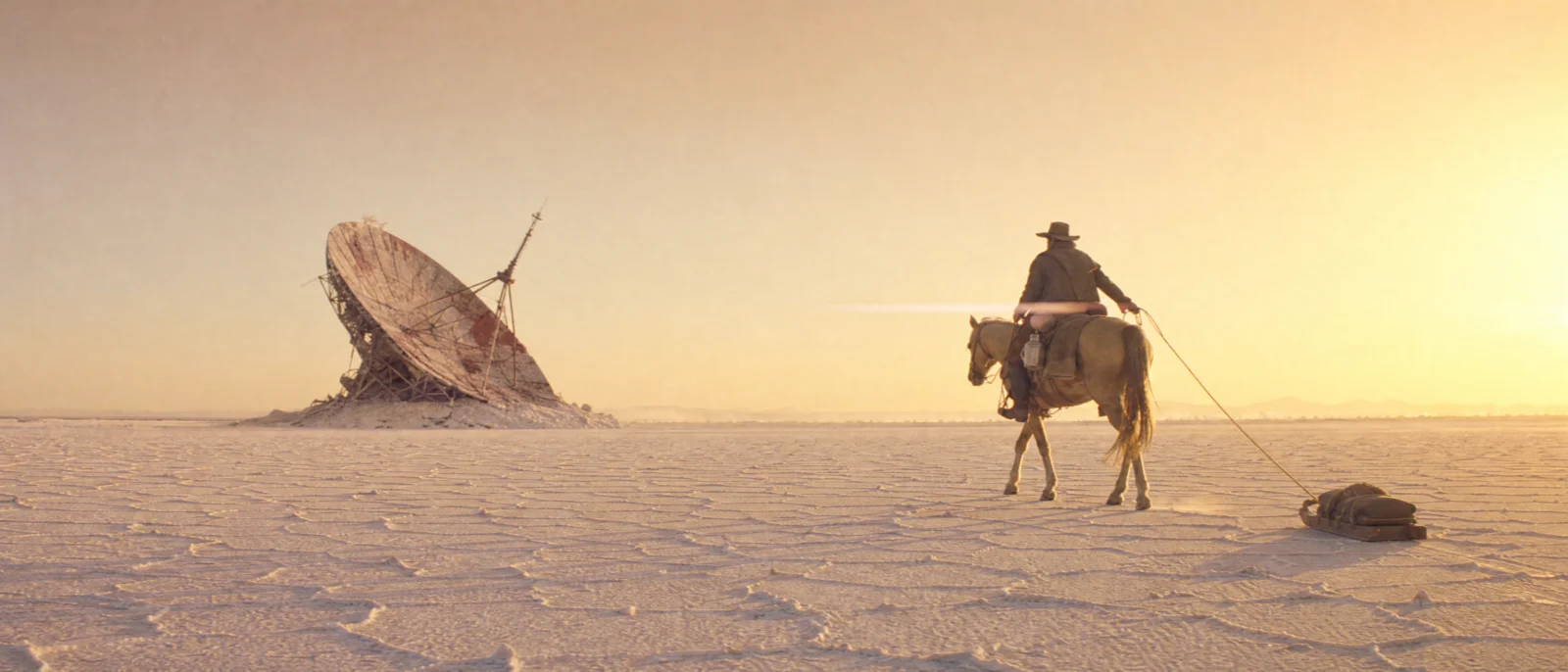
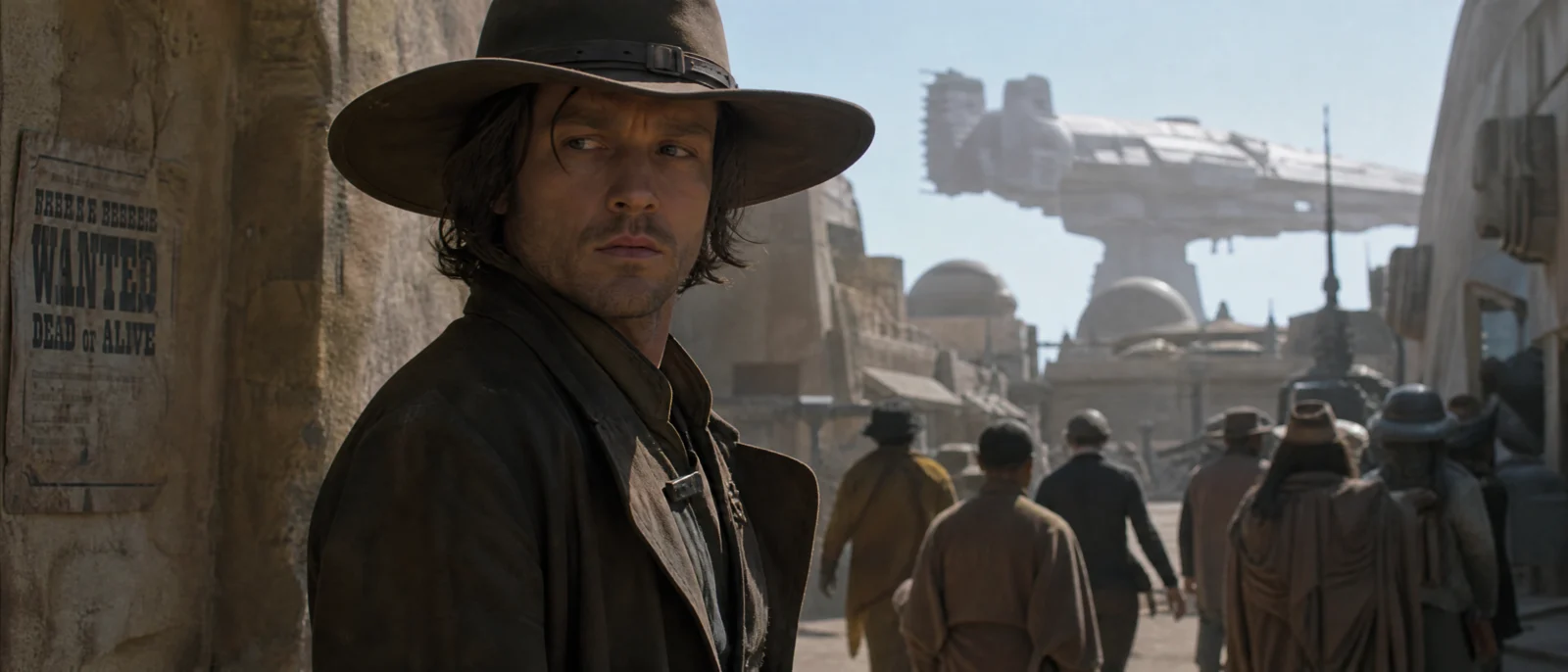
Prompt 1: SALT, the space western, 21:9
Default:
Controlled:
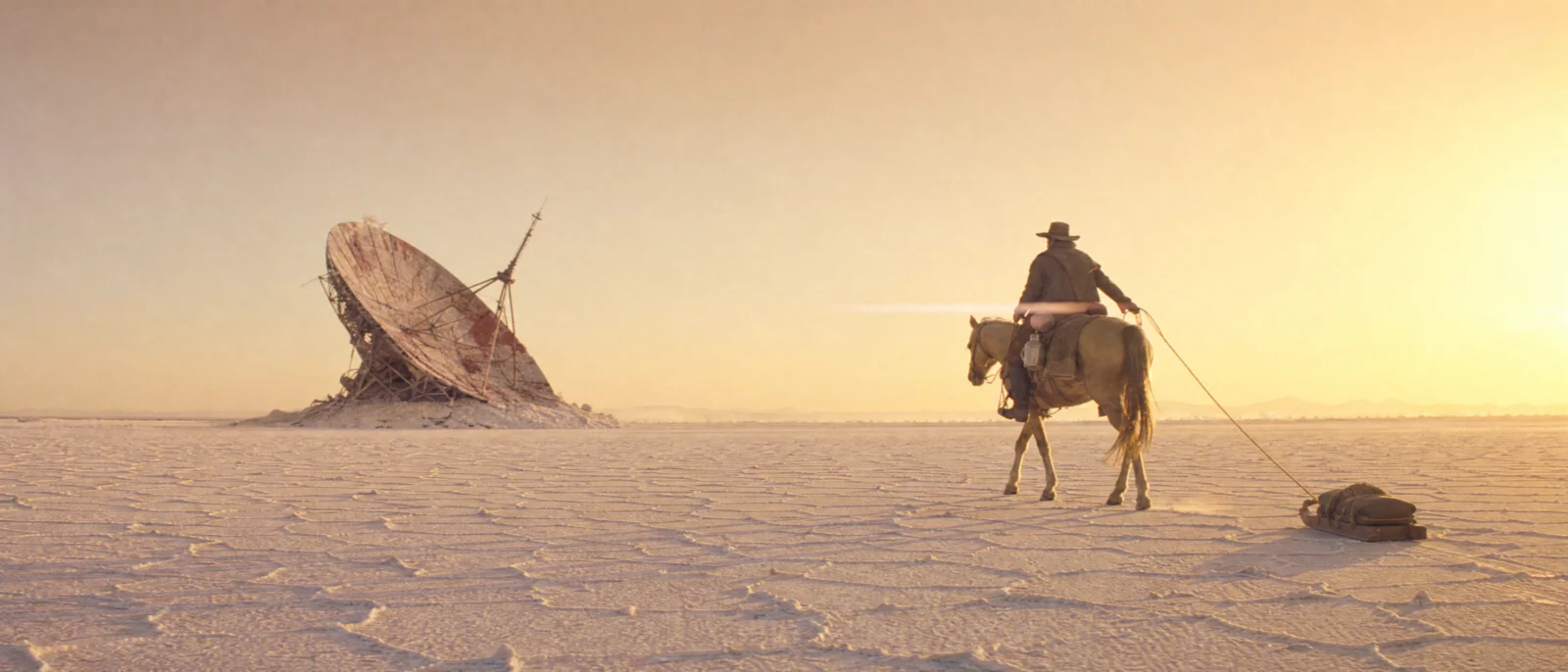
What to notice. The bare code went straight to the most famous space western ever made: a gunslinger’s face to camera, a wanted poster with readable text, a crowded frontier street and a freighter parked behind it. Every default tell in one frame. The controlled take kept only the genre: rider, sled, dish, hexagon salt crust, amber against violet, no text anywhere, and the film SALT exists for exactly one frame.
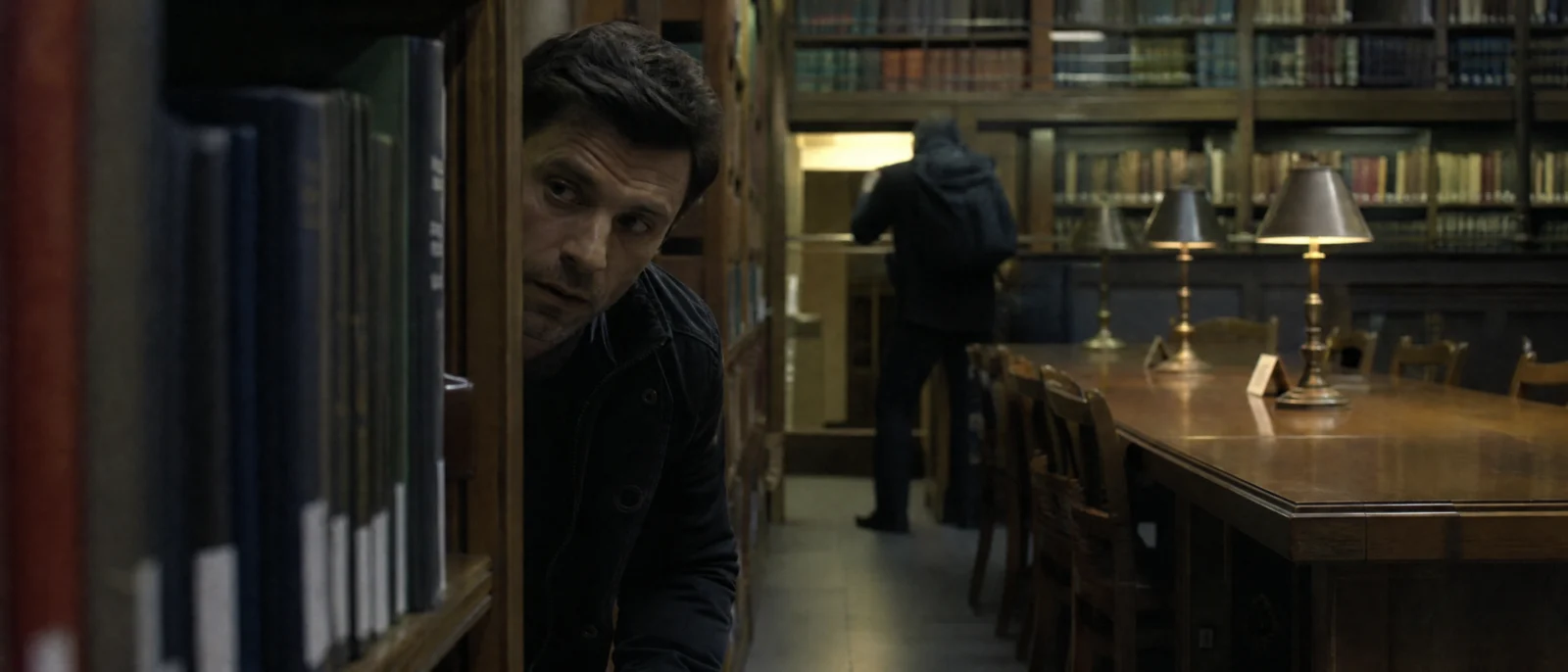
Prompt 2: THE READING ROOM, the heist, 21:9
Default:
Controlled:
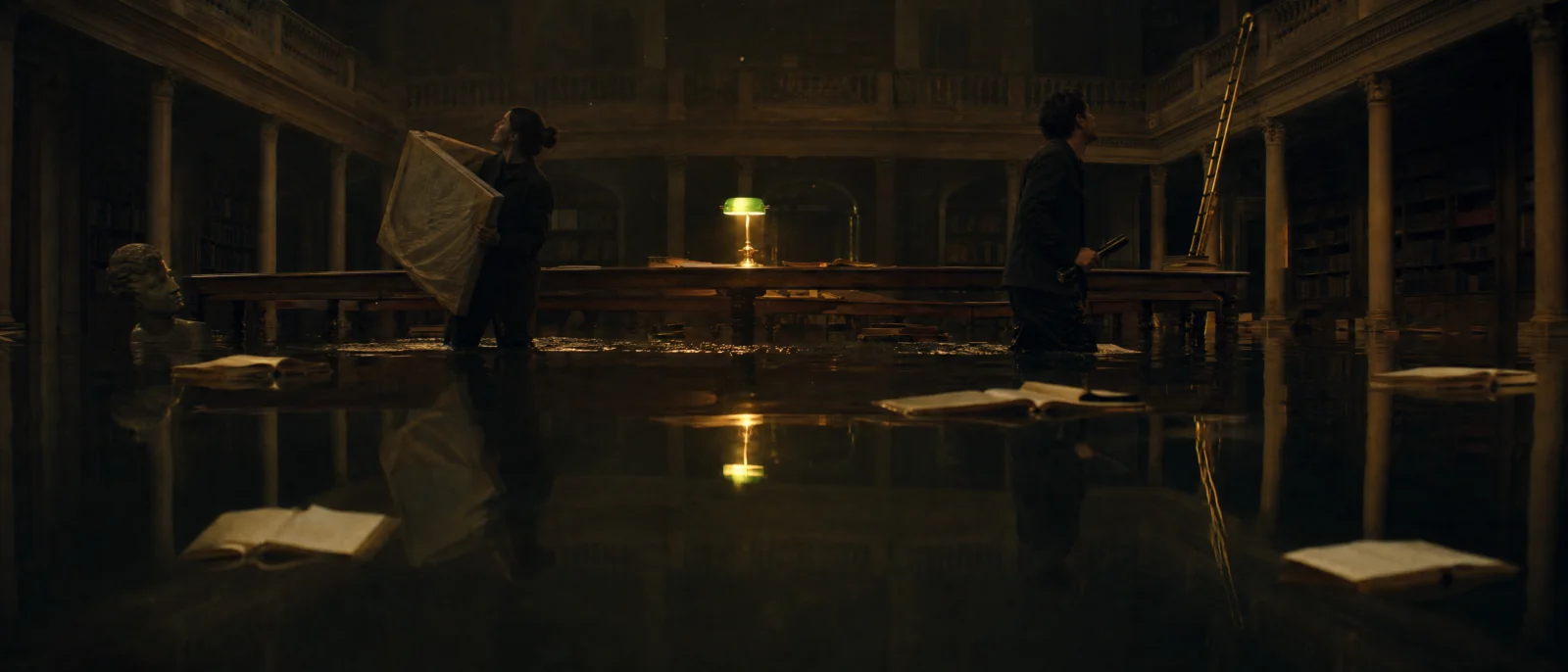
What to notice. Default: a man peering round a shelf toward the lens, three banker’s lamps, no story. Controlled: one lamp, the flood, the reflection doubling the room, both thieves looking up at the balcony. The Rule of One did the work; the water is the only lie and it behaves like water.
Prompt 3: MONSOON EXPRESS, the night train, 21:9
Default:

Controlled:
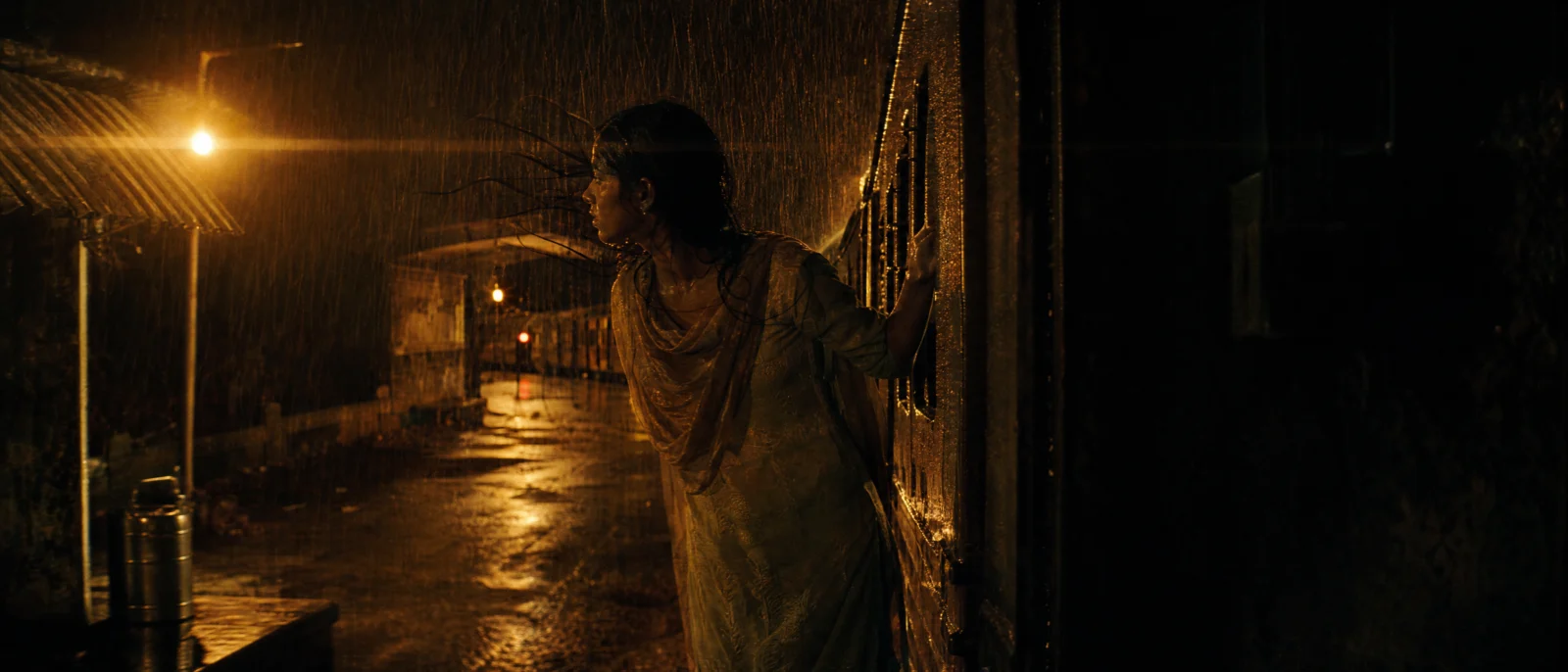
What to notice. Default: a man at a train window, decent light, and a painted number on the wall that the code added on its own. Controlled: the frame moved to the open door, one sodium lamp raked her face, the red tail lamp landed far down the train as the single accent. Nothing here is impossible; the light is the whole film.
Section 03
1B | THE FILM STILL CODE (Prompts 4 to 6)
Vol.23 | The Cinema Codes
Prompts 4 to 6 of THE FILM STILL CODE. The code, the control layer and the settings are on the previous page.
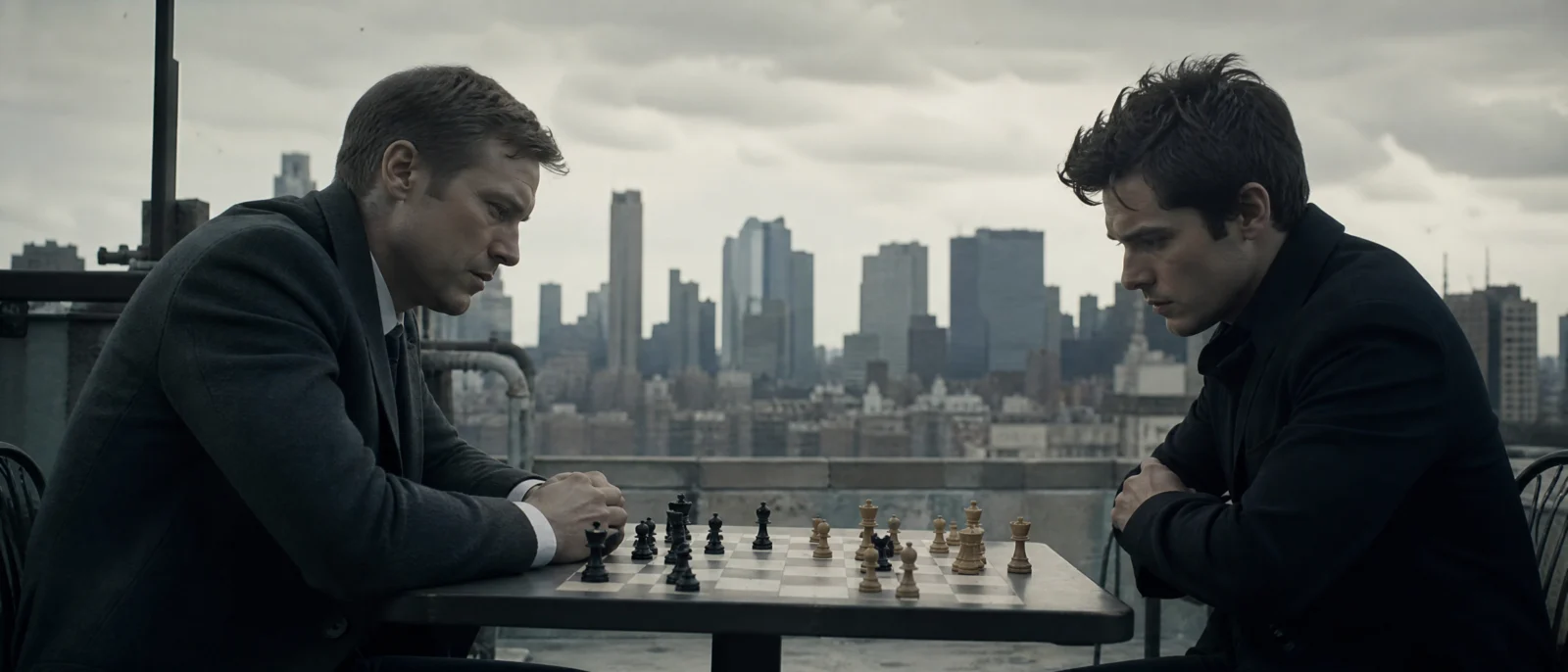
Prompt 4: HIGH TABLE, the rooftop match, 21:9
Default:
Controlled:
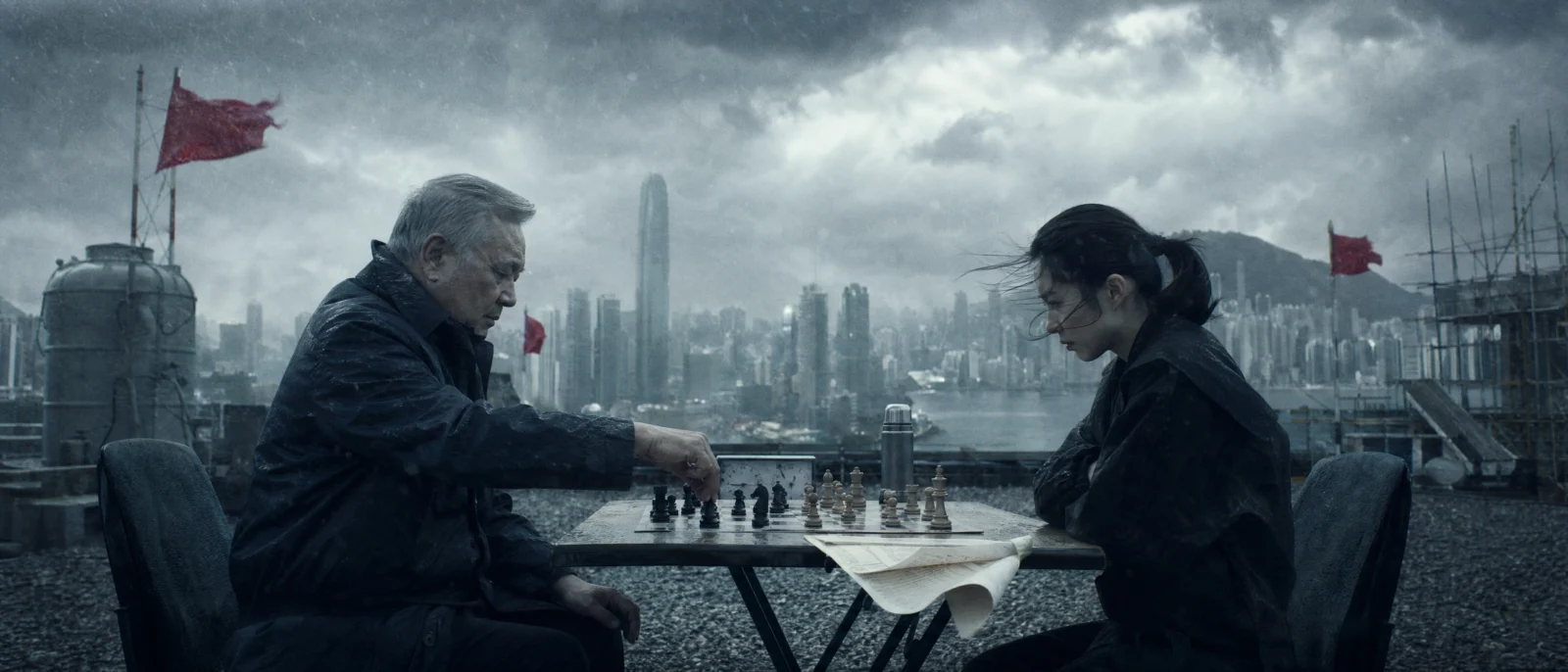
What to notice. Default: two men in suits dead centre, a flat grey skyline, no wind. Controlled: red typhoon flags, bamboo scaffolding, a scoresheet lifting, an older man and a younger woman, both watching the hand on the knight. Blocking is what turned a stock photo into a scene.
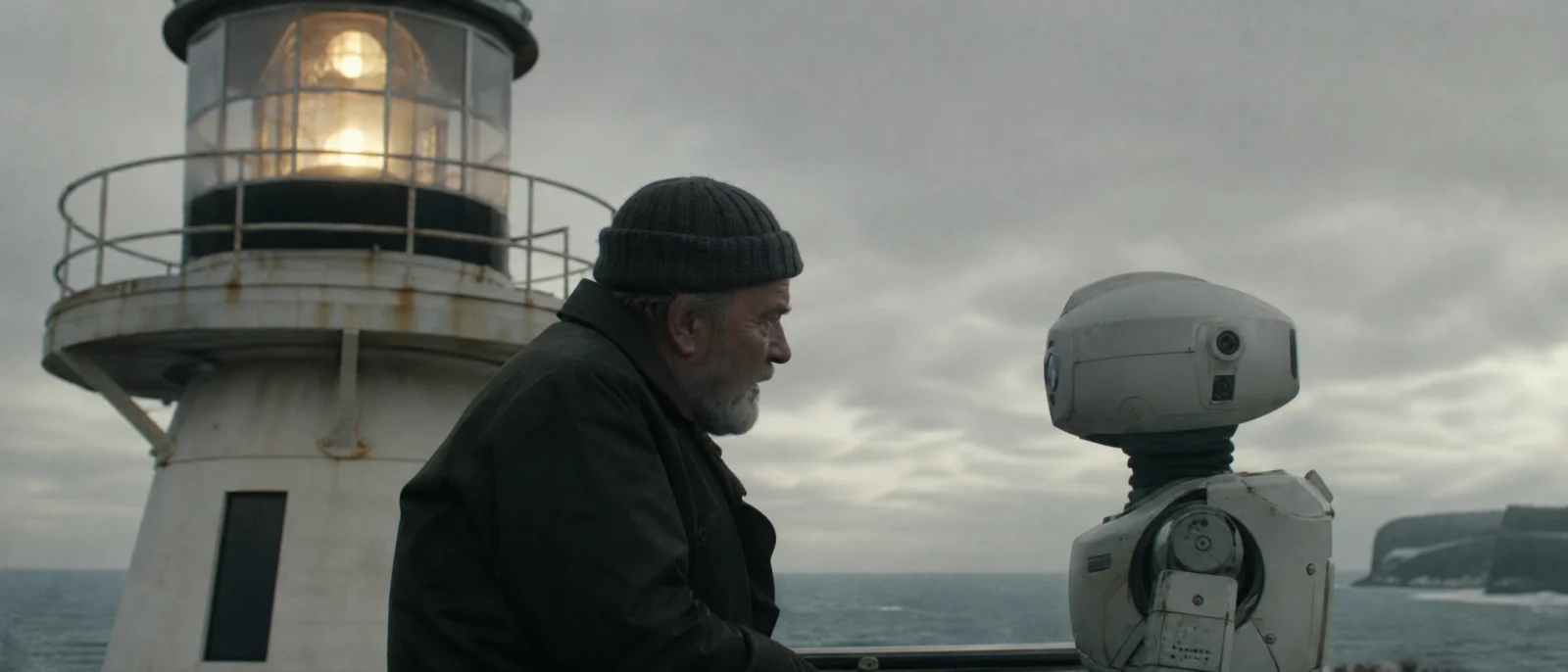
Prompt 5: THE LAST LIGHTHOUSE, keeper and machine, 21:9
Default:
Controlled:
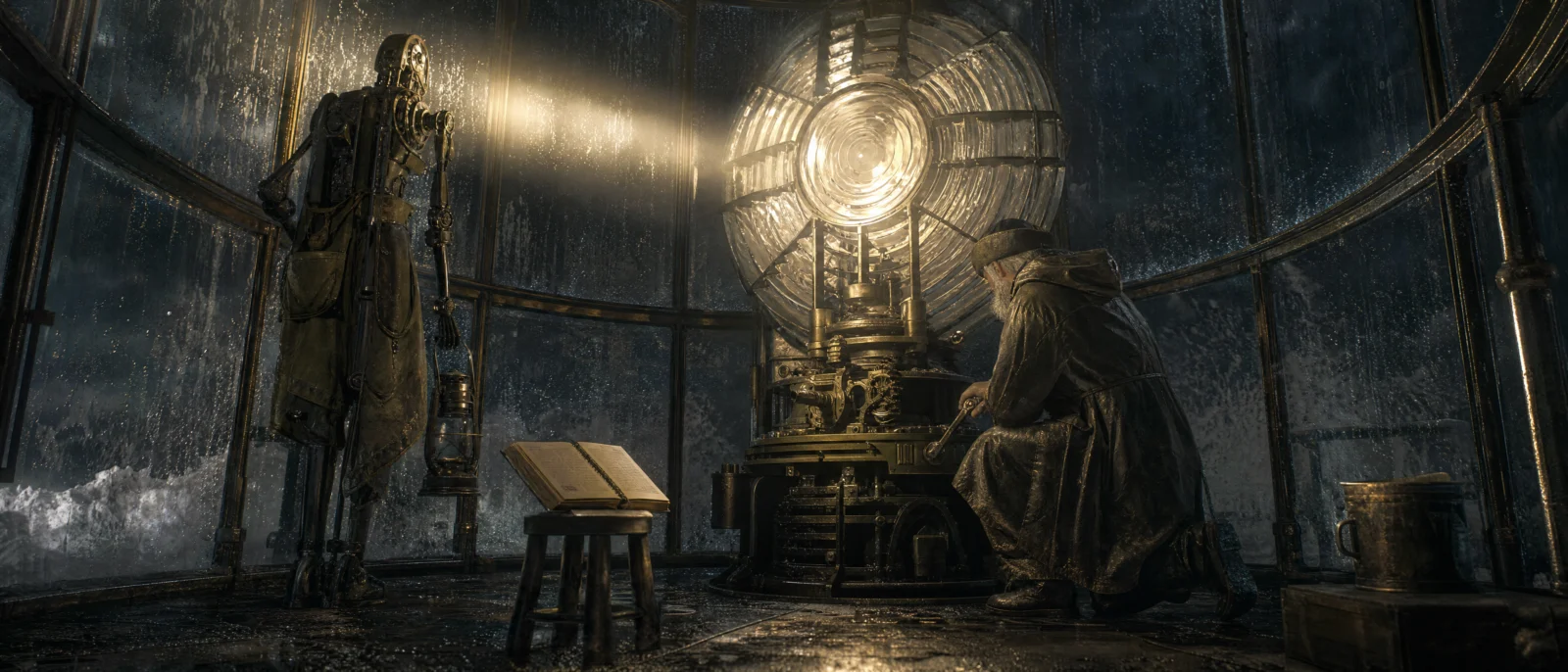
What to notice. Default: a keeper and a smooth white robot outside the tower in flat daylight, both in profile, a science fiction catalogue shot. Controlled: inside the lamp room with the Fresnel lens as the only light, the robot in brass and canvas holding an unlit lantern, rain on the curved glass. Same two characters, different century of cinema.
Prompt 6: FIVE A.M. AT THE KOPITIAM, first contact, 21:9
Default:

Controlled:

What to notice. Default: the alien stares, the uncle stares back, a doorway pours in a second light and the shop signs turned into readable words. Controlled: one fluorescent tube, the uncle pouring kopi without looking up, the visitor waiting politely on a red stool with its cup already served. The comedy is the calm.
Principles in play, prompts 4 to 6
- HIGH TABLE: weather is production design. Typhoon flags and a lifting scoresheet put motion into a still frame, and two players on opposite thirds draw a line of tension across the full 21:9 width.
- THE LAST LIGHTHOUSE: one practical, the Fresnel lens, motivates the whole scene, and period materials (brass, canvas) settle the colour palette and the production design in a single decision.
- FIVE A.M. AT THE KOPITIAM: comedy in cinema is blocking. The uncle not looking up and the visitor waiting politely is the joke; one fluorescent tube keeps it in documentary register so the joke lands.
Common issues and fixes
The title appears on screen. You named the film, so the model prints it. Fix: keep the invented title in line one only and keep no text, no captions in DO NOT. If it still prints, add "the title is never written anywhere in the frame."
Eyes to camera. The still archive is full of publicity portraits. Fix: give the eyes a target in THE BLOCKING every time, "eyes on the dish", "eyes down the track".
Three lights from nowhere. Fix: THE LIGHT names one source and the phrase no fill; if a second light survives, name where the shadow must fall.
The frame comes back 16:9 with black bars. Fix: 21:9 in the generator setting as well as the last line; the two must match.
Next
Page 2 removes every light but one. THE ONE LIGHT CODE: lit only by a welder’s torch, a candle, a fridge, a phone, a neon sign, a lightning flash.
Section 04
2A | THE ONE LIGHT CODE (Prompts 1 to 3)

Vol.23 | The Cinema Codes
Cinema is mostly one light. Name it, place it, and remove every other one.
What the code actually is
"Lit only by" is a lighting instruction disguised as a code. It tells the model that a single visible source inside the frame is doing all the work: a torch, a candle, a screen, a sign. The archive behind it is the best-lit photography ever made, because photographers who work with one source have to be good. The default gets the source right and then cheats: a soft fill appears from nowhere, the shadows never go fully black, the source itself blows out to white. The controlled prompt names the source’s colour, where its shadow lands, and forbids the fill.
Where the control layer bites on this page
THE LIGHT block here is the whole page. Write the source, its colour temperature in words, its direction, and the words no fill and the rest of the frame falls to black. THE TEXTURE should demand halation on the source, because real film blooms around a hot practical and that bloom is what reads as cinema.
Why this works: the principles behind THE ONE LIGHT CODE
- Motivated single-source lighting. The oldest rule in cinematography: light comes from something in the scene. Name the source, its colour temperature in words and where its shadow falls, and the model builds a real lighting setup instead of a lit render.
- Falloff, the inverse square law. Light drops off fast with distance. A candle lights a hand, not a room. Writing the falloff into the prompt (the walls gone within a metre) tells the model how the physics behaves, and the black that results is the whole look.
- Colour temperature is emotion. Candles and tungsten are warm (2,000 to 3,200K), screens are cool blue-white, neon is saturated colour, lightning is blue-white and instant. Cinema codes mood with temperature before a word is spoken.
- Figure and ground. When one source lights one thing, everything else becomes black shape. The design principle is contrast: the eye goes to the only lit object, so you decide what the viewer looks at by deciding what the light touches.
- The accent light. One second source far behind the subject (an exit sign, a tail lamp, a coal) separates the figure from the black and adds depth. Cinematographers call it a kicker or a practical accent. It is one, small, and a different colour from the key.
- Lens and distance do the isolating. A 100mm lens removes the room for you; a 24mm keeps it. Choose the lens to decide how much of the world the one light has to explain.
Settings
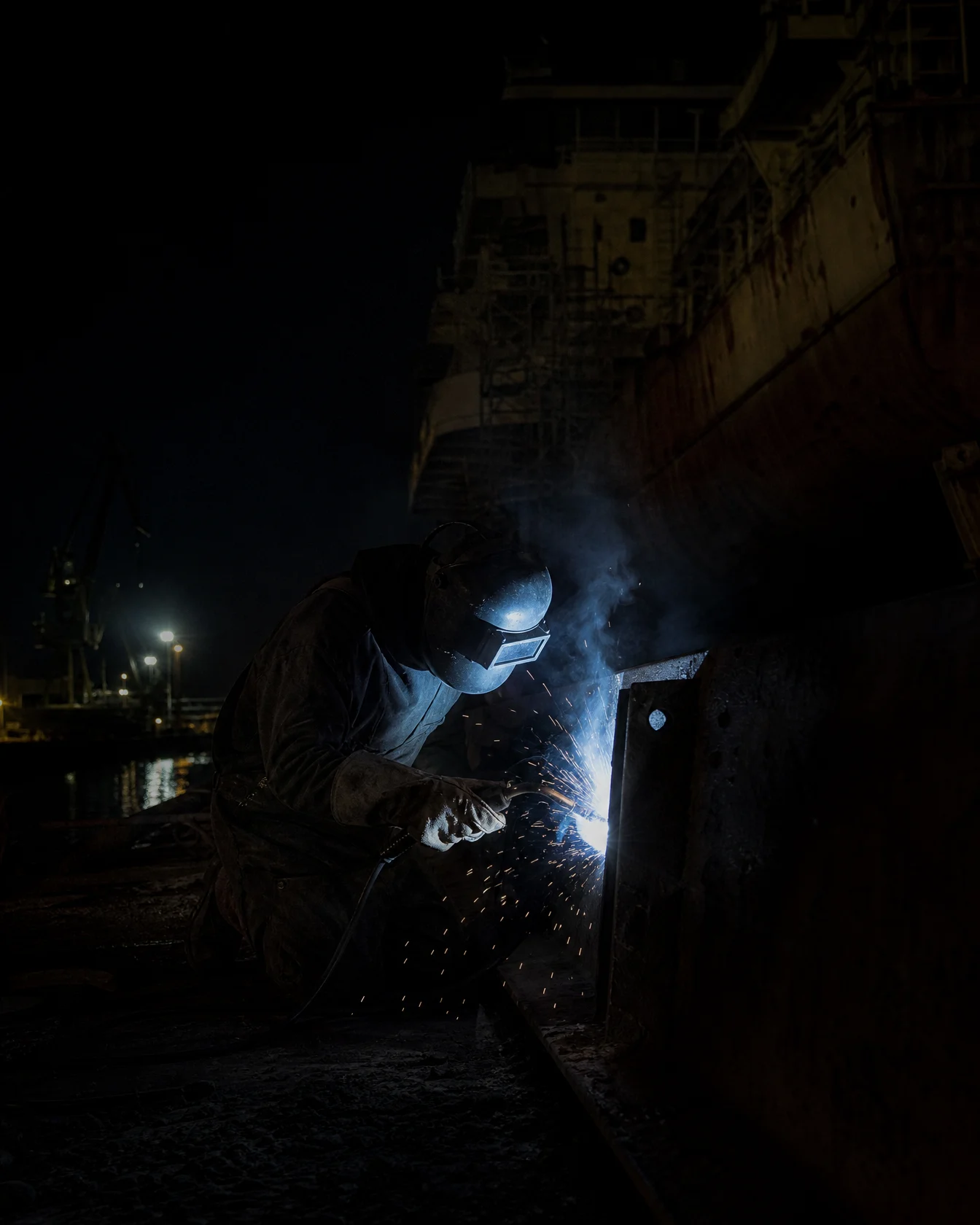
Prompt 1: The Welder, 4:5
Default:
Controlled:
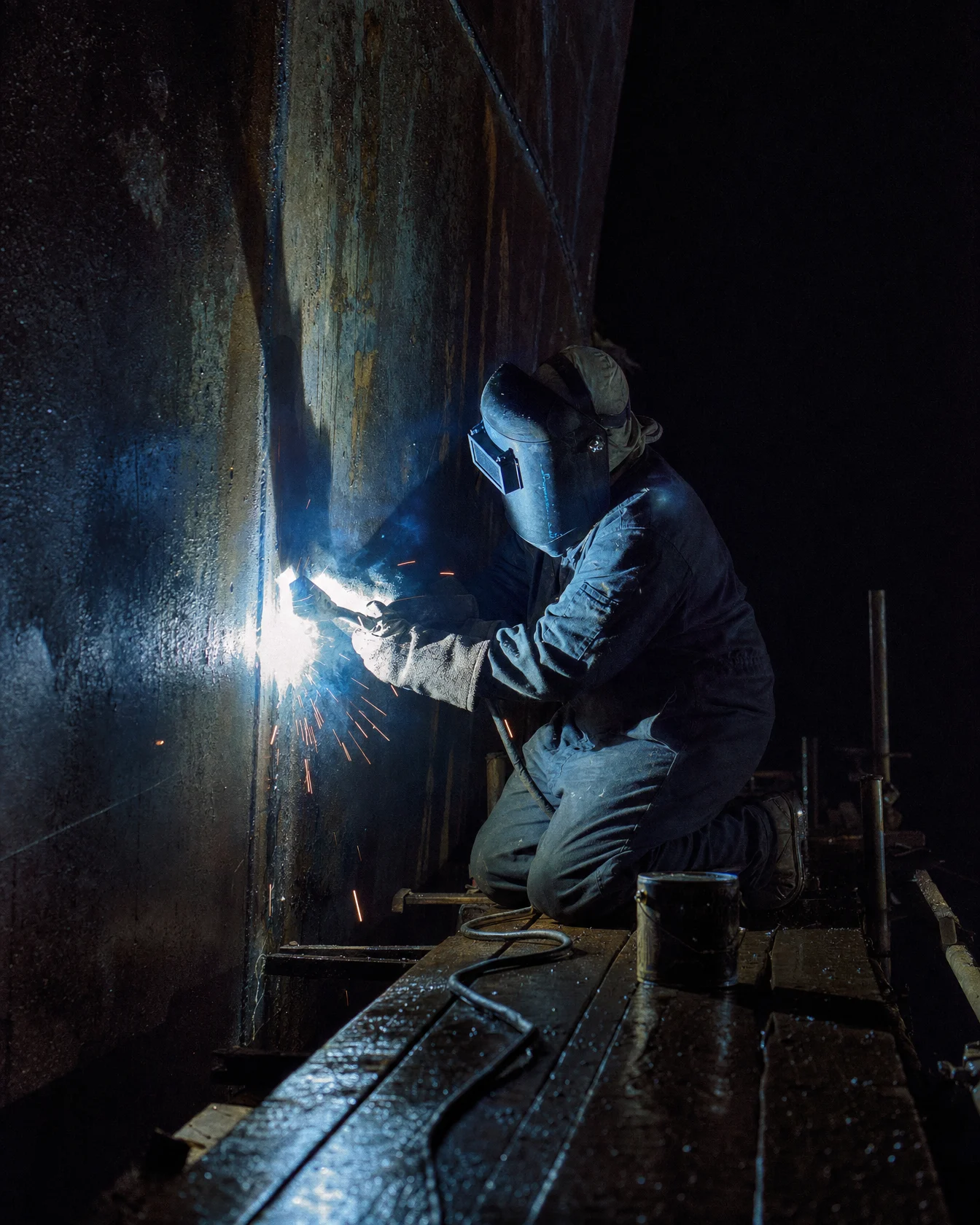
What to notice. Default: the arc is there, but so is a lamp post, a lit ship and a sky glow, three sources for a one-source code. Controlled: arc only, the face hidden behind the visor as written, sparks as the second light, everything else black. Halation around the arc is what makes it read as film.
Prompt 2: The Blackout Ward, 3:2
Default:

Controlled:

What to notice. Default: the doctor’s face is lit by the phone, then a soft fill lifts the whole corridor so nothing is black. Controlled: one screen, one red exit sign far behind as the accent, a nurse’s silhouette, and the walls gone within a metre exactly as the light block asked.
Prompt 3: The Watchmaker, 4:5
Default:

Controlled:

What to notice. Default: a candle at the far end of a cluttered bench, the whole room politely visible, a clock on the wall. Controlled: the frame tightened to loupe and fingertips, wax down the candle, the brass movement lit and the room gone. The lens choice did half of it; 100mm removes the room for you.
Section 05
2B | THE ONE LIGHT CODE (Prompts 4 to 6)
Vol.23 | The Cinema Codes
Prompts 4 to 6 of THE ONE LIGHT CODE. The code, the control layer and the settings are on the previous page.
Prompt 4: The Bride at Three A.M., 3:2
Default:
Controlled:
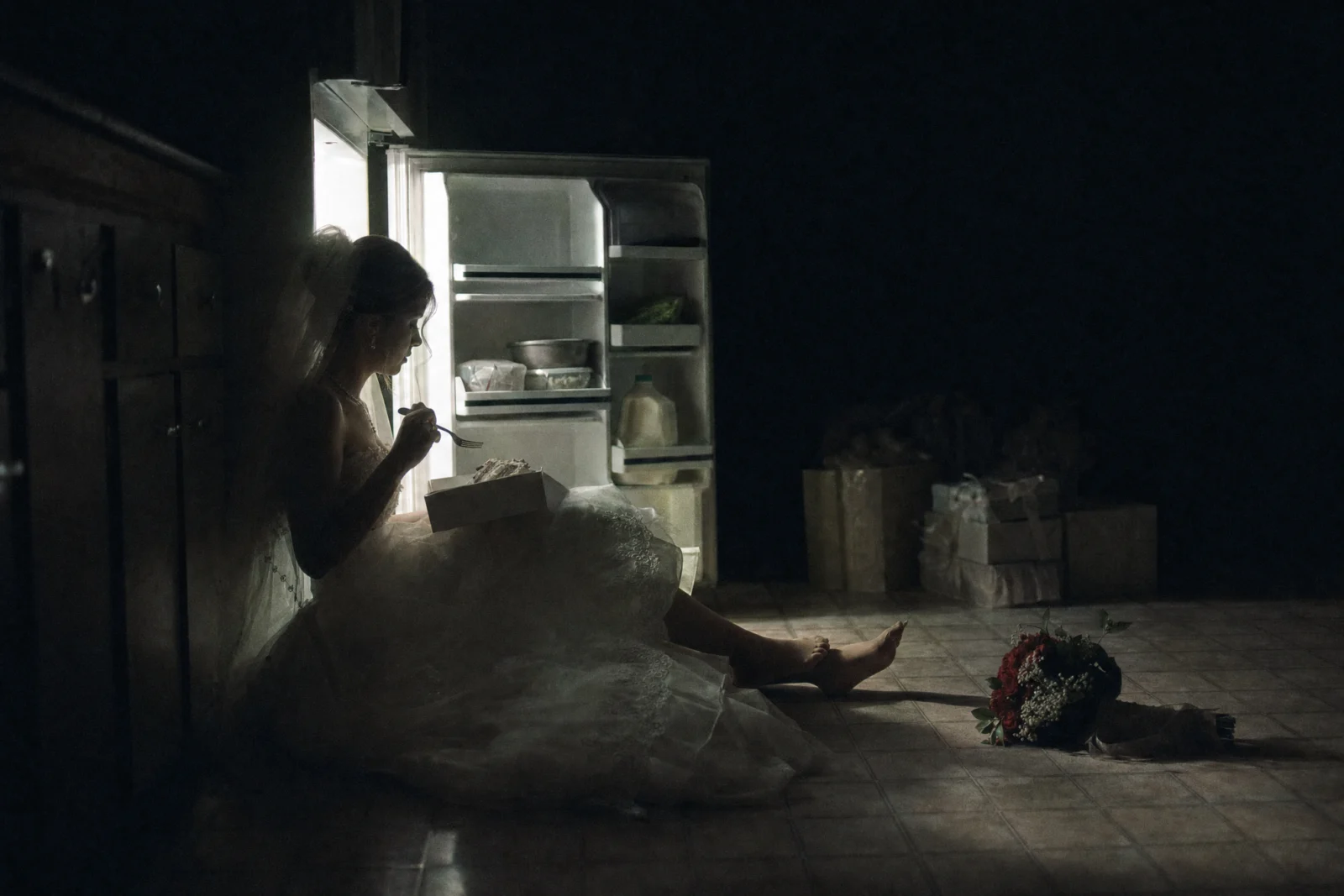
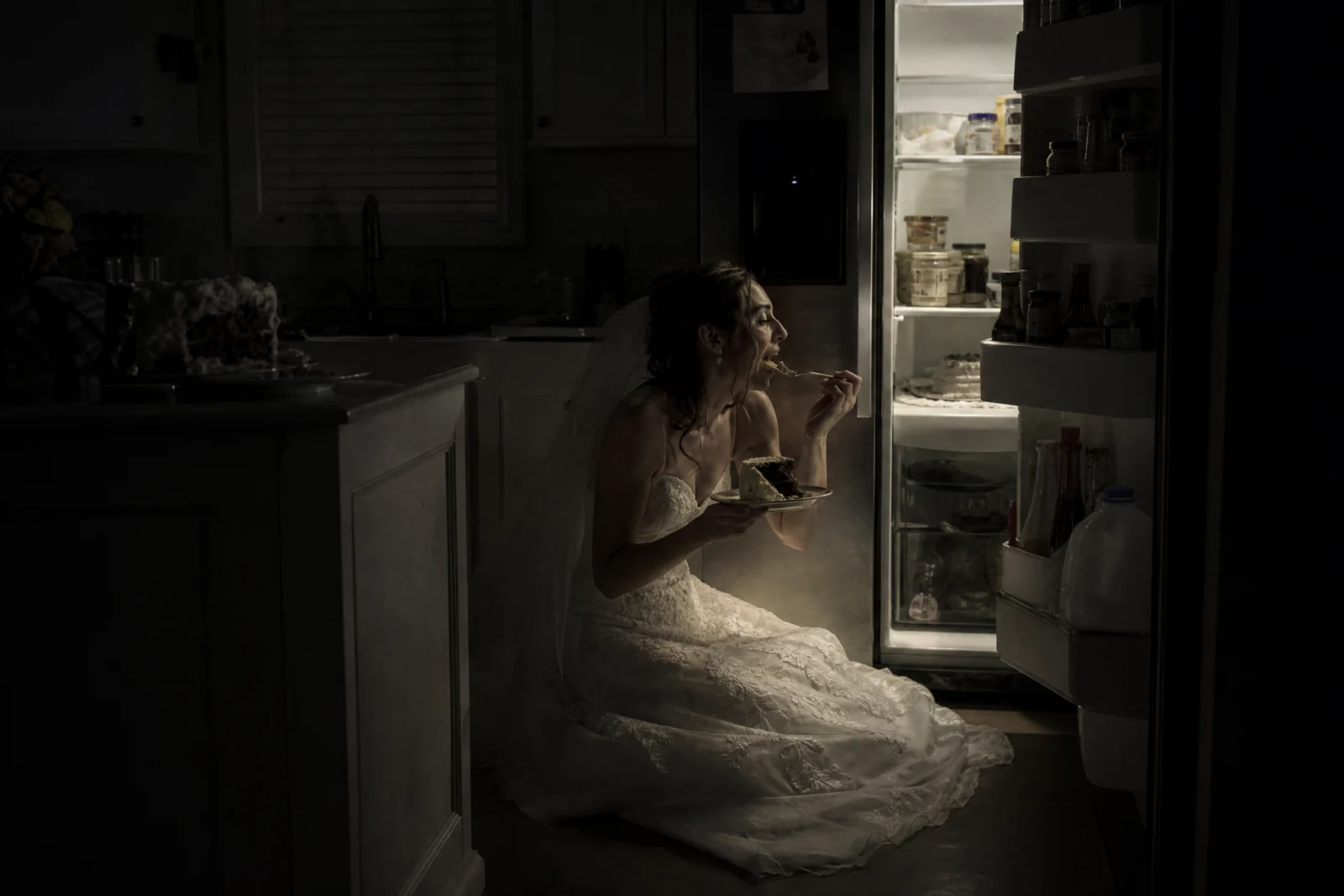
What to notice. Default: fridge light plus window light plus a lamp somewhere, the dress bright, the story flat. Controlled: she is on the floor, shoes off, veil in, fork in hand, the fallen bouquet as the single red accent, and the fridge is the only source. Four objects in THE WORLD told the whole night.
Prompt 5: The Barber Under Neon, 2:3
Default:
Controlled:
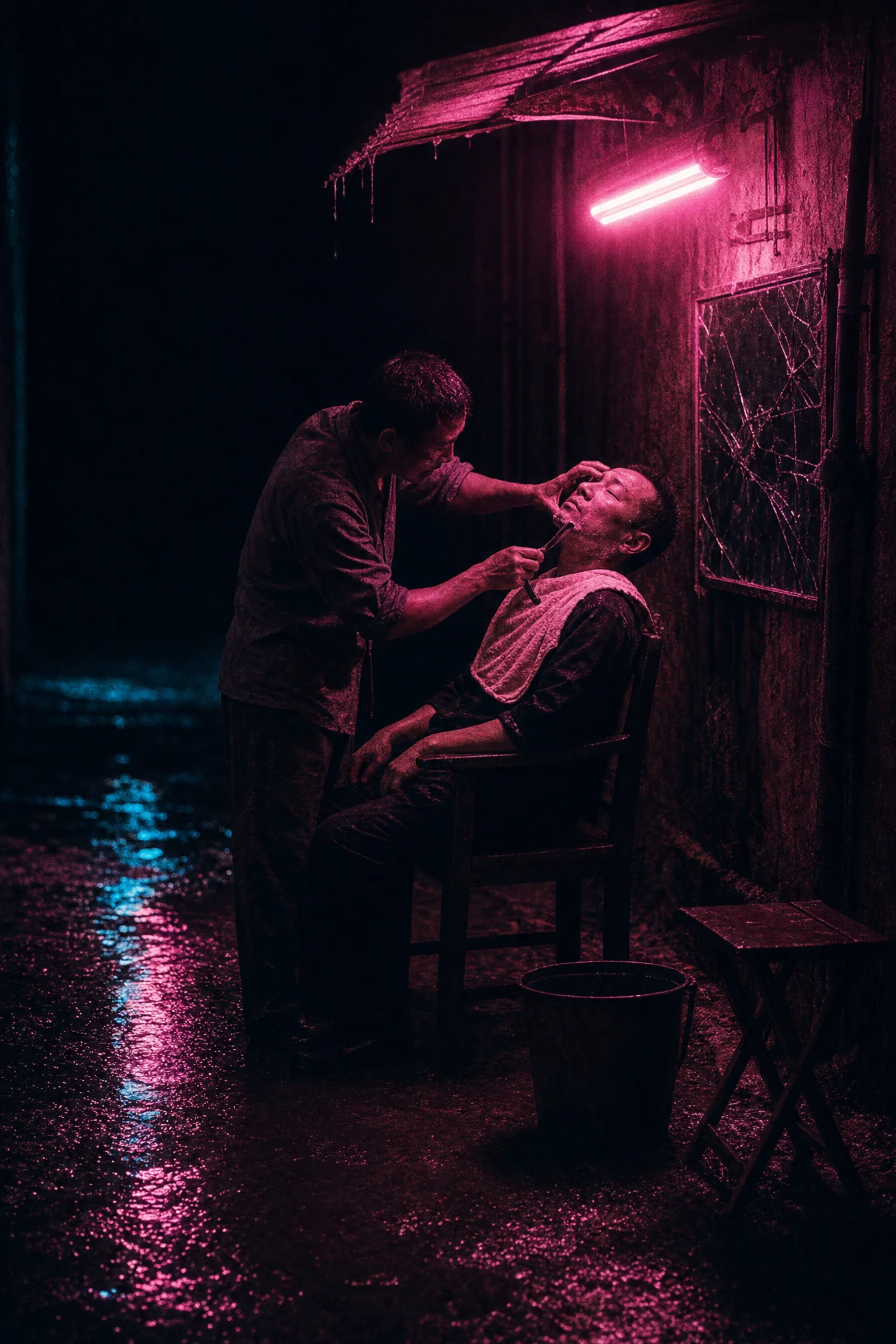
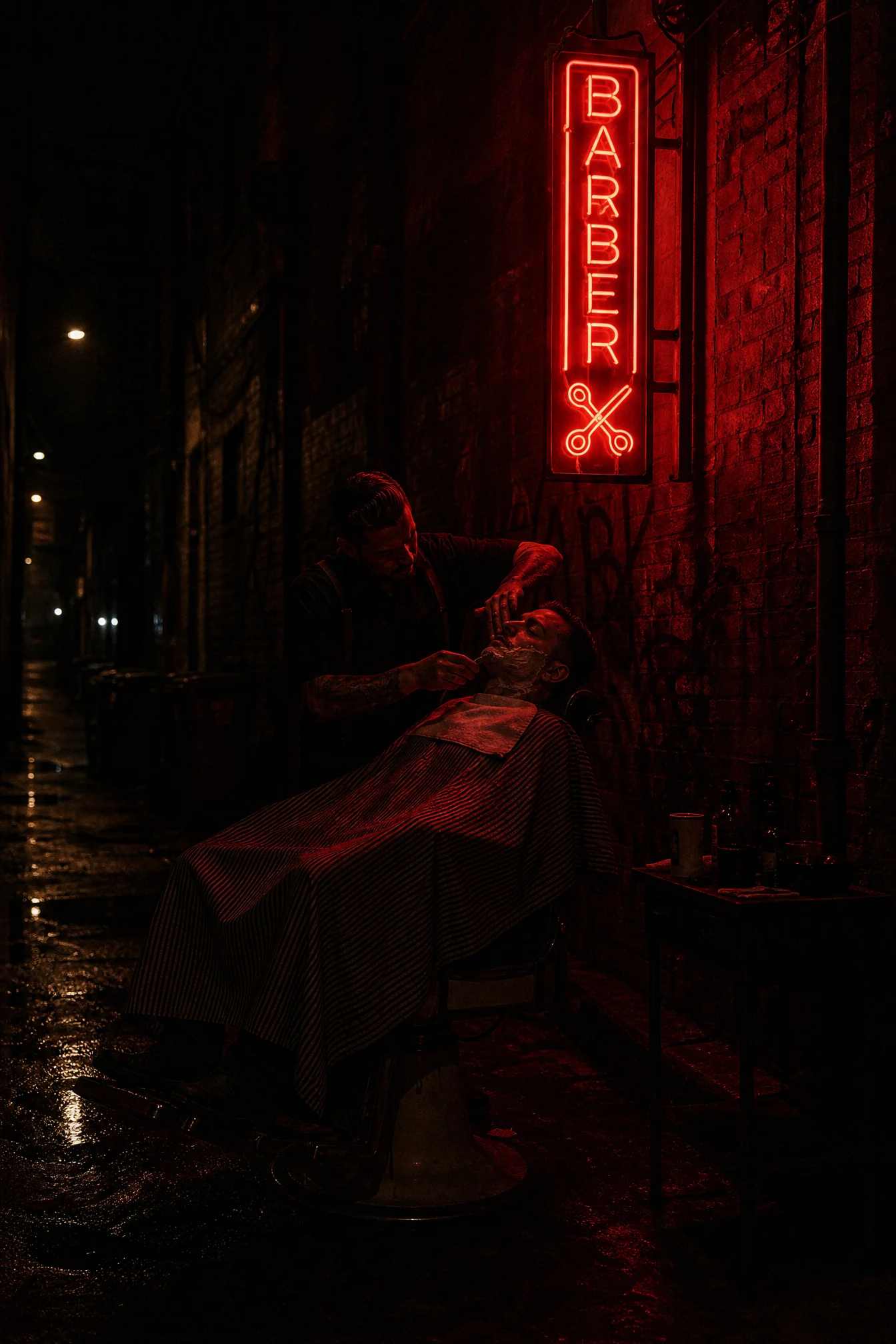
What to notice. Default: the neon spelled out BARBER with a pair of scissors, readable and generic. Controlled: an unreadable pink tube, magenta on wet skin, cyan in the puddles, the razor at the jaw. Name the sign unreadable or the model will write on it.
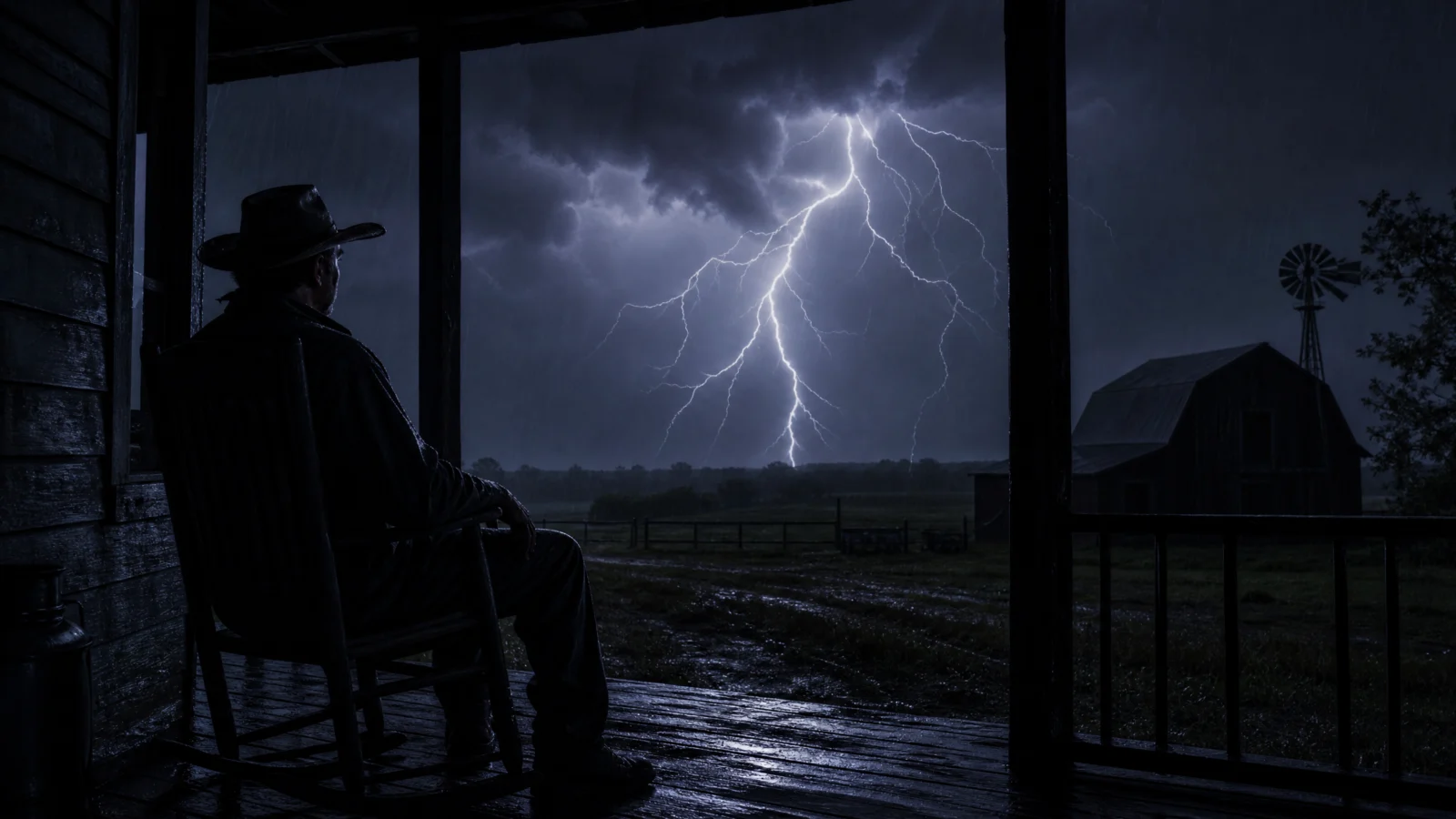
Prompt 6: The Porch in the Storm, 16:9
Default:
Controlled:

What to notice. Default: a man in a rocking chair, the porch and the sky lit as if by a full moon, lightning as decoration. Controlled: the flash freezes every raindrop, the porch interior is black, the dog sits by his boots, the mug is on the rail. The bolt is the only light in the frame.
Principles in play, prompts 4 to 6
- Three sources, three temperatures. Fridge light is cool white, neon is saturated magenta, lightning is blue-white. Colour temperature is the mood; the source is the story.
- Match the shutter to the source. Lightning is a one-frame flash, so the frame freezes every raindrop. A neon tube is continuous, so wet skin and puddles carry its colour. A one-light frame is built as much from reflections as from the source.
- Falloff draws the frame. The porch interior goes black, the kitchen ends at the fridge door. What the light does not reach is a compositional decision, not a missing part.
Common issues and fixes
A fill light appears anyway. The default hates a black shadow. Fix: no fill and the rest of the frame falls to black, both, in THE LIGHT; if it persists, name the object that must be invisible, "the ceiling is not visible".
The source blows out to a white blob. Fix: give the source a colour in words (arc blue-white, candle amber, neon pink); a coloured source keeps its shape.
Neon text becomes real words. Fix: call the sign unreadable in THE LIGHT and repeat readable text in DO NOT.
The face turns to camera. Fix: give the eyes a target in THE BLOCKING, "eyes on the jaw", "eyes on the cake".
Next
Page 3 makes the subject enormous and the human tiny. THE COLOSSUS CODE.
Section 06
3A | THE COLOSSUS CODE (Prompts 1 to 3)
Vol.23 | The Cinema Codes
Scale is an emotion. One small person tells the viewer how big the world is.
What the code actually is
"A lone figure dwarfed by" is a composition code. It hands the model the sense-of-scale archive: industrial photography, dam and shipyard documentation, the expedition photograph with a person for scale. The default understands the idea and then ruins it: the figure is too big, or centred, or the camera floats in the air so nothing has a ground. The controlled prompt puts the camera at human height, puts the figure on a third at the true proportion, and gives the colossus a texture that proves its size.
Where the control layer bites on this page
THE SHOT carries this page: camera at human eye height, a wide lens close to the ground, and the figure stated as a fraction of the frame’s height ("the figure is one fortieth of the frame"). THE WORLD must include a scale texture on the colossus, rivets, weld seams, bark plates, ice layers, because the eye measures size by texture repetition.
Why this works: the principles behind THE COLOSSUS CODE
- Scale needs a ruler. The eye cannot measure size without a known object. A human figure is the universal ruler; a door, a truck or a line of rivets does the same work. Remove the ruler and the biggest object in the world looks like a model.
- Camera height and the low angle. Shooting from human eye height or lower makes the subject tower over the viewer. A drone view kills scale because it removes the viewer’s own body from the scene.
- Let it leave the frame. A colossus that fits inside the frame is contained by the frame. Cropping the top or the sides tells the brain it continues beyond the picture. This is monumental photography’s oldest composition rule.
- Repetition as measurement. Rows of windows, formwork joints, welded hull plates, turbine housings in one-point perspective. The brain counts the repeats and infers the size. Texture repetition is the cinematographer’s tape measure.
- Raking light for surface. Light skimming across a surface at a low angle (dawn, a floodlight from below, sodium lamps down a hall) reveals every joint and every texture. Flat front light erases the cues and the scale with them.
- Grade for weight. Heavy subjects want a cool, desaturated, contrasty grade with one warm accent: a work light, an orange suit, a lantern. Colour theory: warm advances, cool recedes, so the small warm figure pops off the cold mass.
Settings
Prompt 1: The Spillway, 9:16
Default:

Controlled:
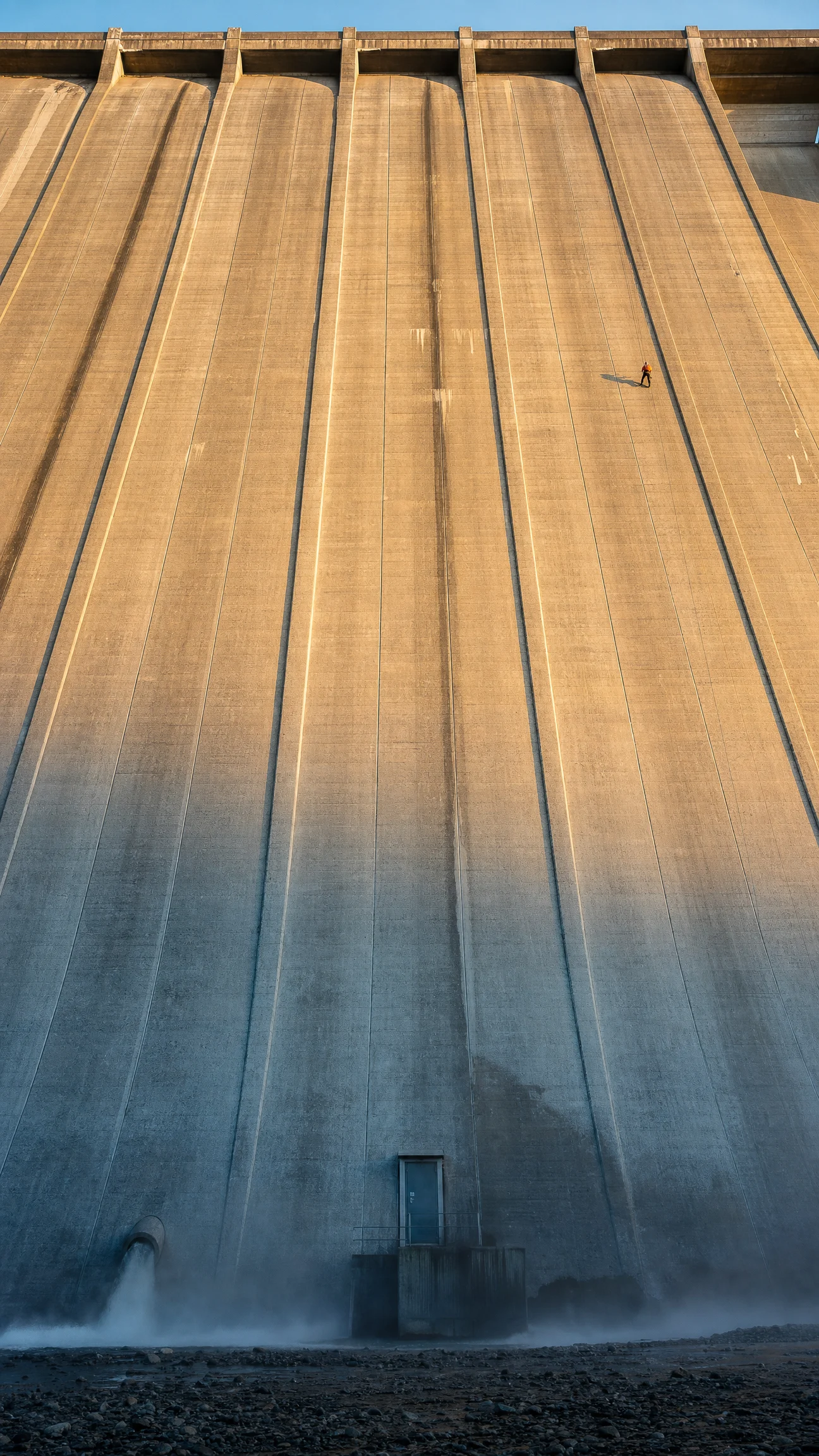
What to notice. Default: the spillway is running, the figure stands at the bottom in a normal composition, scale is read but not felt. Controlled: the dam fills the frame edge to edge, first light rakes across the formwork joints, the abseiler is a fleck on the face. The repeating joints are the ruler.
Prompt 2: The Bulb of the Bow, 3:2
Default:
Controlled:

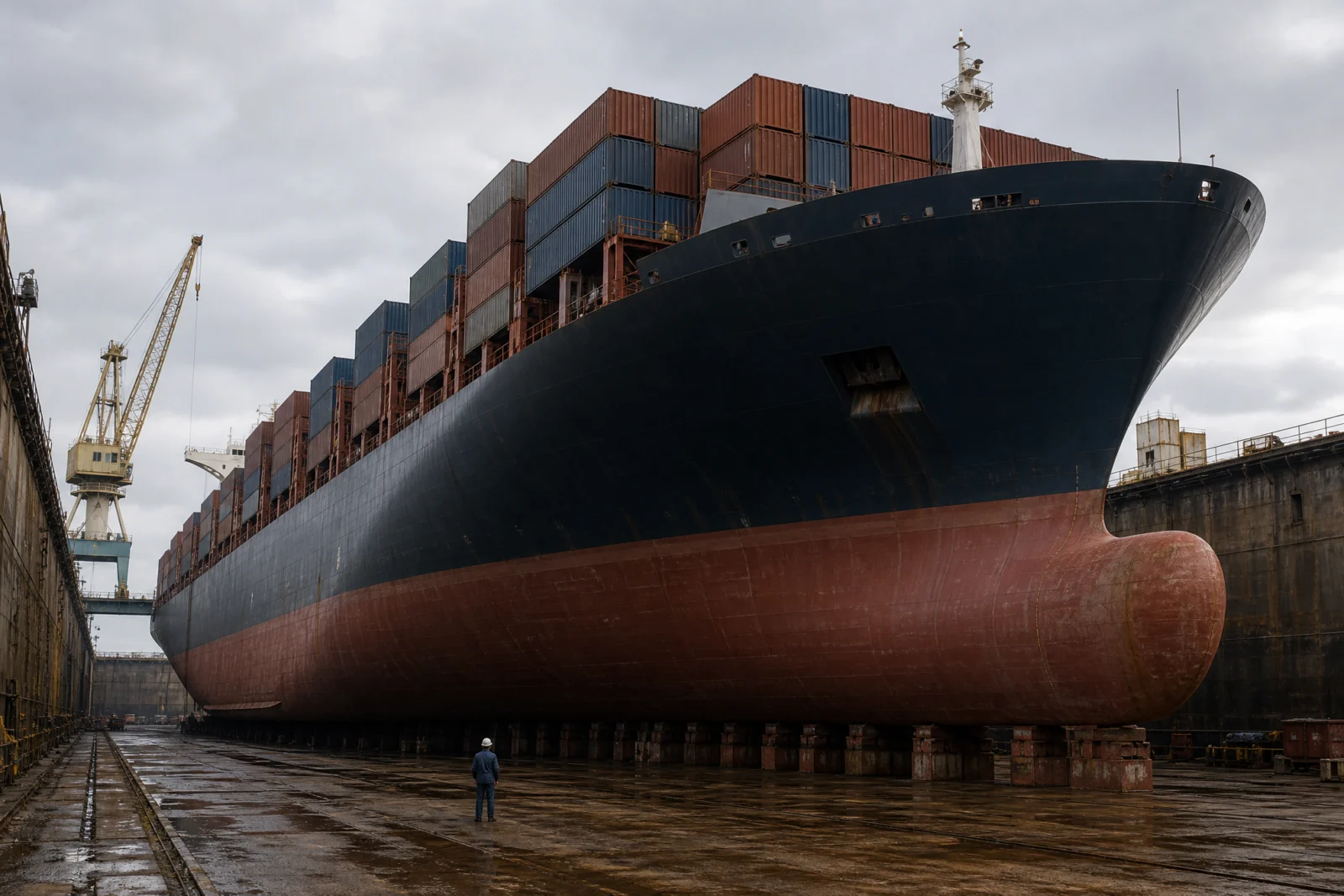
What to notice. The bare code returned a real shipping line’s name and logo on the bow, so the default shown here carries one safety clause, no ship name, no logos, and is labelled as such. Controlled: the camera went to the dock floor under the bulb, peeling antifouling plates and weld lines repeat across the hull, the welder is one thirtieth of the frame. Texture repetition is how the eye measures.
Prompt 3: The Pad, 9:16
Default:

Controlled:
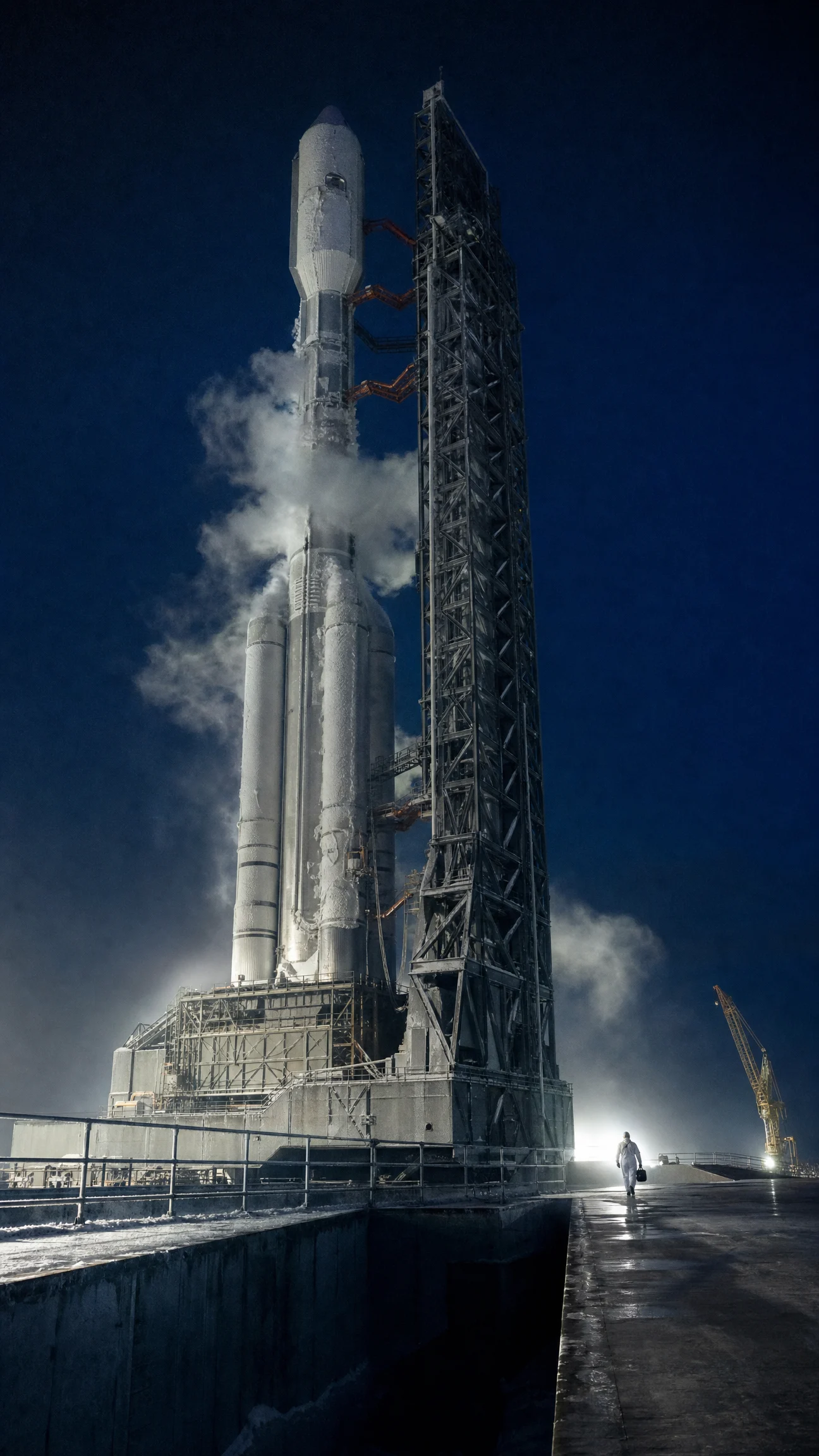
What to notice. The bare code printed a real space agency’s mark on the tank, so the default shown here carries one safety clause, no agency markings, no flags, no logos. Controlled: floodlights from below, vapour streaming off the tanks, the technician in the clean suit walking away, one fiftieth of the frame. The pad reads as a cathedral because the camera is at pad level.
Section 07
3B | THE COLOSSUS CODE (Prompts 4 to 6)
Vol.23 | The Cinema Codes
Prompts 4 to 6 of THE COLOSSUS CODE. The code, the control layer and the settings are on the previous page.
Prompt 4: The Giant Tree, 9:16
Default:
Controlled:
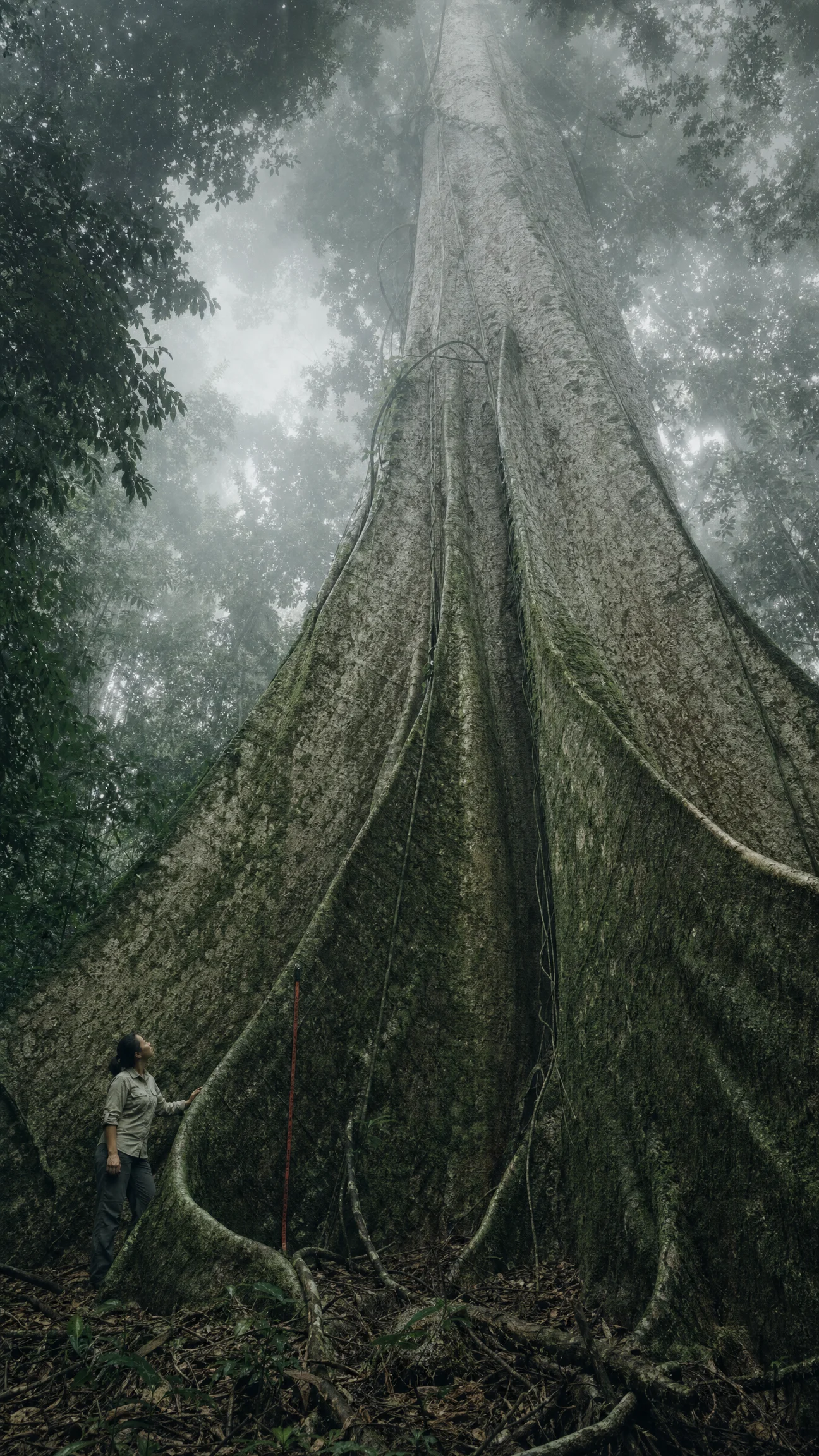
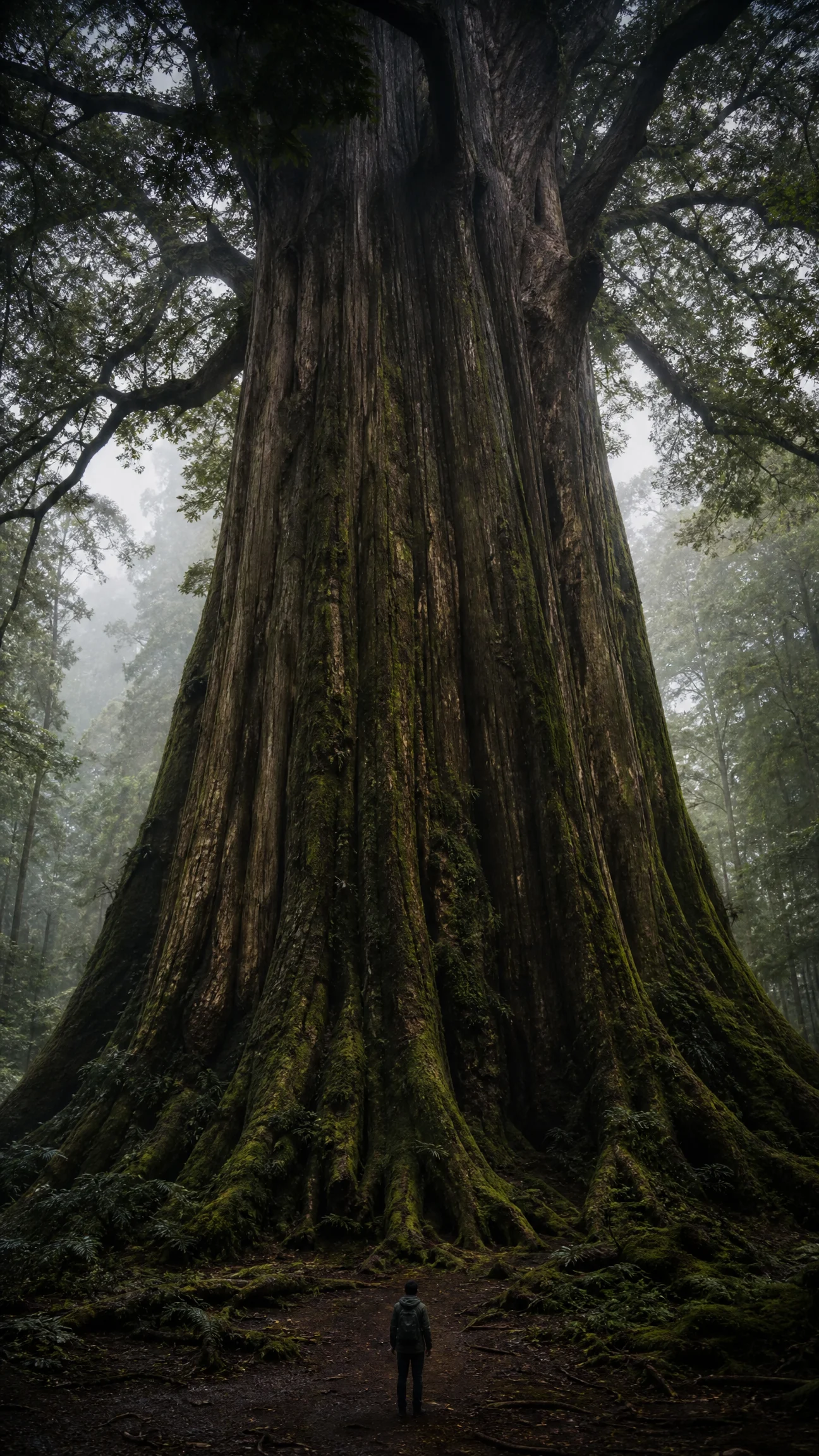
What to notice. Default: a mossy giant from a fantasy poster, the person a silhouette at the base, the whole tree in frame. Controlled: a real tualang with buttress roots like walls, the researcher’s hand on a root twice her height, the canopy out of the top of frame. Letting the subject leave the frame is what makes it big.
Prompt 5: The Turbine Hall, 21:9
Default:
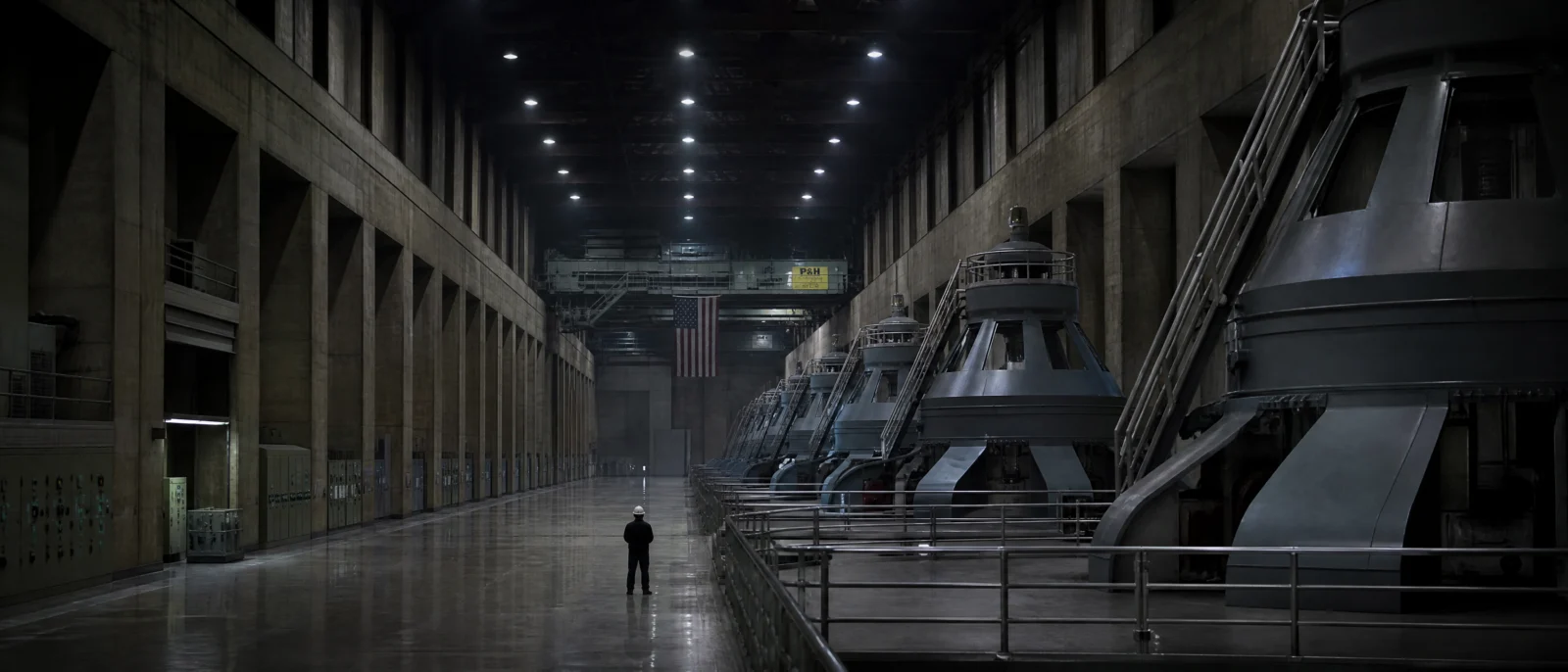
Controlled:
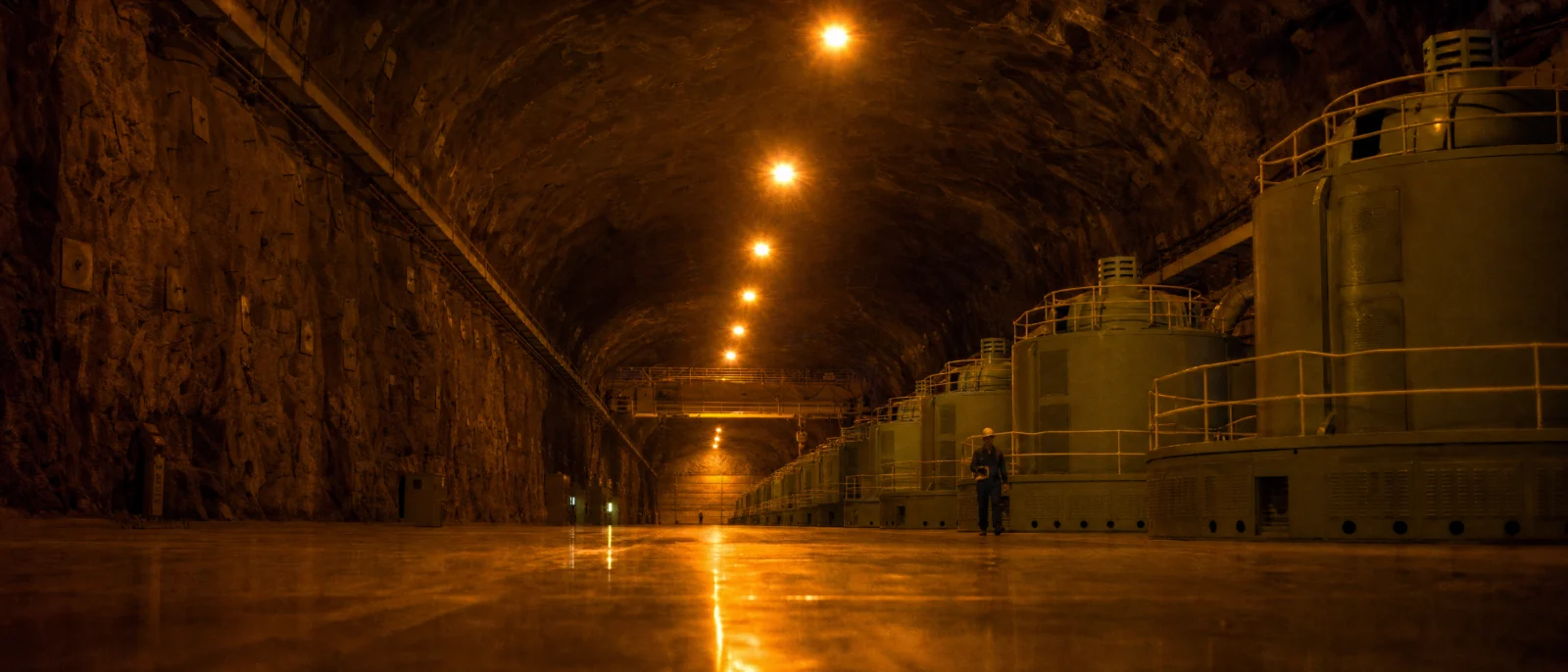
What to notice. Default: a clean, evenly lit hall, the figure centred and readable, a flag on the wall the code added by itself. Controlled: sodium lamps as the only source, one-point perspective down the housings, a wet floor carrying the reflections, the engineer one fortieth of the frame. Same hall, ten times the size.
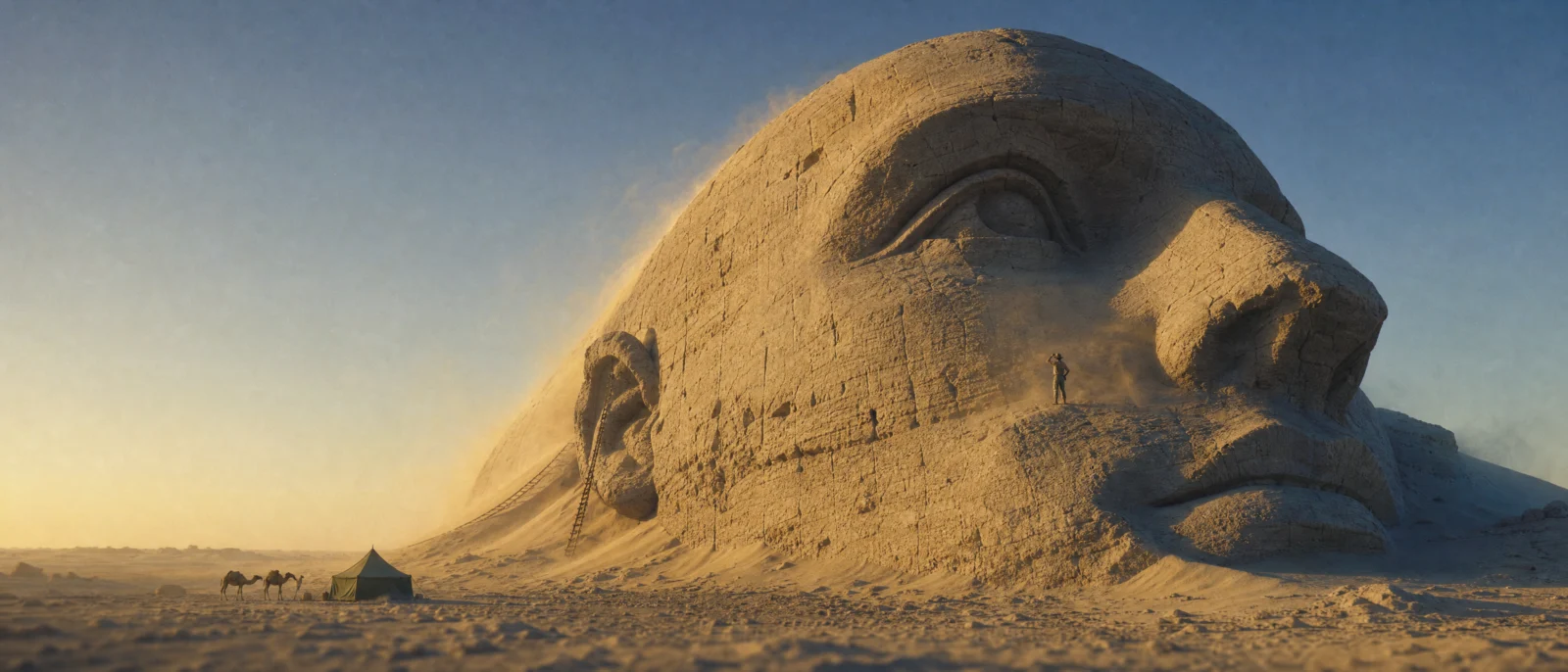
Prompt 6: The Buried Colossus, 21:9
Default:

Controlled:

What to notice. Default: a toppled statue in soft haze, the figure small but the composition flat, a concept-art look. Controlled: a head rising like a hill, tool marks across the sandstone, sand pouring from the ear, the archaeologist standing on the cheekbone with the tent and camels far below. The Rule of One kept the stone obeying the sun.
Principles in play, prompts 4 to 6
- The ruler changes, the rule does not. The tree uses buttress roots and a hand for scale, the hall uses one-point perspective down a row of identical housings, the buried head uses a tent and camels far below.
- Raking light makes texture and texture makes scale. Sodium lamps down a hall, first light across sandstone tool marks: skimming light is what turns a smooth mass into a measurable surface.
- The human is a fleck on a third. A centred, readable figure shrinks the subject; a small figure at the edge of the frame, looking at the thing, makes it enormous.
Common issues and fixes
The figure is too big. The archive likes a readable human. Fix: state the figure as a fraction of the frame’s height and repeat figure larger than stated in DO NOT.
The camera floats. A drone view kills scale because it removes the ground. Fix: camera at ground level in THE SHOT and drone angle in DO NOT.
The colossus looks small because it is smooth. Fix: give THE WORLD a repeating texture, formwork joints, rivet lines, bark plates; repetition is how the eye measures.
Agency and ship names appear. Fix: name the surface they leak onto and ban them, flags, logos, agency markings, ship name.
Next
Page 4 keeps the world completely real and tells one lie inside it. THE ANOMALY CODE.
Section 08
4A | THE ANOMALY CODE (Prompts 1 to 3)

Vol.23 | The Cinema Codes
One lie in a true world. The truer the world, the bigger the lie can be.
What the code actually is
This code is the Rule of One as a sentence. "Documentary photograph" pulls the model toward reportage: available light, real lenses, people who are not posing. "Except one impossible thing" gives it a single permission. The default takes the permission and runs: two or three impossible things, a dreamy grade, people staring in awe. The controlled prompt keeps the anomaly to one, gives it real physics (weight, shadow, wetness, wind), and, most important, makes the people ignore it. Calm witnesses are what sell an impossible image.
Where the control layer bites on this page
THE BLOCKING on this page is about the bystanders: they carry on, they do not point, they do not look at camera. THE RULE OF ONE is written twice: once naming the anomaly, once stating that it obeys gravity, light and weather. COLOUR SCIENCE stays neutral and photographic; a fantasy grade would give the game away.
Why this works: the principles behind THE ANOMALY CODE
- Verisimilitude. The documentary look is a contract with the viewer: normal lens (35 to 50mm), eye height, available light, neutral grade, nothing stylised. The truer the world, the more the one impossible thing is believed.
- The Rule of One, strictly applied. One anomaly against a completely ordinary field reads as a fact. Two anomalies read as a fantasy render. Design calls this contrast: the strange thing only works against the normal thing.
- Physics carry over. The impossible thing must obey the rest of physics: the jet flattens the wheat, the snow has a hard edge at the property line, the moon lights the harbour. Visual effects supervisors call this integration, and it is what sells any effect.
- Bystander blocking. People who do not react normalise the event. Give every extra a job: mowing, reading, loading nets, carrying coffee. This is the deadpan principle, from Magritte to Wes Anderson: calm makes the strange stranger.
- Weight and shadow. Contact shadows, displacement and reflections anchor an object to the world. Without them the anomaly floats like a sticker on a photograph.
- The single accent. One accent colour (a yellow safety line, a red umbrella) guides the eye and gives the documentary frame a designed focal point without breaking its realism.
Settings
Prompt 1: Snow on One House, 3:2
Default:

Controlled:
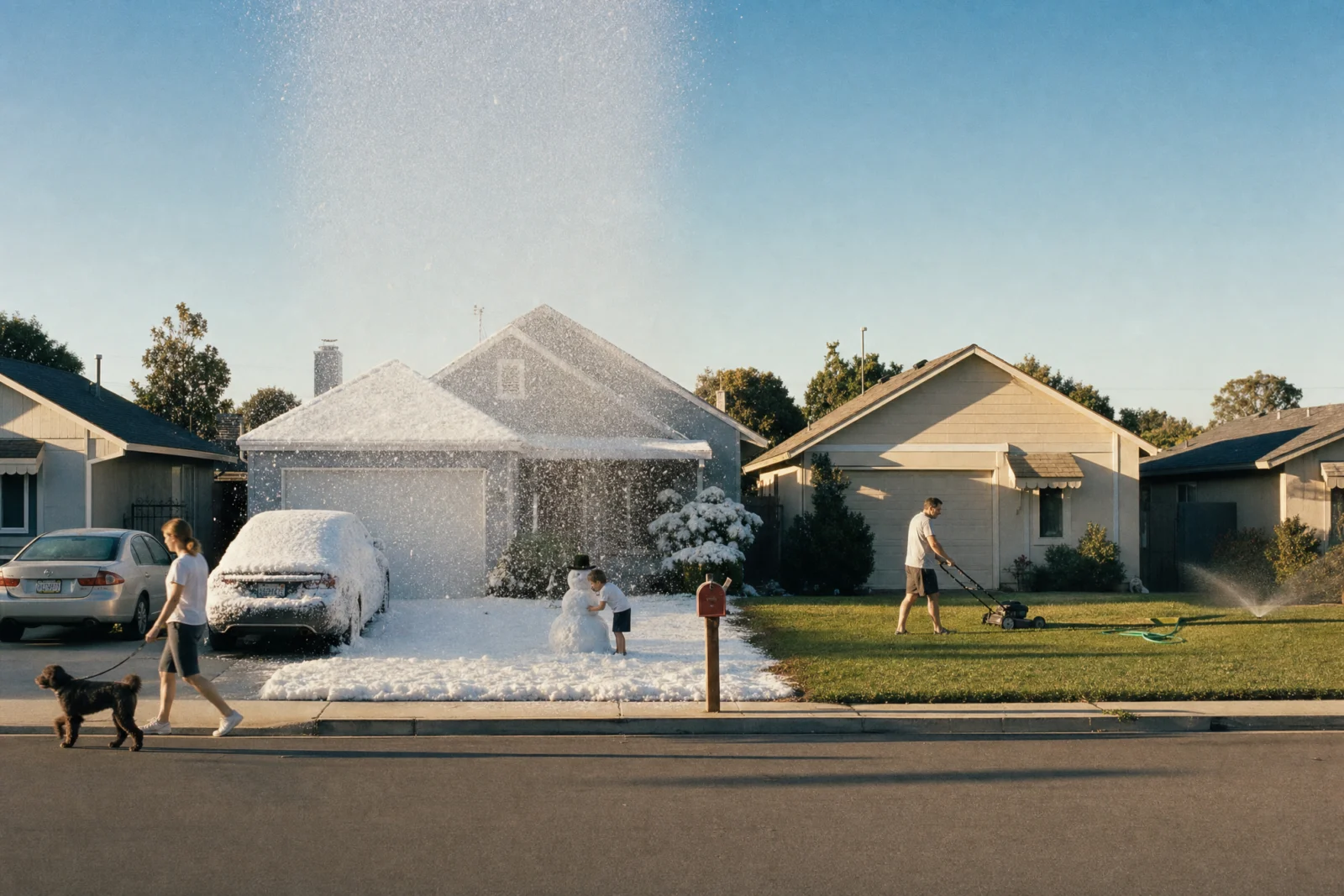
What to notice. Default: it snowed on the whole street, so the anomaly vanished into a normal winter photo. Controlled: a column of snow on one house with a hard edge at the property line, a man mowing next door, a child in a T-shirt building a snowman, a dog walker passing. Nobody looks up; that is what sells it.
Prompt 2: The River Platform, 16:9
Default:
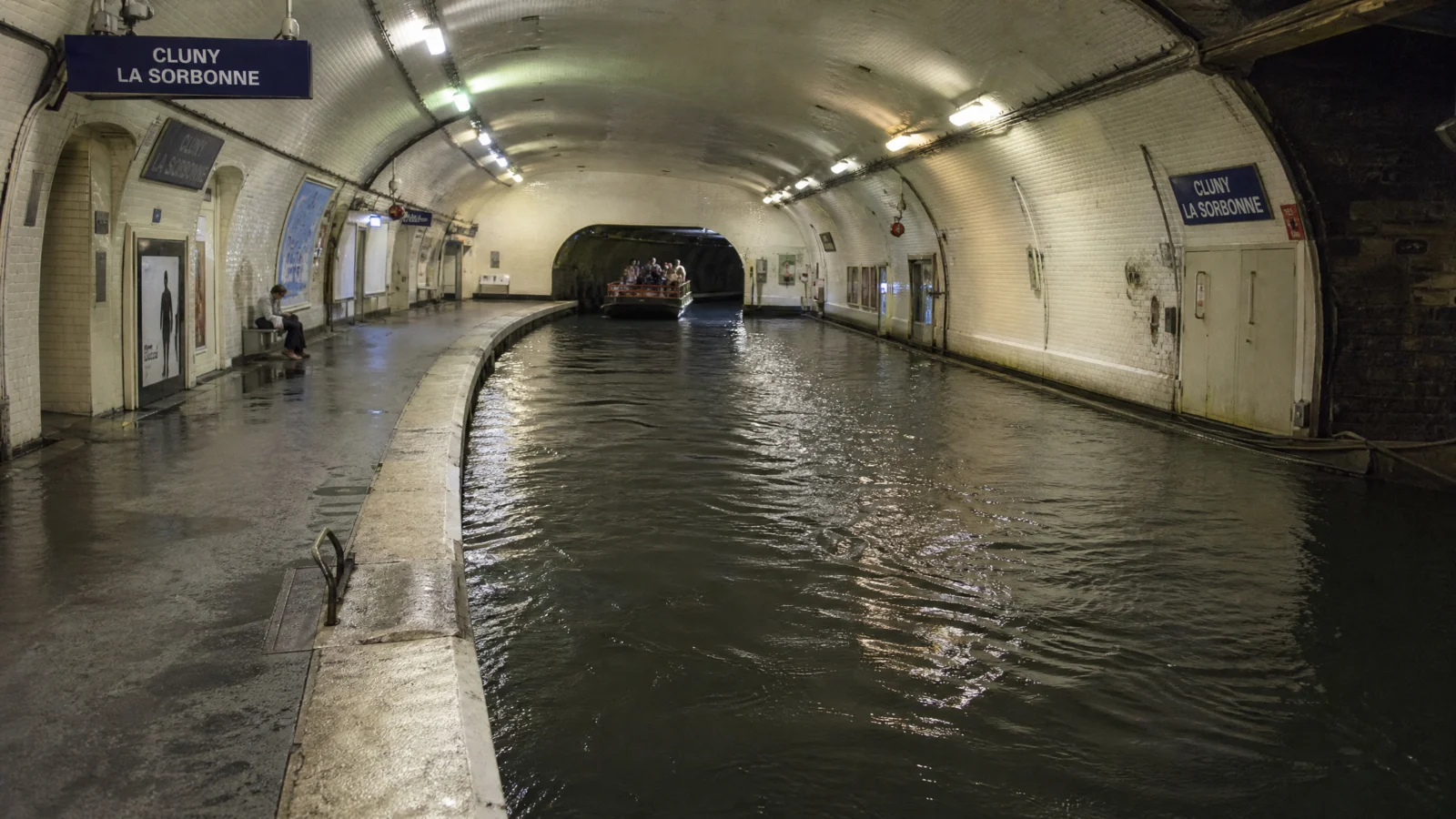
Controlled:
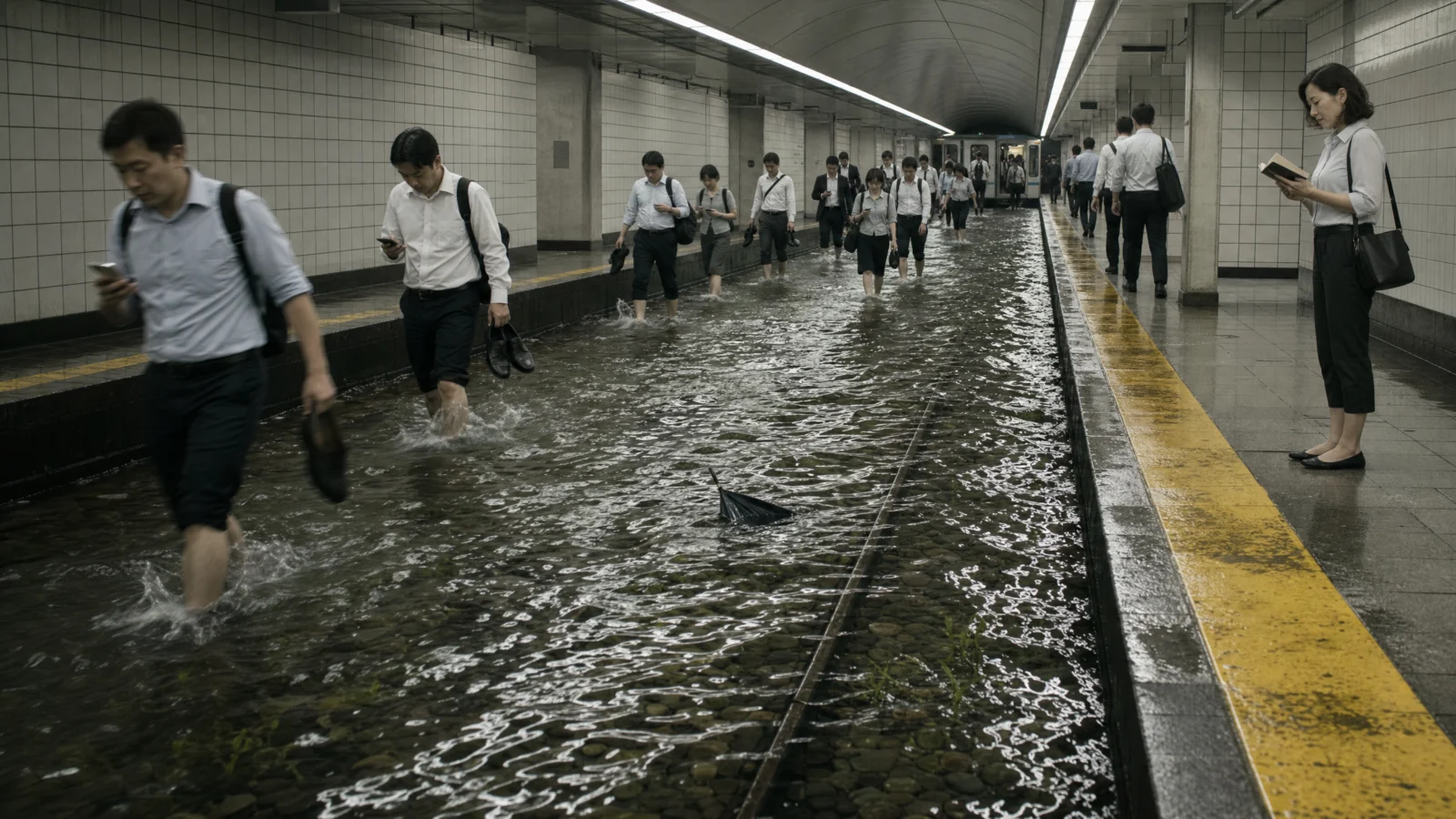
What to notice. Default: a flooded corridor with a real station name on the wall and nobody in it. Controlled: commuters wading knee deep with shoes in hand, a woman reading on the platform edge, the yellow line as the one accent. Calm witnesses turn a flood into a Tuesday.
Prompt 3: Harvest Around the Jet, 21:9
Default:
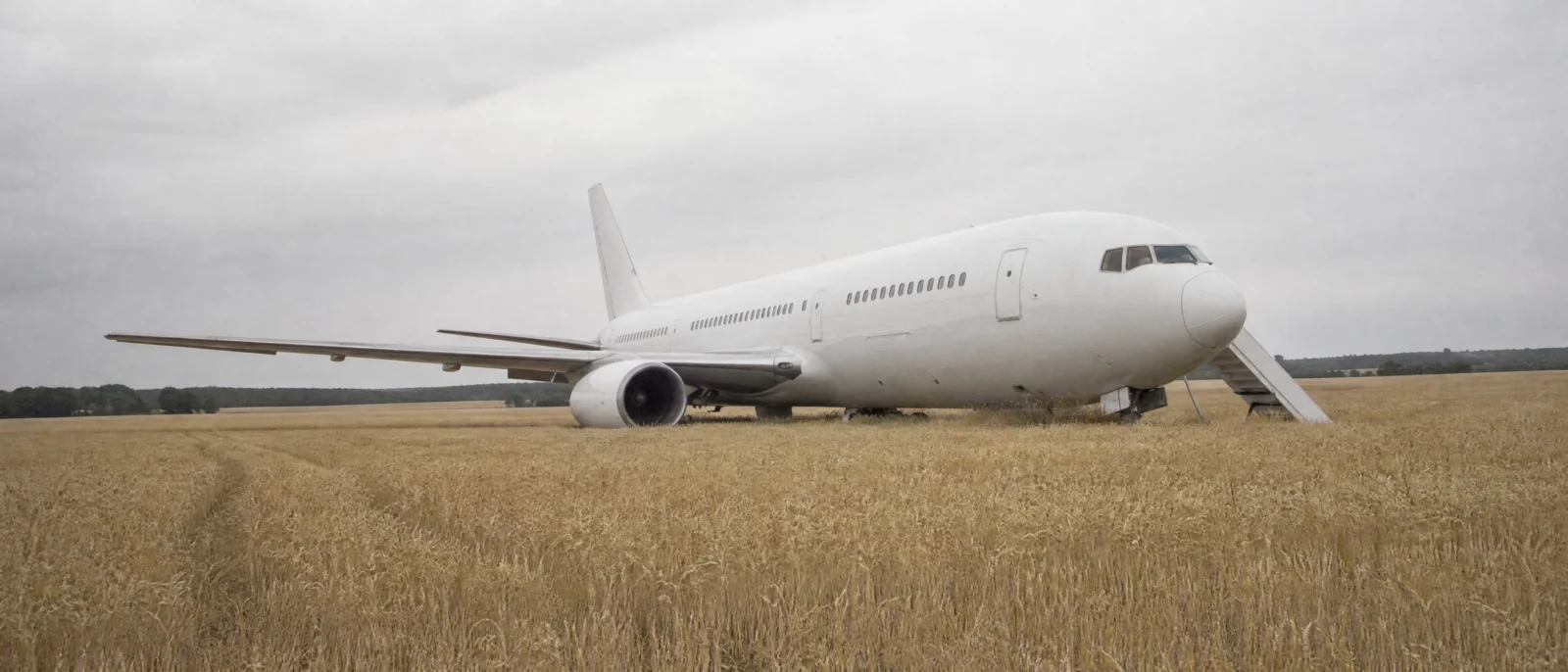
Controlled:

What to notice. The bare code reached for a real news photograph, a real airline’s livery included, so the default shown here carries one safety clause, no airline livery, no logos. Controlled: an unbranded airliner with its weight in the wheat, the combine cutting a lane past the tail, a boy on a hay bale eating an apple. The harvest ignoring the jet is the whole image.
Section 09
4B | THE ANOMALY CODE (Prompts 4 to 6)
Vol.23 | The Cinema Codes
Prompts 4 to 6 of THE ANOMALY CODE. The code, the control layer and the settings are on the previous page.
Prompt 4: Fog in the Nave, 4:5
Default:
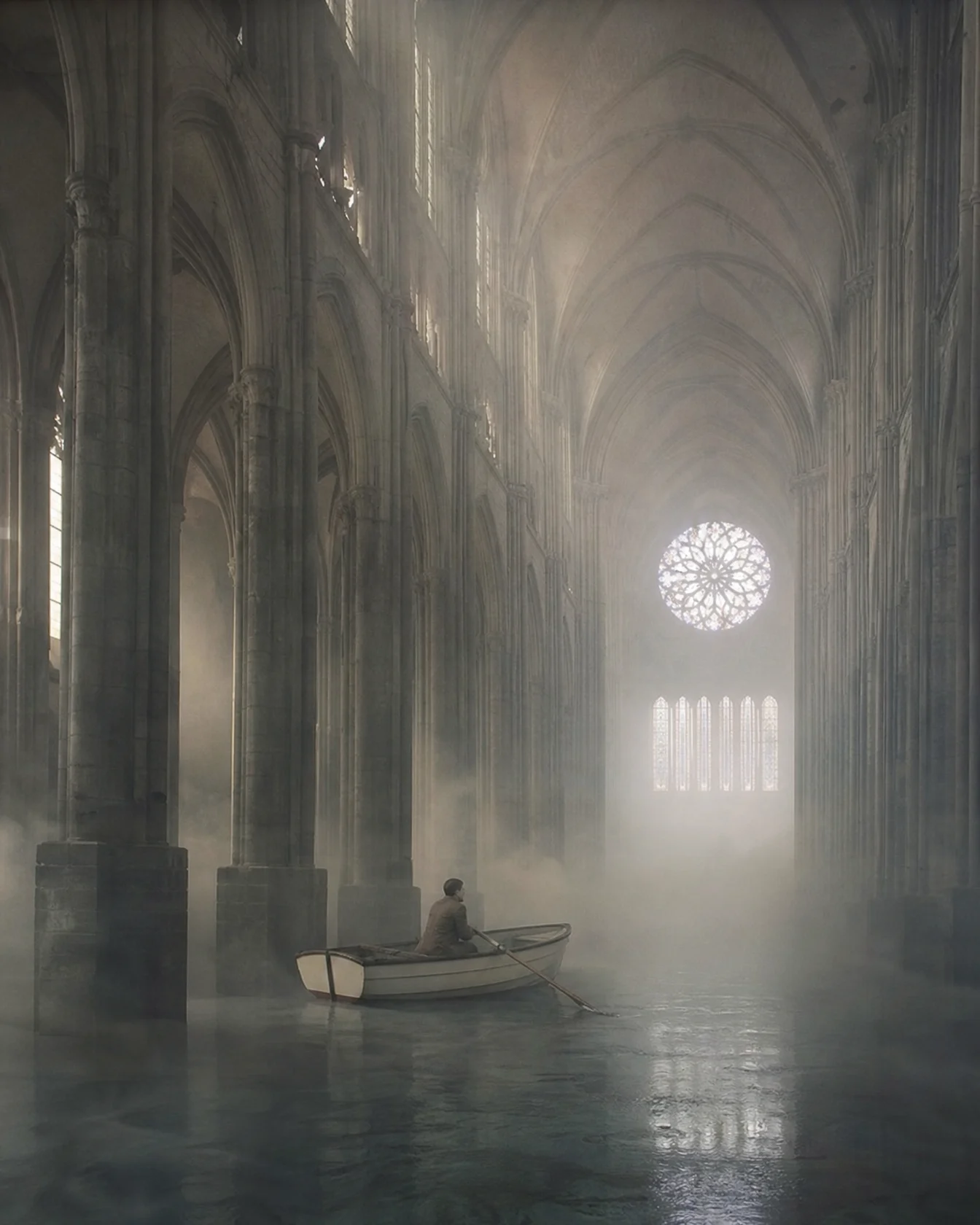
Controlled:

What to notice. Default: fog and a boat in a beautiful empty nave, no people, no service, a screensaver. Controlled: the verger rowing through knee-deep fog, worshippers seated with only shoulders above it, window light landing on the fog surface. One idea, one lie, and the service continues.
Prompt 5: The Moon on the Sea, 16:9
Default:
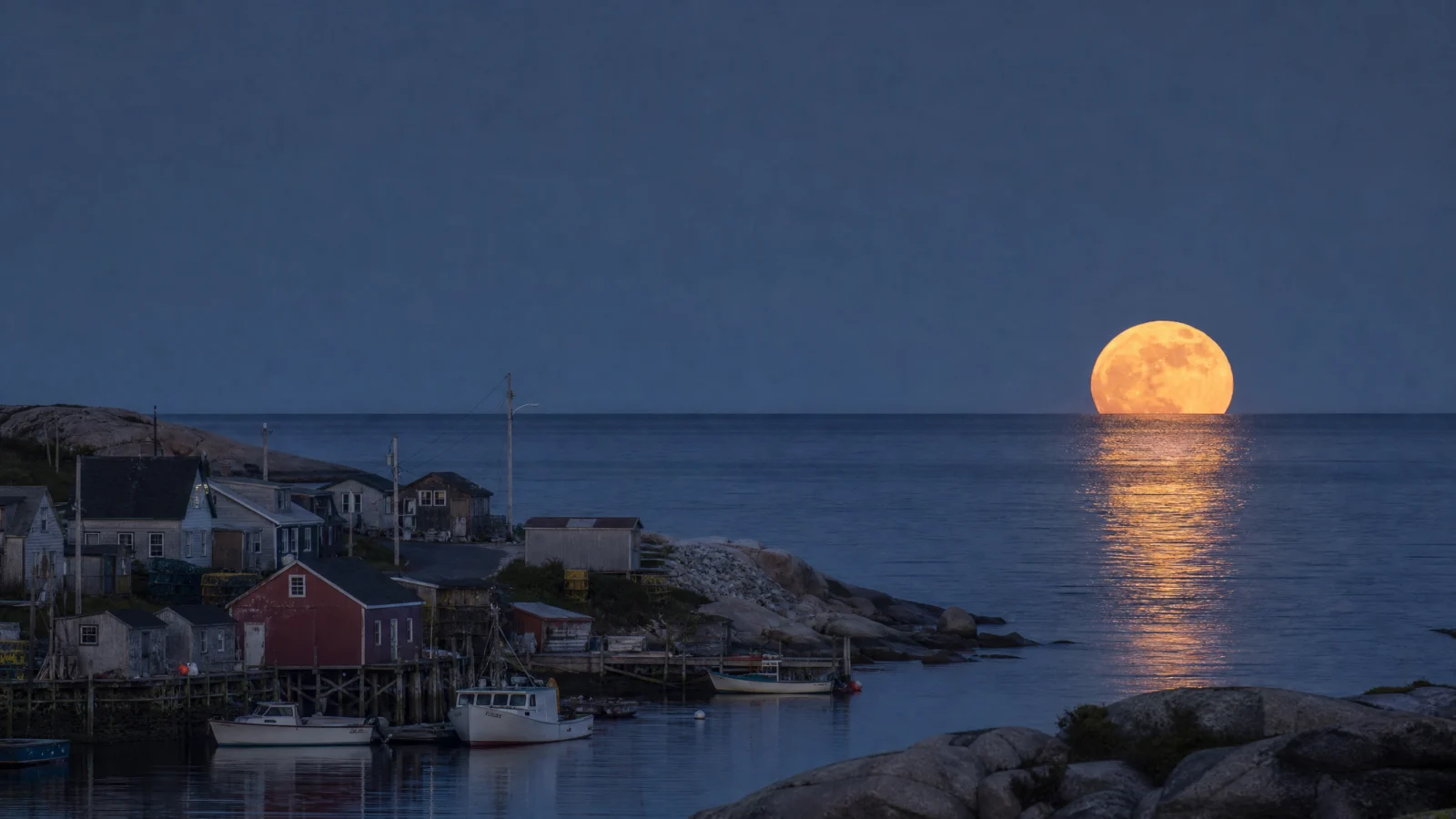
Controlled:
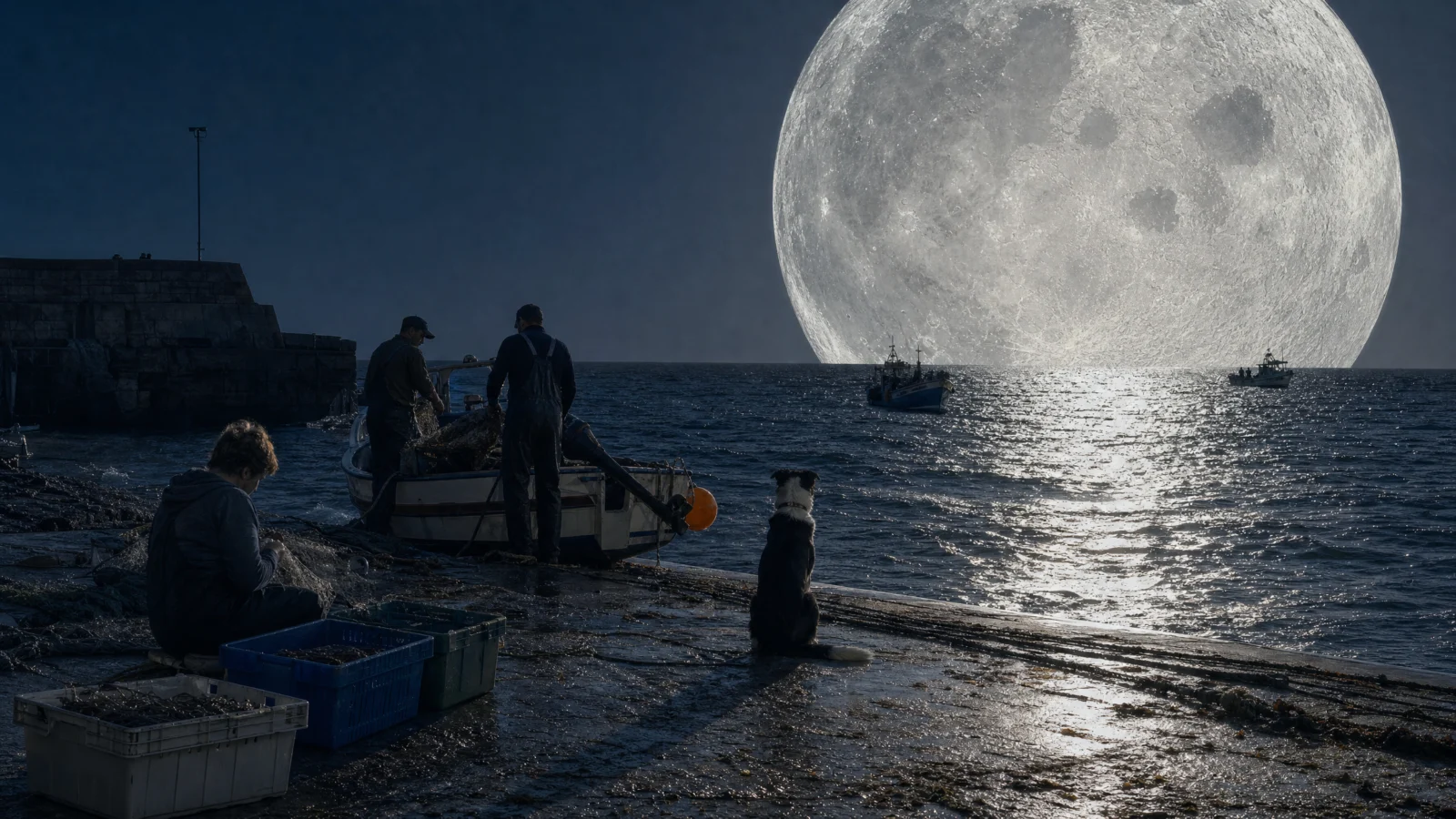
What to notice. Default: a normal orange moonrise, small and far, no anomaly at all; the code played safe. Controlled: the moon touching the water at full size, craters sharp, fishermen loading nets with their backs to it, the dog watching the boats. The moon lights the scene like a real source, which is why it works.
Prompt 6: Rain in the Office, 16:9
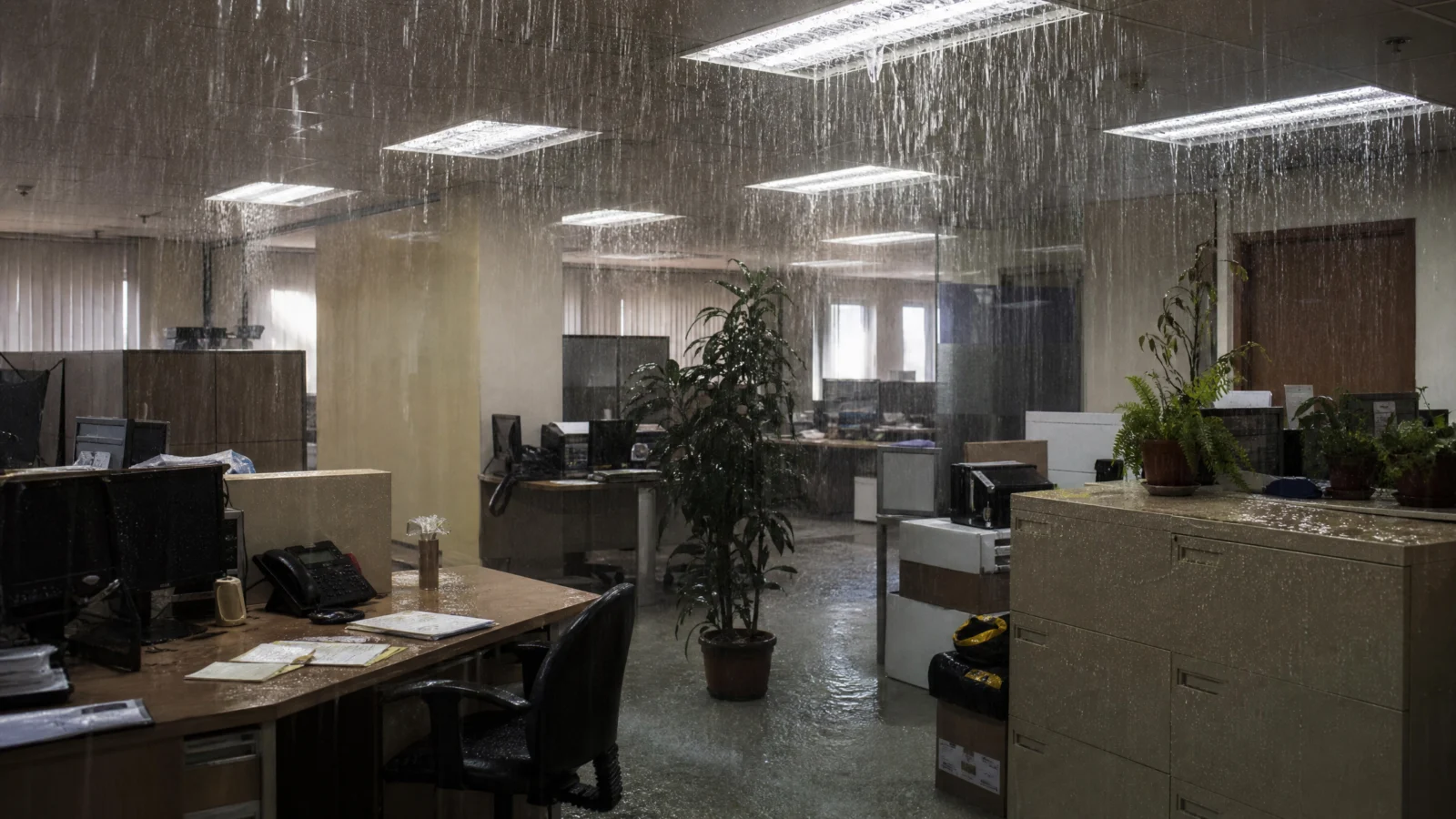
Default:
Controlled:
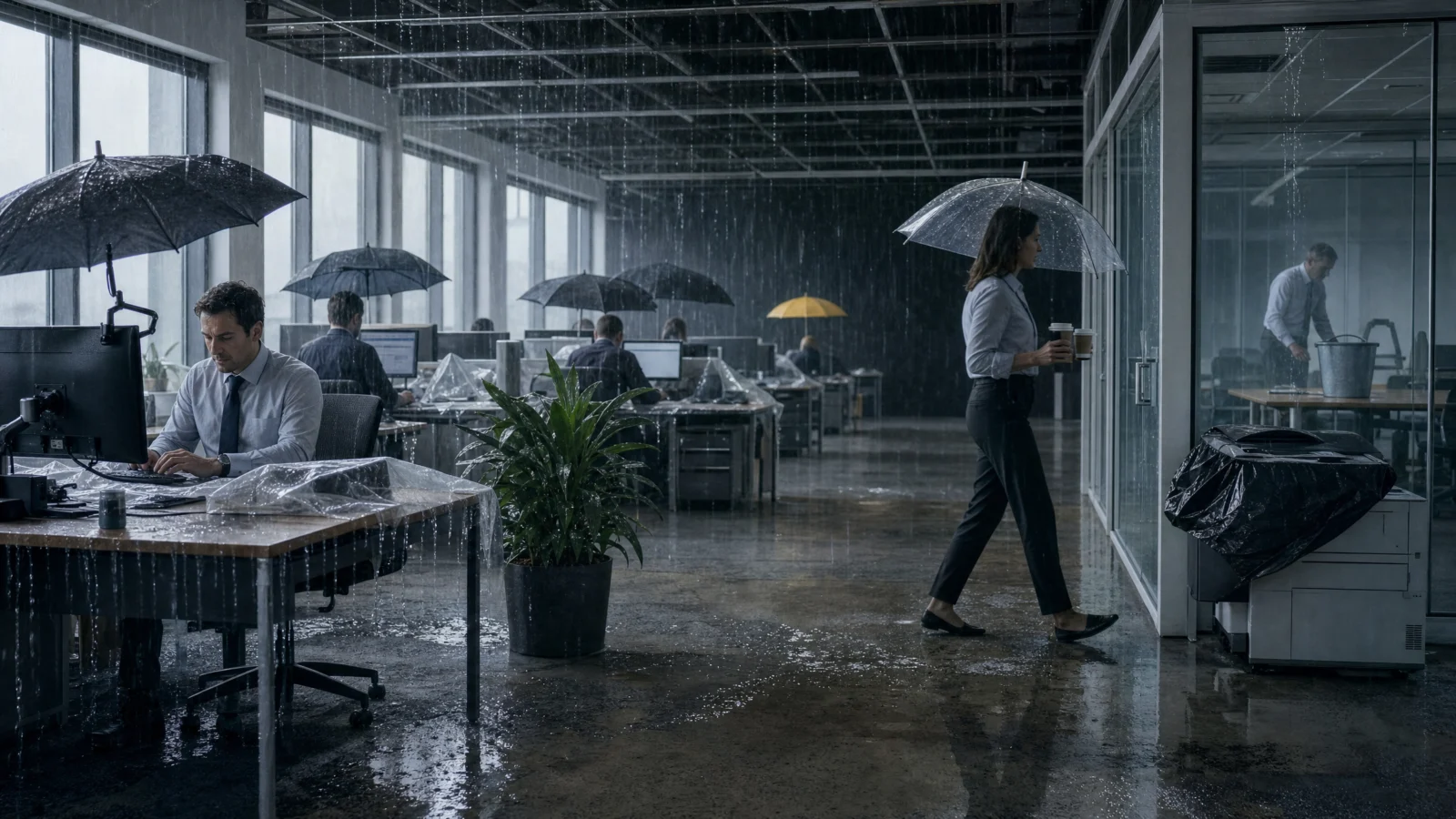
What to notice. Default: rain from the ceiling into an empty office, lights on, nobody home. Controlled: umbrellas clipped to monitor arms, keyboards under plastic, a woman crossing with two coffees, puddles on the carpet, a yellow umbrella far back as the accent. The workers ignoring the weather is the joke and the proof.
Principles in play, prompts 4 to 6
- Every anomaly casts real light or shadow. Window light lands on the fog surface, the moon lights the harbour like a lamp, indoor rain leaves puddles on carpet. Integration is the effect.
- The witnesses keep working. A verger rows, fishermen load nets, a woman carries two coffees. Deadpan blocking is the whole difference between a documentary photograph and a dream sequence.
- One accent in a neutral grade. A yellow umbrella, a red boat, a yellow line: the only designed colour in the frame, placed where the eye should end up.
Common issues and fixes
Two or three anomalies arrive. Permission spreads. Fix: THE RULE OF ONE names the one thing and DO NOT says a second anomaly.
Everyone stares at it. Fix: give every bystander a job in THE BLOCKING and add people pointing or staring to DO NOT; calm witnesses sell it.
The anomaly has no weight. A jet that does not flatten the wheat is a sticker. Fix: write the physics into THE WORLD, ruts, shadows, wet clothing, displaced fog.
The grade drifts dreamy. Fix: COLOUR SCIENCE names a documentary stock and fantasy glow sits in DO NOT.
Next
Page 5 fakes history honestly. THE ARCHIVE CODE: found photographs of events that never happened, on the right film for the year.
Section 10
5A | THE ARCHIVE CODE (Prompts 1 to 3)
Vol.23 | The Cinema Codes
The year chooses the camera. Get the film right and the fiction becomes a document.
What the code actually is
"Found photograph" with a year points the model at the physical history of photography: glass plates, autochromes, press prints, slide film, instant film. The default knows the eras roughly and blends them: a 1899 plate with 1970s colour, a Polaroid with a modern lens look, a sepia filter over everything. The controlled prompt names the exact process for the year, its real flaws (plate scratches, halation, colour shift, print curl), and the invented event, then keeps every person inside the frame calm and period-correct. Everything on this page is fiction and every prompt says so; no real people, no real events, no real logos.
Where the control layer bites on this page
THE TEXTURE is the page’s hero block: the process defines the image. COLOUR SCIENCE names the process and its known cast (albumen brown, autochrome grain in red green and blue, Kodachrome red, Polaroid cyan). THE WORLD must be era-correct in clothing, vehicles and objects. The ratio follows the medium: 4:5 for plates, 3:2 for 35mm, 1:1 for the instant print.
Why this works: the principles behind THE ARCHIVE CODE
- Process defines the picture. Every era had a chemistry: albumen and wet plate in the 1890s, autochrome in the 1910s, Kodachrome in the 1950s, instant film in the 1970s, consumer colour negative in the 1980s. Naming the process gives the model grain, colour bias, dynamic range and print surface in one word.
- Exposure time is behaviour. Long exposures made people stand stiff and blurred anything that moved. Writing the era’s behaviour into THE BLOCKING is what makes a fake plate read as a real one.
- The print is an object. Borders, crop marks, a chipped corner, a slide mount, a fingerprint on an instant print. A photograph is a physical thing; showing its edges is the design cue that says found, not generated.
- Period-correct glass. Old lenses were soft at the edges, vignetted and flared. A modern, sharp corner-to-corner look is the biggest tell on an archive fake, so THE TEXTURE names the softness.
- Colour of the era is research, not taste. Kodachrome reds and cyan skies, autochrome pastel clumps, the magenta cast of a 1980s drugstore print. The palette is historical fact; get it right and the fiction inherits the credibility.
- Unreadable text. Signboards, captions and date stamps stay illegible, blank or exactly as written. Real archive prints rarely carry crisp readable text, and the model will otherwise invent words that date the fake.
Settings
Prompt 1: 1899, the Ice Door, 4:5
Default:

Controlled:
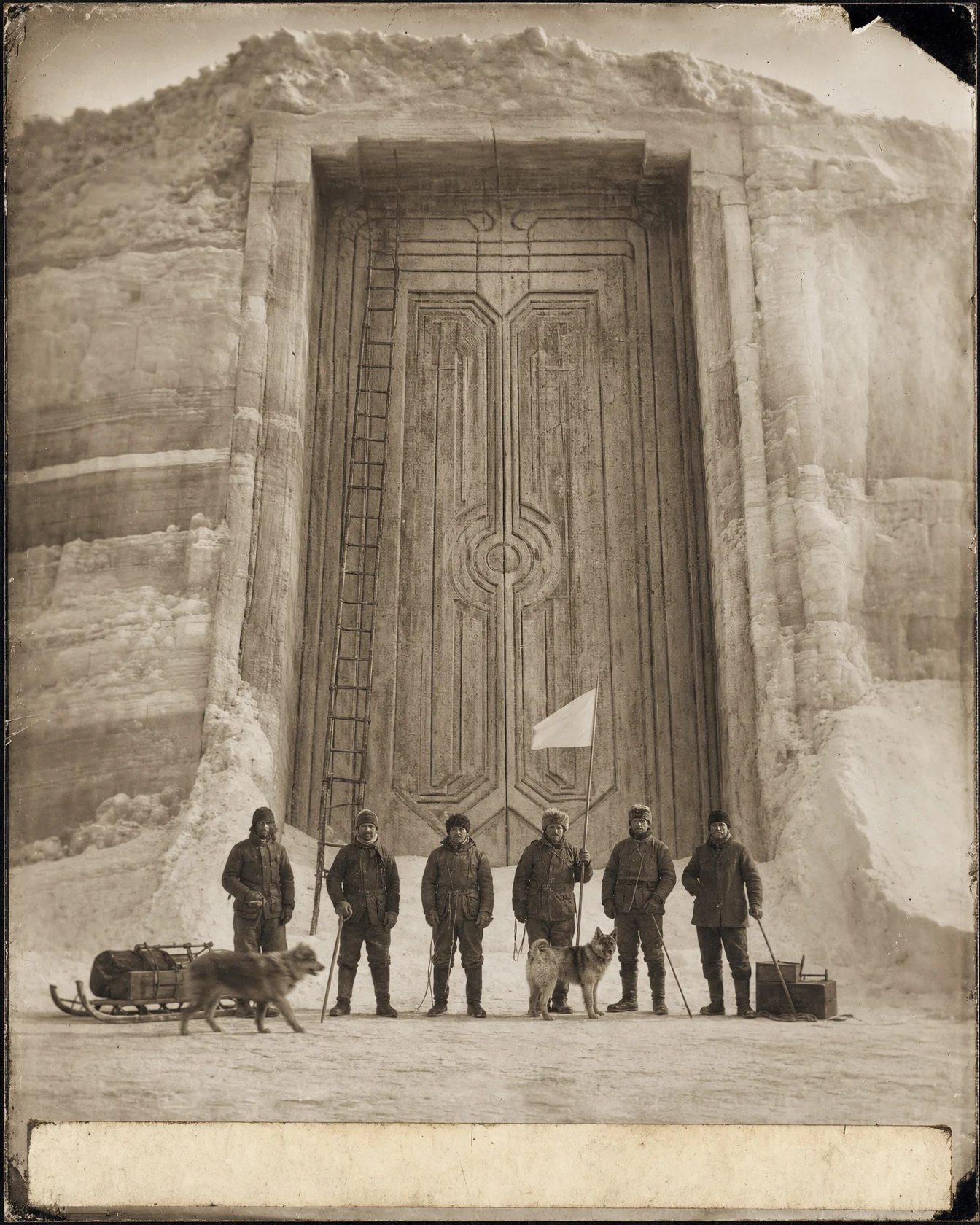
What to notice. Default: sepia, decent figures, but the men face away and the print has no physical life. Controlled: an albumen plate with six men standing stiffly for a long exposure, dogs and a sledge, a blank caption strip and a chipped corner. The process is the image; the door is just the excuse.
Prompt 2: 1936, the Airship over the Shophouses, 3:2
Default:

Controlled:

What to notice. Default: a good airship, palms, a car, and shophouse signboards that turned into readable words. Controlled: the mooring cable to the roof, a rickshaw puller resting, a boy on a bicycle, a policeman directing nothing, unreadable painted characters, a crop mark and a curled edge. Everyone looks up except the camera.
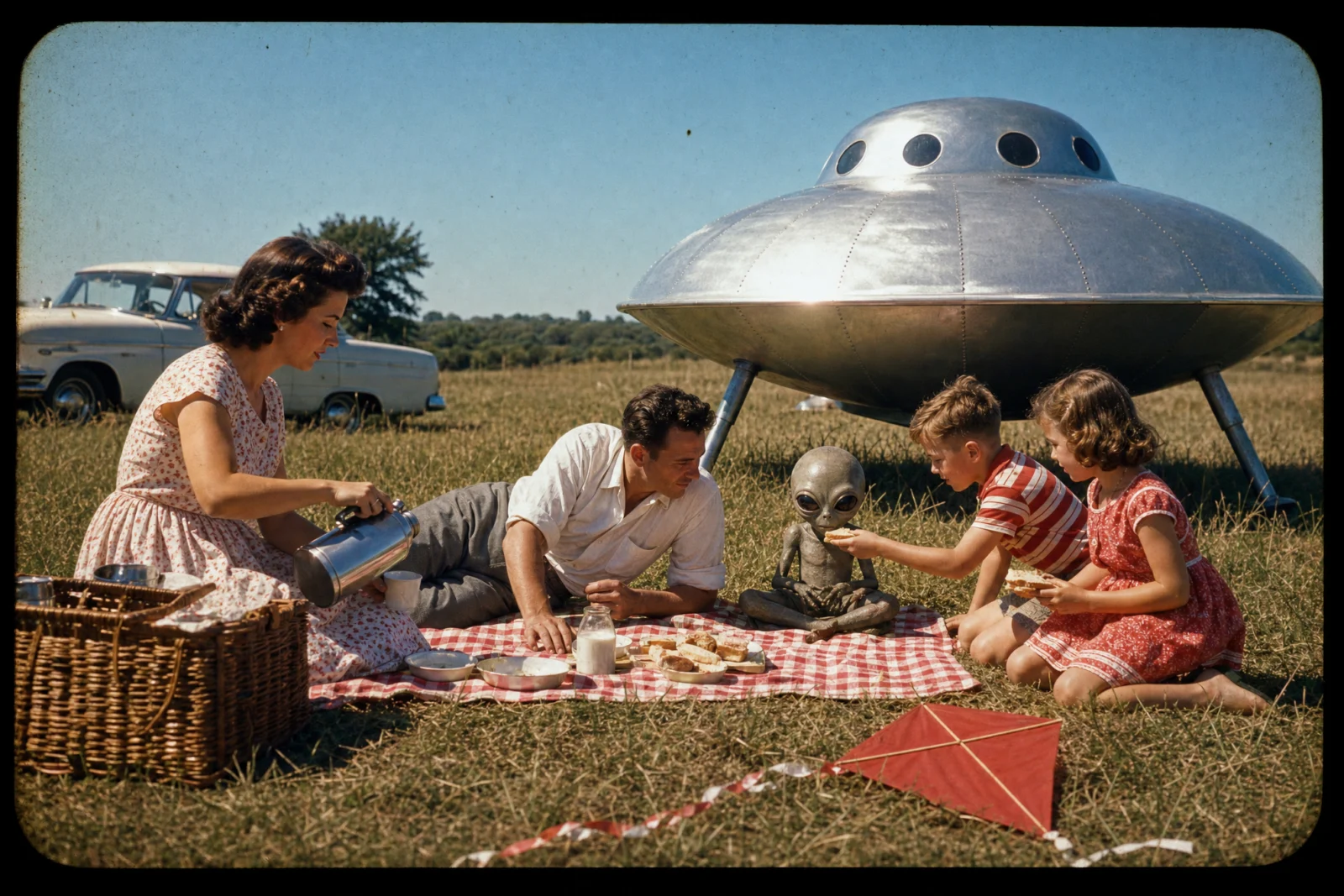
Prompt 3: 1958, the Saucer Picnic, 3:2
Default:
Controlled:

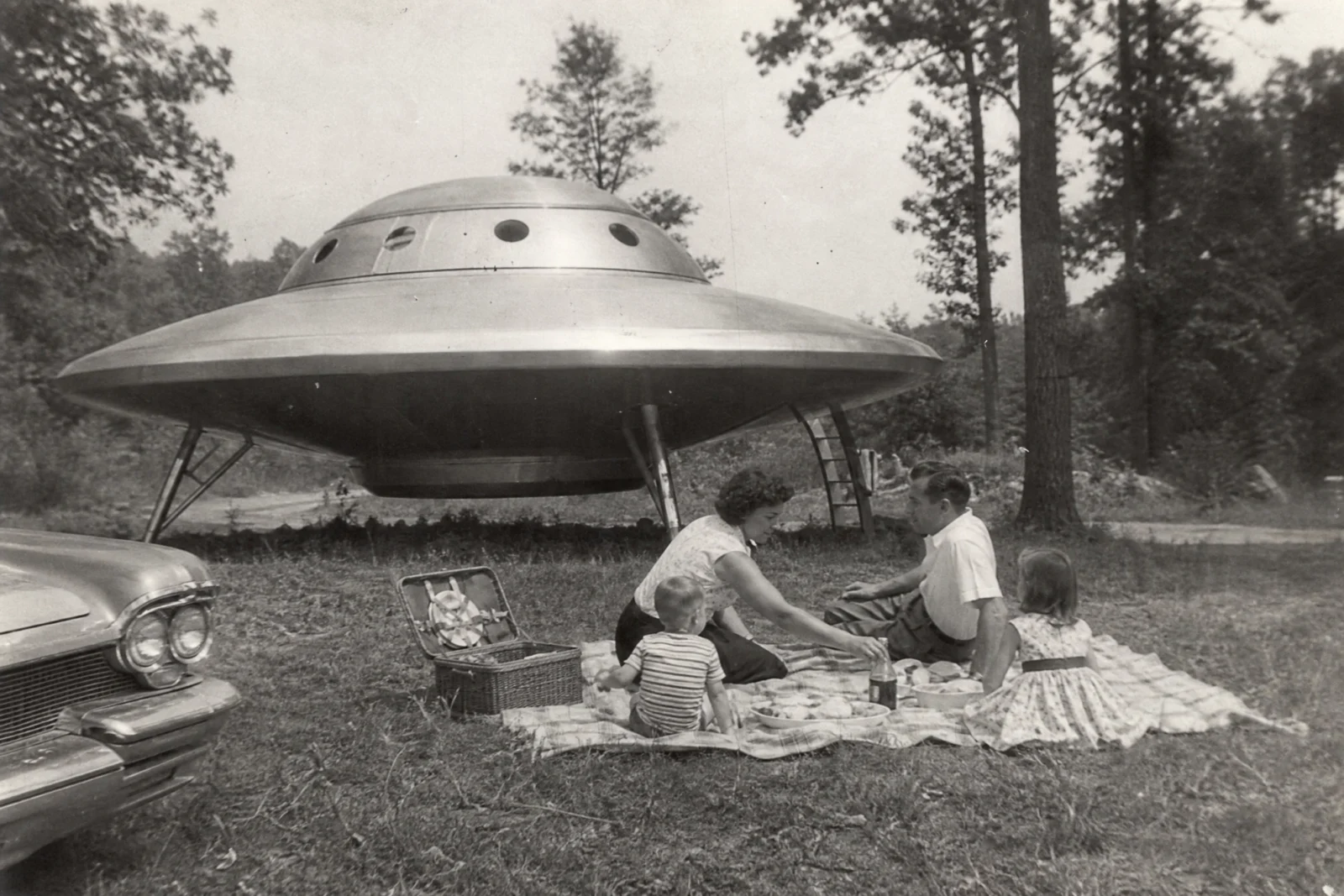
What to notice. Default: 1958 arrived in black and white, the classic era blend; the family faces away from the saucer. Controlled: Kodachrome reds and cyan sky, the slide mount edge, the visitor sitting on the blanket like a guest being fed a sandwich, nobody looking at camera. Name the film stock or the year means nothing.
Section 11
5B | THE ARCHIVE CODE (Prompts 4 to 6)
Vol.23 | The Cinema Codes
Prompts 4 to 6 of THE ARCHIVE CODE. The code, the control layer and the settings are on the previous page.
Prompt 4: 1972, the Kitchen Robot, 1:1
Default:
Controlled:

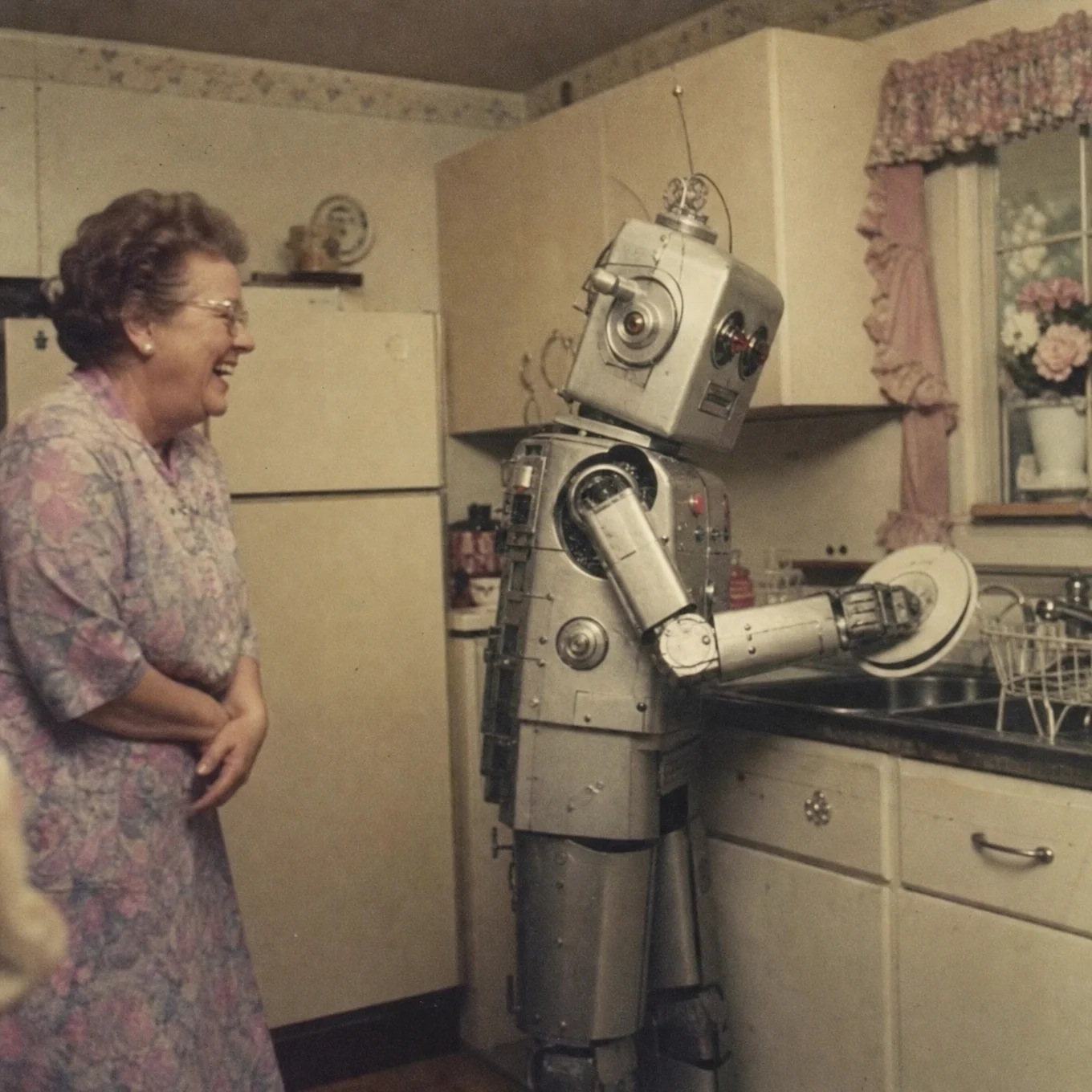
What to notice. Default: a chrome robot with a face, a modern lens look, no print. Controlled: an instant print with the thick bottom border and a fingerprint, on-camera flash, a cream box on casters with rubber-gloved arms and no face, avocado cabinets, a wall phone. The white border you see is the Polaroid itself, not padding; it is part of the picture.
Prompt 5: 1912, the Mechanical Elephant, 4:5
Default:

Controlled:
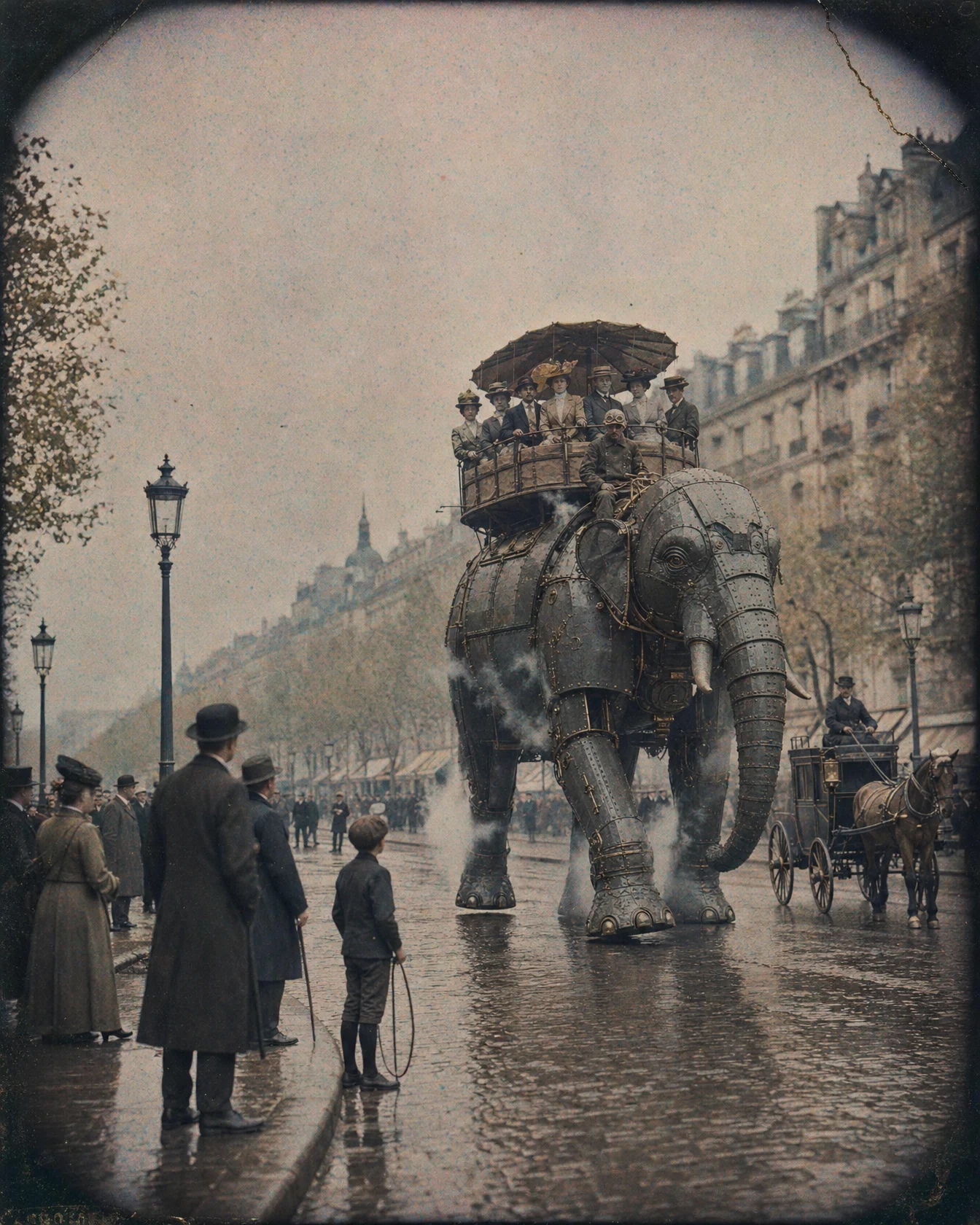
What to notice. Default: a sharp black and white press photo with a readable shop sign, a mechanical elephant but a modern lens. Controlled: autochrome grain clumps, dusty pastel colour, a dark vignette, steam from the joints, eight passengers in Edwardian hats. The 1912 process is what makes the fiction a document.
Prompt 6: 1985, the Elephant at the Bus Stop, 3:2
Default:
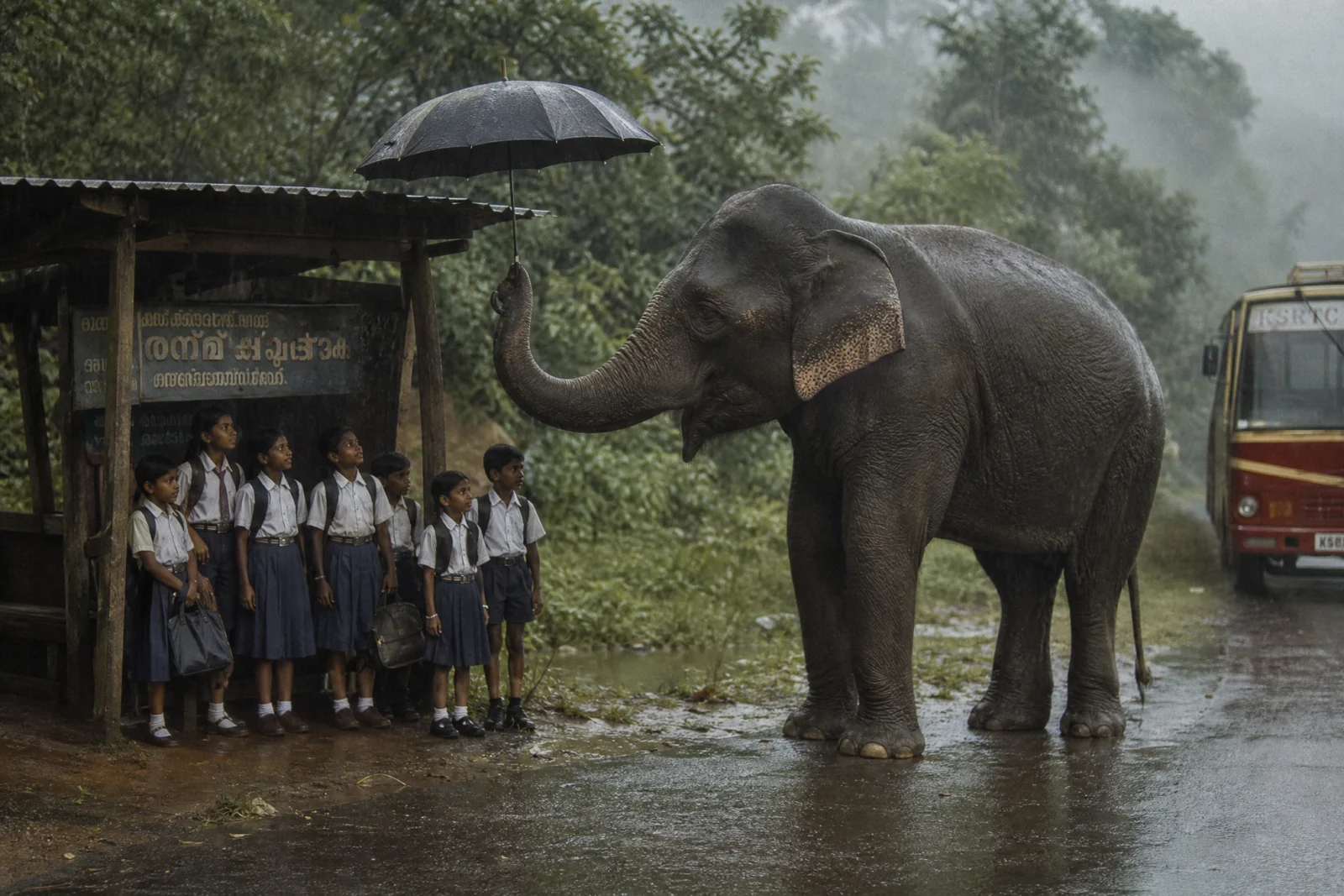
Controlled:
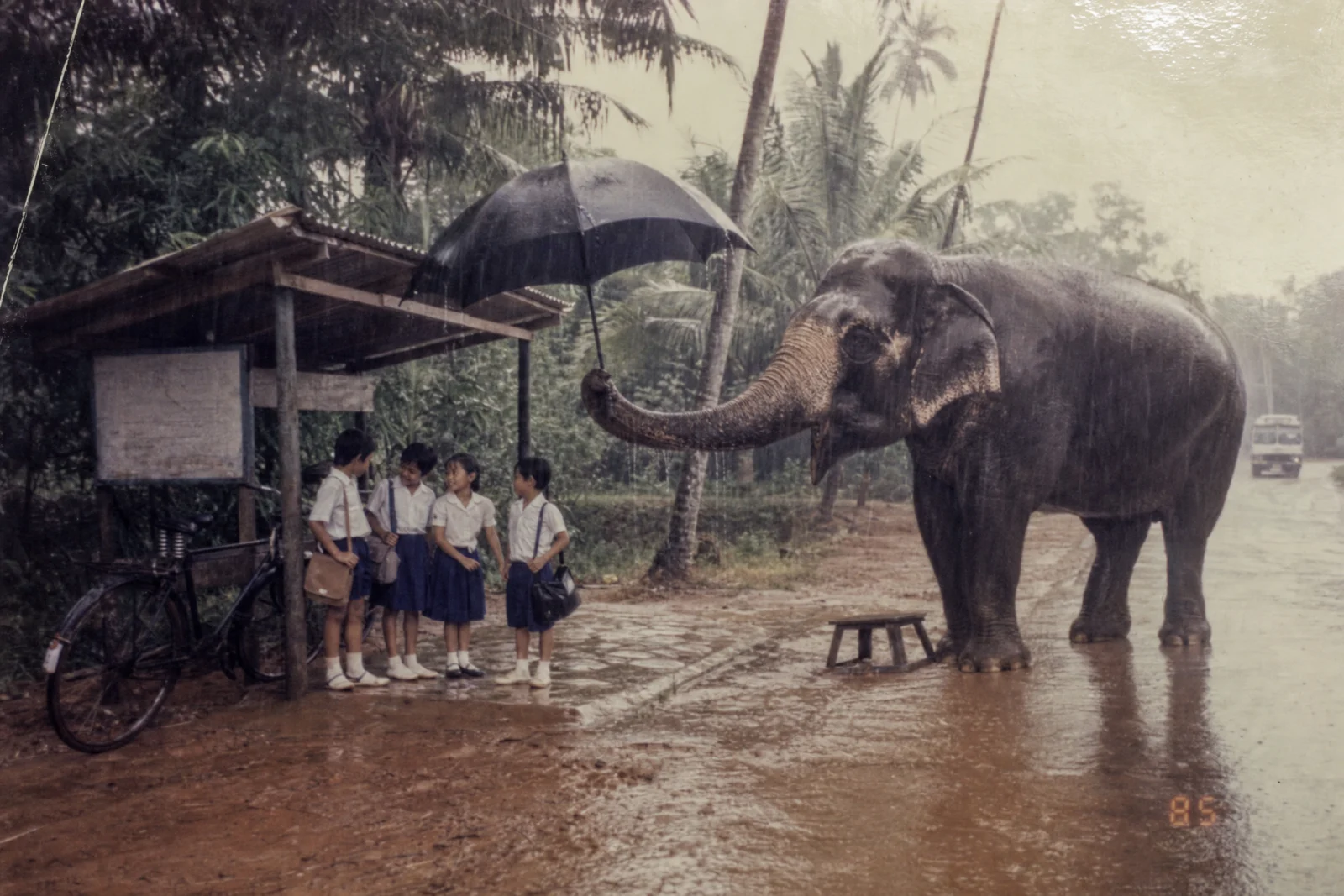
What to notice. Default: a clean modern digital photograph with a bus in frame and painted text on the shelter; the year was ignored. Controlled: consumer negative grain, a magenta cast, the orange date stamp reading only 85, a blank board, a bicycle on a post, the children chatting under the umbrella. Small consumer-film details carry the decade.
Principles in play, prompts 4 to 6
- The process is the style. Instant film, autochrome and 1980s colour negative each bring their own border, grain structure and colour cast. Never add a vintage filter on top; name the chemistry and let it do the work.
- Light and glass belong to the era. The on-camera flash of 1972 and the dark vignette of 1912 optics are facts of the period, written into THE LIGHT and THE TEXTURE rather than left to chance.
- Text discipline dates the fake. A date stamp that reads only what you allow, a blank board, an unreadable shelter sign. Readable invented text is the fastest way to lose a document.
Common issues and fixes
Eras blend. A 1899 plate arrives in colour. Fix: COLOUR SCIENCE names the process and ends with no colour where the process had none.
Real people and real markings appear. Fix: real explorers, real airship markings, national insignia in DO NOT; the archive is full of them.
Modern objects leak in. Fix: modern objects in DO NOT and three era-correct props in THE WORLD; the props anchor the year.
The date stamp invents a full date. Fix: state exactly what the stamp reads; anything more is decoration.
Next
Page 6 shows the story without the event. THE AFTERMATH CODE: the frame after.
Section 12
6A | THE AFTERMATH CODE (Prompts 1 to 3)

Vol.23 | The Cinema Codes
Do not shoot the explosion. Shoot the smoke. The viewer builds the event from what is left.
What the code actually is
"The frame after" is a narrative code. It points the model at aftermath photography: empty stadiums, launch pads still steaming, ballrooms at dawn, the beach after the storm. The default gets the emptiness and forgets the evidence, so the frame is just an empty room. The controlled prompt fills THE WORLD with evidence, the objects that prove what happened minutes ago, puts one exhausted human in it, and keeps the light honest to the hour.
Where the control layer bites on this page
THE WORLD is the page: at least five pieces of evidence per frame, physical and specific. THE BLOCKING places one person who has stopped moving. THE LIGHT is the light of that exact hour, dawn after the final, the hour after liftoff, four in the morning.
Why this works: the principles behind THE AFTERMATH CODE
- Show the smoke, not the explosion. Narrative cinema trusts the viewer to rebuild the event from evidence. The frame after is stronger than the frame during because the audience does the work, and work is engagement.
- Production design as narrative. Five pieces of evidence per frame: a burst ball, a cork on the centre spot, shoes in a lap, one ticket left on the pass. Each object is a sentence. Specificity over quantity, always.
- The hour is the light. Aftermath lives at dawn, at four a.m., at the hour after. Naming the hour gives the cinematographer’s lighting plan for free: low raking sun, one string of fairy lights, heat lamps in a dark kitchen.
- Stillness and the survivor. One person who has stopped moving (a groundskeeper, a sleeping bridesmaid, a cook on the floor) gives scale, emotion and a place for the eye to rest. Small, on a third, never centred.
- Absence is a directing instruction. The model wants to shoot the event. Naming what must be absent in DO NOT (the rocket, the crowd, the guests) is the same as clearing a set before the shot.
- A quiet grade. Washed, low-saturation colour with one accent (confetti, a blue boat) matches the emotional register. A loud grade fights the calm and the calm is the story.
Settings
Prompt 1: The Morning After the Final, 21:9
Default:
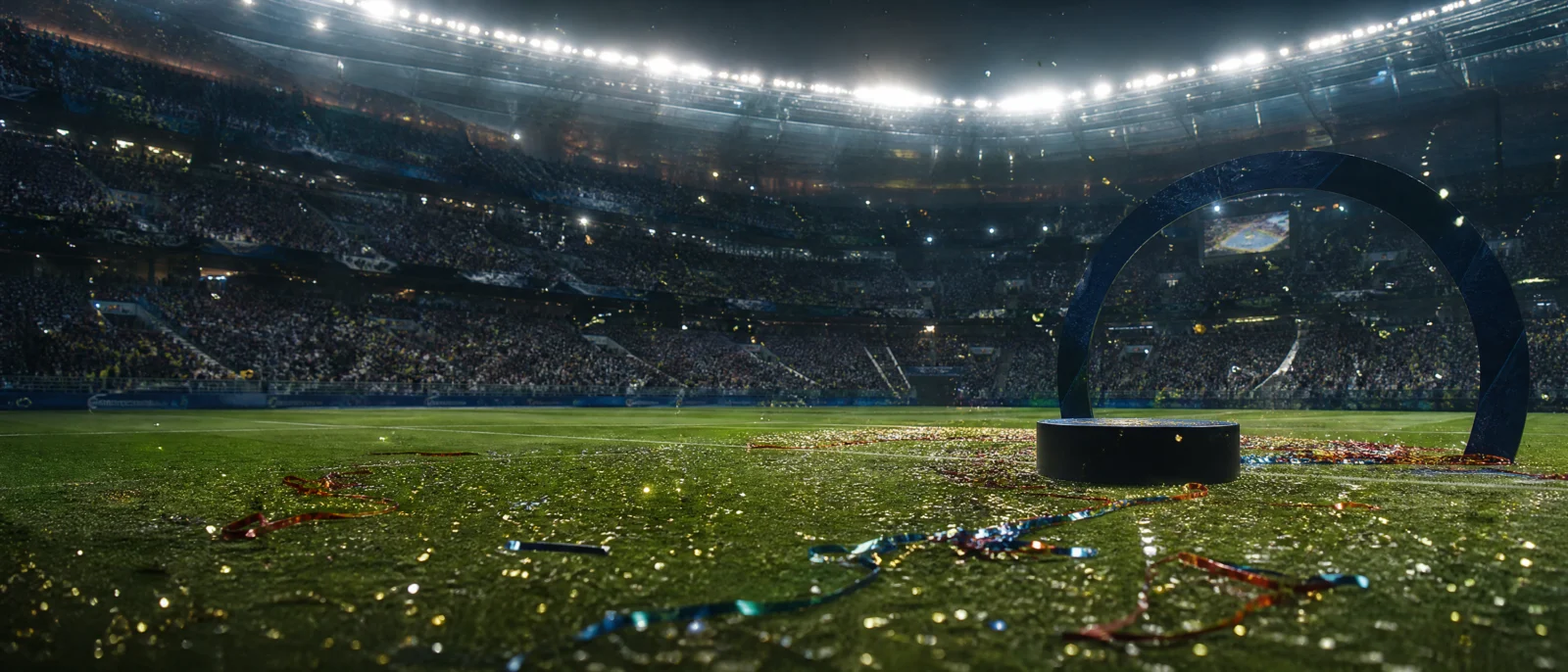
Controlled:

What to notice. The bare code returned a famous real final with recognisable players and crowds, the opposite of aftermath, so the default shown here carries one safety clause, no real players, no real teams, no recognisable faces. Controlled: dawn light across the confetti, the goal posts’ long shadows, one groundskeeper with a broom, a burst ball and a cork on the centre spot. The evidence tells the story.
Prompt 2: One Hour After Liftoff, 3:2
Default:

Controlled:
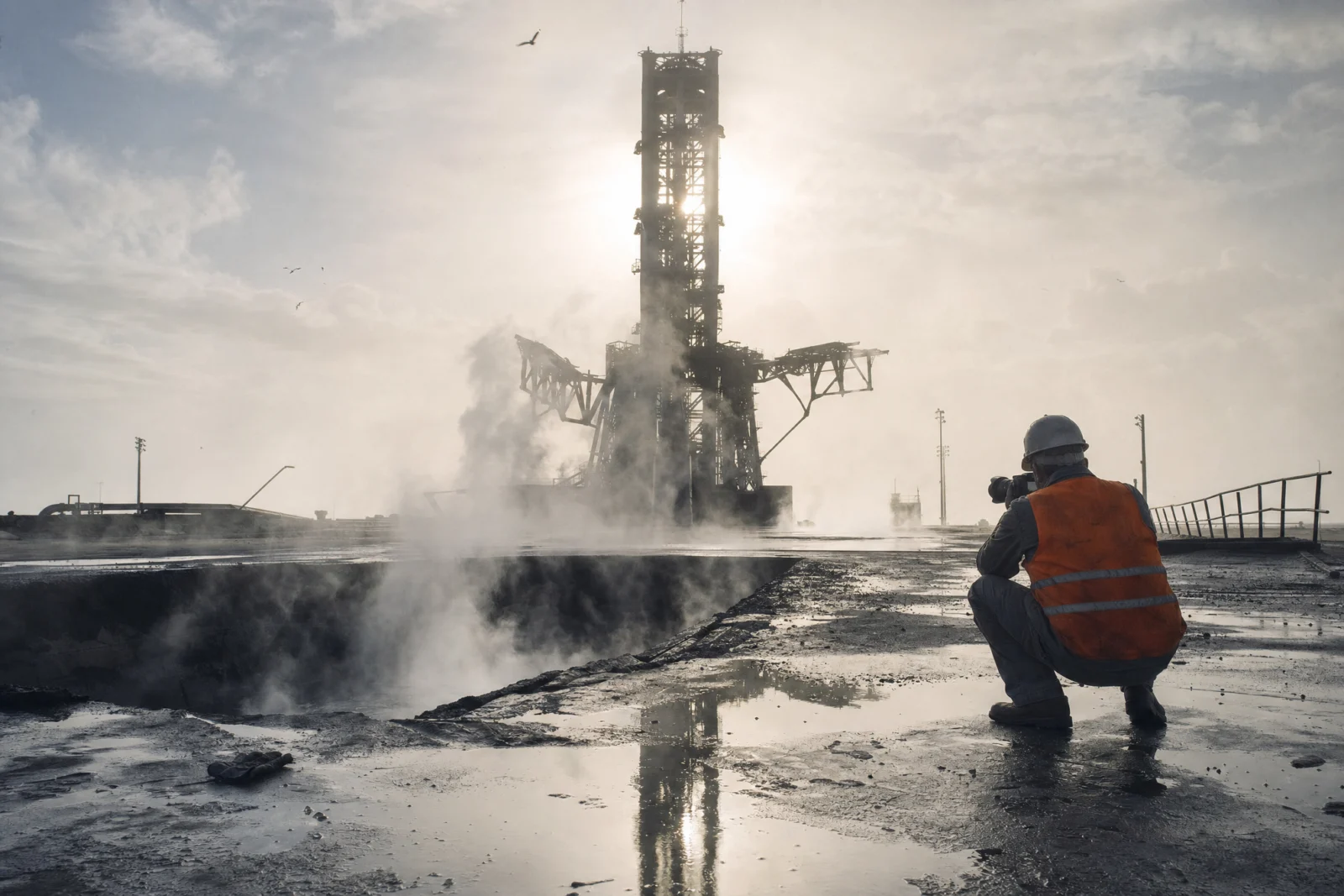
What to notice. Default: the rocket lifting off in full flame, the event itself; the code ignored the word after. Controlled: steam still rising from the trench, scorched concrete, the umbilical arms swung open on an empty tower, a technician photographing the burn, the rocket gone. Name the thing that must be absent in DO NOT.
Prompt 3: Four A.M., the Wedding Hall, 16:9
Default:

Controlled:
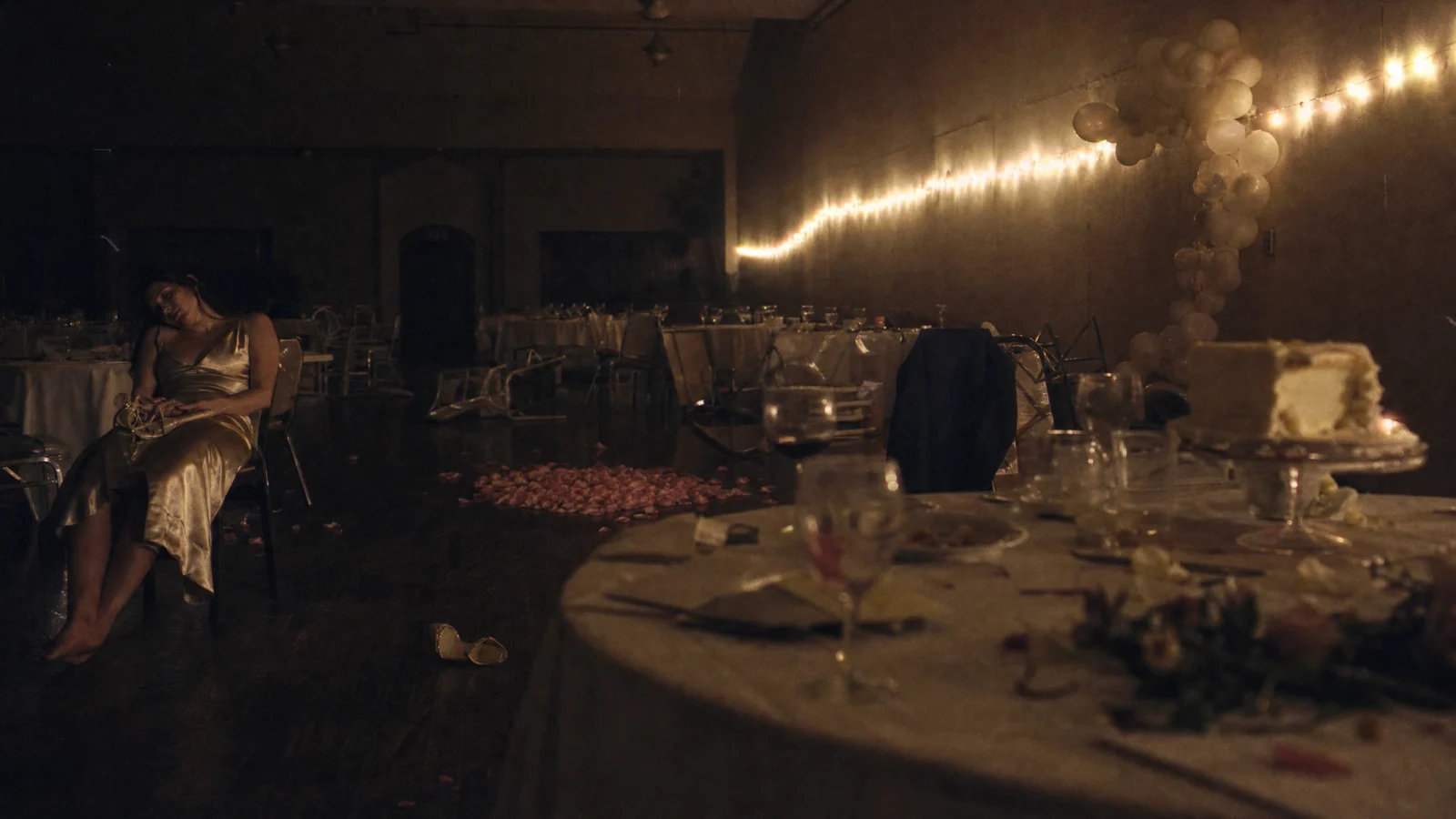
What to notice. Default: every light on, tables set, petals on the floor, no person, a venue photo after cleanup. Controlled: one string of fairy lights, the bridesmaid asleep with her shoes in her lap, a jacket on a chair, cake half eaten, glasses with lipstick. Four in the morning is a light, not a caption.
Section 13
6B | THE AFTERMATH CODE (Prompts 4 to 6)
Vol.23 | The Cinema Codes
Prompts 4 to 6 of THE AFTERMATH CODE. The code, the control layer and the settings are on the previous page.
Prompt 4: After Saturday Service, 3:2
Default:

Controlled:

What to notice. Default: a tidy kitchen with stacked plates, fluorescents on, no cooks, no exhaustion. Controlled: heat lamps as the only light, three cooks on the floor against the lowboy, family meal in a hotel pan, the pass wiped except for one ticket. The people who stopped moving are the aftermath.
Prompt 5: The Morning After the Typhoon, 16:9
Default:
Controlled:

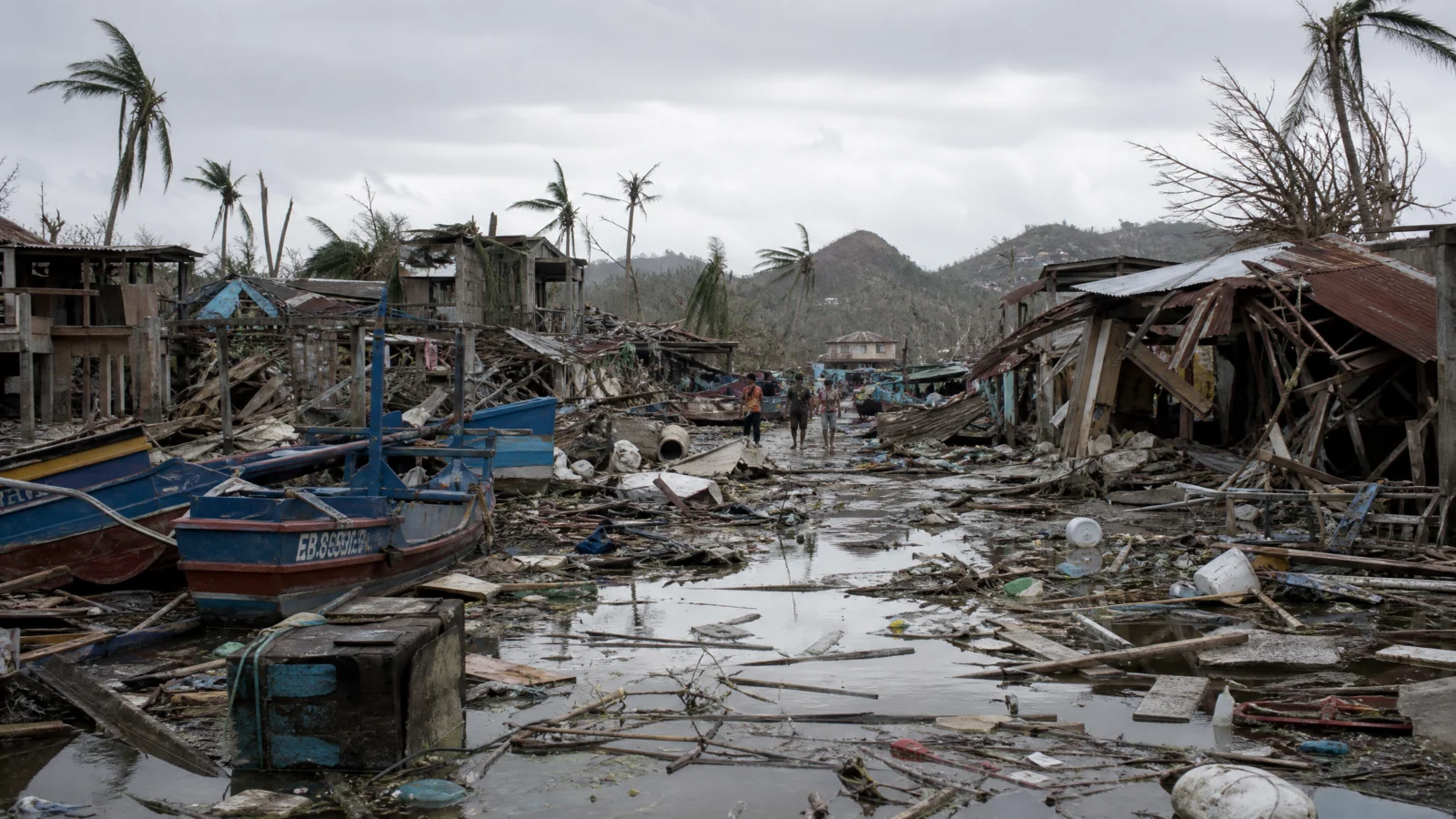
What to notice. Default: a destroyed village under a heavy sky, boats and debris everywhere, too much event and no single story. Controlled: a calm sea, washed sunlight, a blue boat wedged in the fork of a tree, one fisherman with his hands on his hips and a dog beside him. One piece of evidence, framed, beats a hundred.
Prompt 6: After the Last Exam, 4:3
Default:
Controlled:

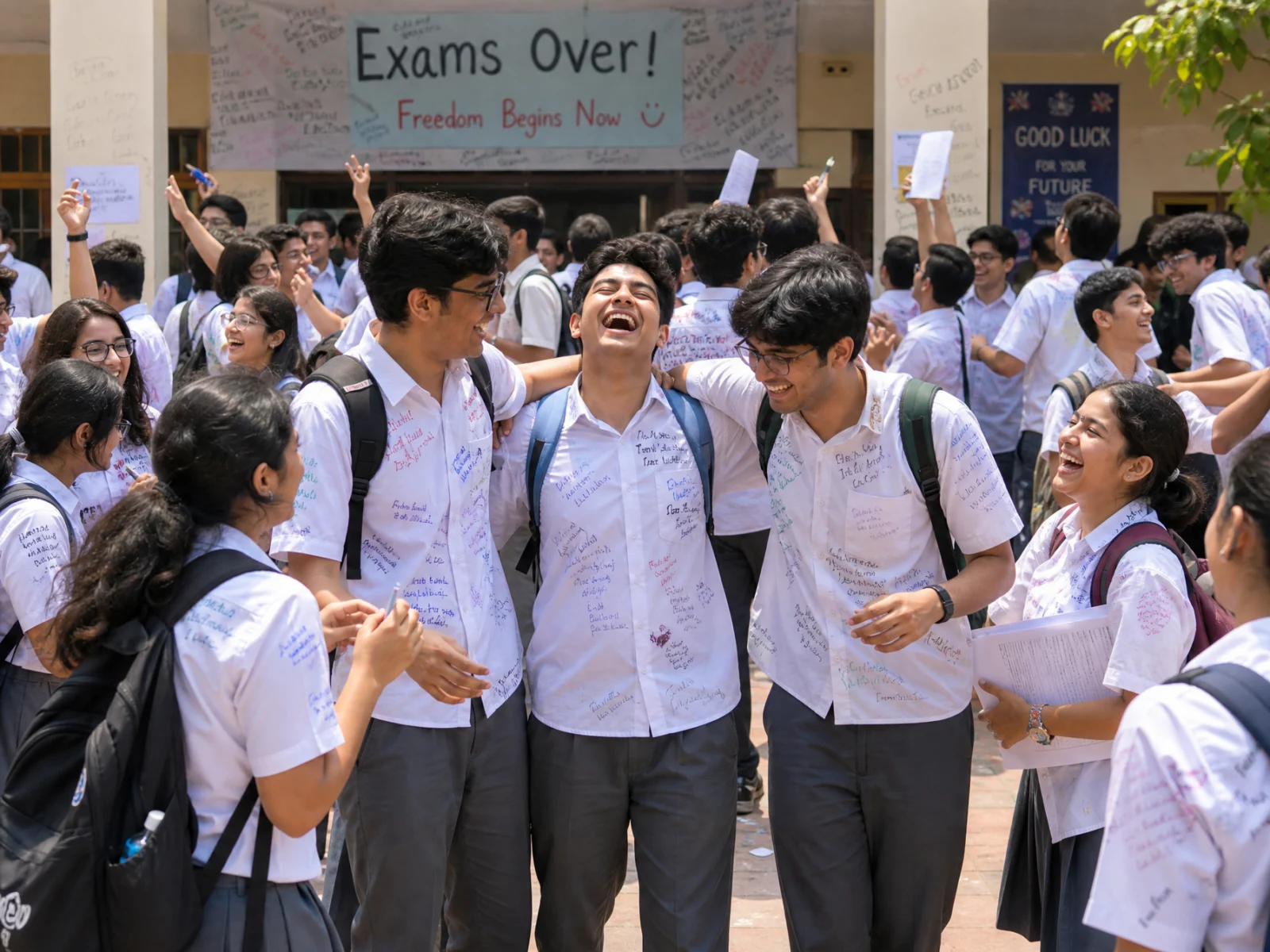
What to notice. Default: a courtyard full of celebrating students under a banner with readable text; the code shot the party, not the frame after it. Controlled: one student asleep on his desk, late sun through the windows, a fallen chair, the board wiped except for one doodle. The empty room with evidence is the code working.
Principles in play, prompts 4 to 6
- The hour is the lighting plan. Heat lamps after service, washed sun the morning after a storm, late classroom light after the last exam. Name the time and the cinematographer’s light comes with it.
- Exhaustion is blocking. Cooks on the floor, a fisherman with his hands on his hips, a student asleep at his desk. Bodies that have stopped moving read as aftermath without a caption.
- One piece of evidence, framed. A boat in the fork of a tree, one ticket on the pass, one doodle left on the board. Specificity beats a frame full of debris every time.
Common issues and fixes
The room is just empty. Fix: THE WORLD lists at least five pieces of evidence; the evidence is the story.
The event sneaks back in. Crowds, the rocket, the guests. Fix: name them in DO NOT; the point of the code is their absence.
The light is generic. Fix: THE LIGHT names the hour, dawn, one hour later, four in the morning, and the one source that hour allows.
Tickets and papers grow text. Fix: readable text in DO NOT; the eye does not need to read them to believe them.
Next
That is the vault. Go back to page 1 and shoot your own film: pick a title that does not exist, run the six codes on it, and post the frame that makes people ask what it is called.