
Section 01
The Slate
GPT Image 2 draws what looks right. When right and looks right part company, it chooses looks. This vault is the six places that happens to a working creative, with the proof on every page and the chain that fixes it.

The thesis in two images

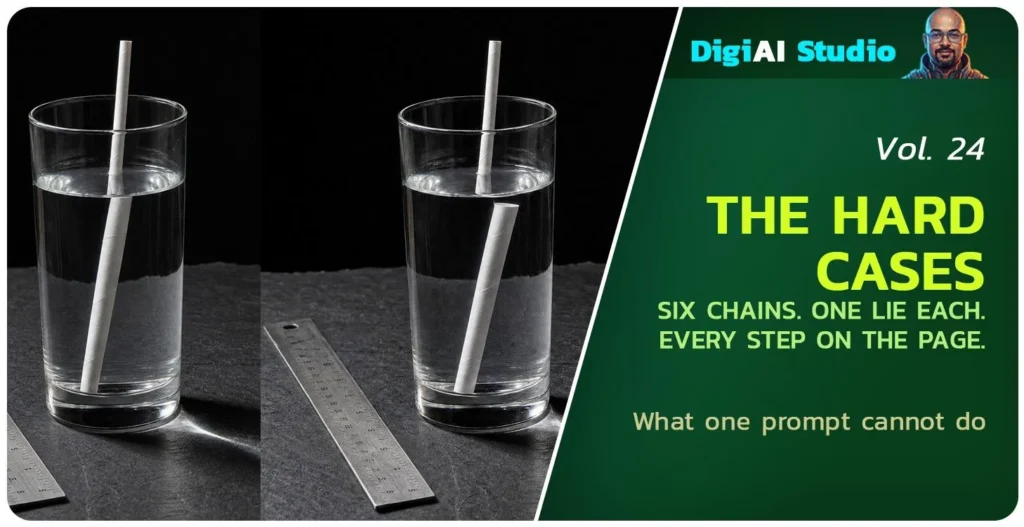
Generated at high quality with "exact refraction" written in the prompt. The straw runs straight through the water. Quality does not fix a fact.

The same file after one edit that names the thing the model has seen: the bent straw demonstration. The straw breaks at the surface. That edit is on page 2; the method is the whole vault.
How this vault differs from the earlier ones
Vol.19 to Vol.23 teach a code that gets a look from one prompt. Vol.24 teaches a chain that gets a fact right when one prompt cannot, and proves it with the fail beside the pass on every page. If you own the earlier vaults you have the looks; this is the other half.
What twenty tests found
Before a page was written, twenty classic "AI fails" were run as one line prompts at medium quality, with no control at all. Both contact sheets are below. Twelve passed from one line, and you should stop paying anyone to fix them: text on a curved surface, a crowd of thirty distinct faces, pattern continuity round a corner, an isometric cutaway with a legend, a map with a legend, hands holding a tool, a four panel sequence in one locked scene, a character in six poses on one sheet, a product with its own box and manual, a mirror selfie with the phone correct, dense bilingual signage, cable knit at macro.
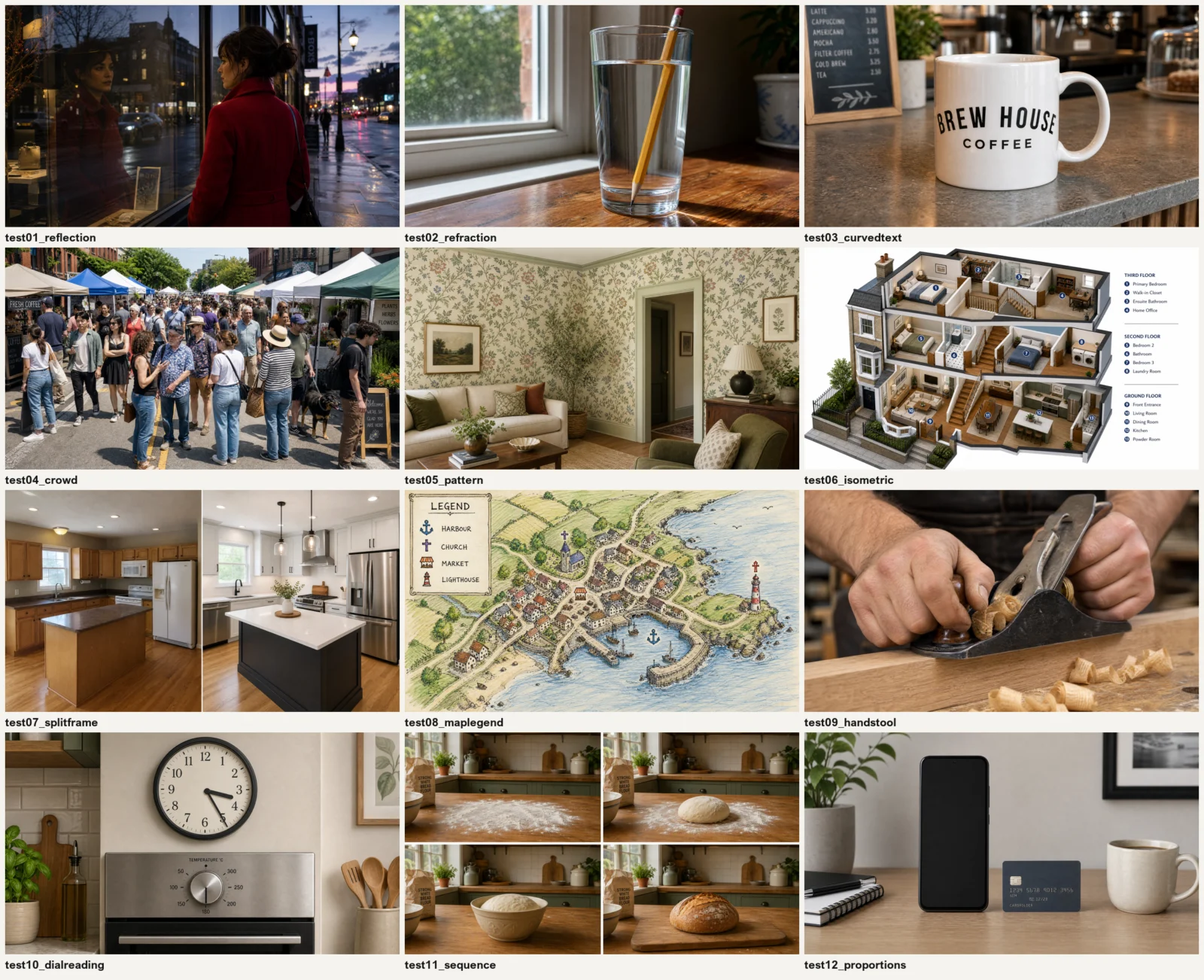
Round one, twelve tests, in order: reflection, refraction, curved text, crowd, pattern, cutaway, split frame, map, hands, readings, sequence, proportions.

Round two, eight tests, in order: two cameras, six poses, box and manual, ruler, mirror selfie, bilingual signs, knit, technical drawing.
Eight failed, and they fail for one reason. The frame has to hold a second truth that is not a look: a law of light (refraction, reflection), the same scene in a second state or from a second camera, a real size against a known object, a number that must agree with the picture. The model has no second truth. It has one picture and a sense of what pictures look like.
What you leave with
- Six deliverables a working creative sends, each built from a bare fail to a finished file: a drinks shot with true refraction, a shop fit before and after in one frame, a two camera location pair, a vanity shot with an honest mirror, a product scale shot against a ruler, a working drawing whose numbers match its lines.
- Every image on every page sits above the exact prompt that made it, including the two edits that did not work, so you know what to expect.
- The Chain Sheet: a three step template (plate, truth, deliverable) you fill for any second truth.
- The Fix Bank: one edit prompt per failure class that repairs an image you already have, plus the one case (a clock or dial reading) that needs no chain at all, said plainly.
Who it is for
Designers, architects, interior designers, product people and marketers who send pictures to clients who check them, and AI creators who want their work to survive a second look. If nobody checks your images, you do not need this vault yet.
What you need
An OpenArt account with GPT Image 2 (link above, the code gives you credits), any image viewer that shows pixel positions (a free one is fine), and about an hour a page.
The one rule
When the frame must hold a second truth, build it in steps. Step 1, the plate: generate the world with the truth left out (the glass empty, the room bare, the drawing without numbers). Step 2, the truth: with the plate attached as Image 1, add the one thing the model cannot invent, written as geometry, and where it helps, named as the thing the model has seen. Step 3, the deliverable: with step 2 attached, add the label, the fit out, the title block, with the truth named as fixed before anything new is asked for. One change a step. The plate re attached every step. If a step proves unnecessary, the page says so and shows the shorter chain; two pages here are two steps.
The course map
- The Slate (this page).
- Light Through Glass: refraction, three steps, one failed edit kept.
- The Same Room Twice: a split frame with a named seam, three steps.
- Two Cameras, One Set: the other end of the room, two steps.
- The Honest Mirror: the room goes into the glass reversed, two steps.
- True Size: objects touch the ruler, two steps, every size measured.
- The Drawing That Agrees: lines, then a measurement, then numbers, two steps.
- The Chain Sheet and the Fix Bank: the template, the repairs, the checks, your turn.
How to use it
Read page 2 first even if your job is on page 6; it carries the longest explanation of why an edit fails and what to say instead. Then go to your page, paste the plate prompt, change the subject, keep the structure, and run the chain. Check every step against the plate before the next. Post your pair in the community.
Settings and what it costs
All stills: OpenArt, GPT Image 2, 2K. Bare fails at medium, plates and steps at high, 16:9 throughout. At the time of writing, a medium image was about 45 credits, a high text to image about 170, a high image to image about 172; check the live price. A full chain of three steps is about 510 credits; the whole vault, with two re rolls and the tests, cost about 3,400.
Next: page 2, Light Through Glass.
Section 02
Light Through Glass
Water bends what stands in it. If the straw runs straight through the water line, the drinks shot is wrong, and the model draws it straight every time until you name the bend.

What this page covers
The first hard case: refraction. A drinks brand’s art director knows that a straw, a spoon or a pencil looks broken at the water line and wider under it. GPT Image 2 knows what a glass of water looks like, and draws the straw straight, because straight looks right. This page shows the one line fail, the plate, the edit that was not enough, the edit that worked, and the finished shot for a fictional water brand, ORRIN SPRING. Four images, four prompts, all pasted below.
The second truth, and why one prompt loses it
- The look is "a glass of water with a straw". The truth is a law: light slows in water, so the part of the straw under the surface appears shifted and magnified. The model optimises for the look.
- Writing "realistic refraction" does nothing. The word is a label, not a geometry. The model has seen a million straight straws labelled realistic.
- Writing the geometry line by line (the straw breaks, shifts right, reads wider) was still not enough on the first edit. The straight straw is a strong habit.
- What worked was naming the thing the model has seen with the bend in it: the textbook demonstration, the bent pencil in a glass of water. Then the geometry lines told it how much.
- The chain matters because the water is the only change. A plate with an empty glass fixes the bottle, the counter, the light and the straw’s angle, so when the water goes in you can see whether the bend arrived and nothing else moved.
Before: the one line prompt

Bare prompt at medium. The pencil runs straight through the water line, no shift, no magnification. The glass is drawn as if empty and tinted.
Settings: OpenArt, GPT Image 2, text to image, 16:9, 2K, quality medium.
Step 1: the plate
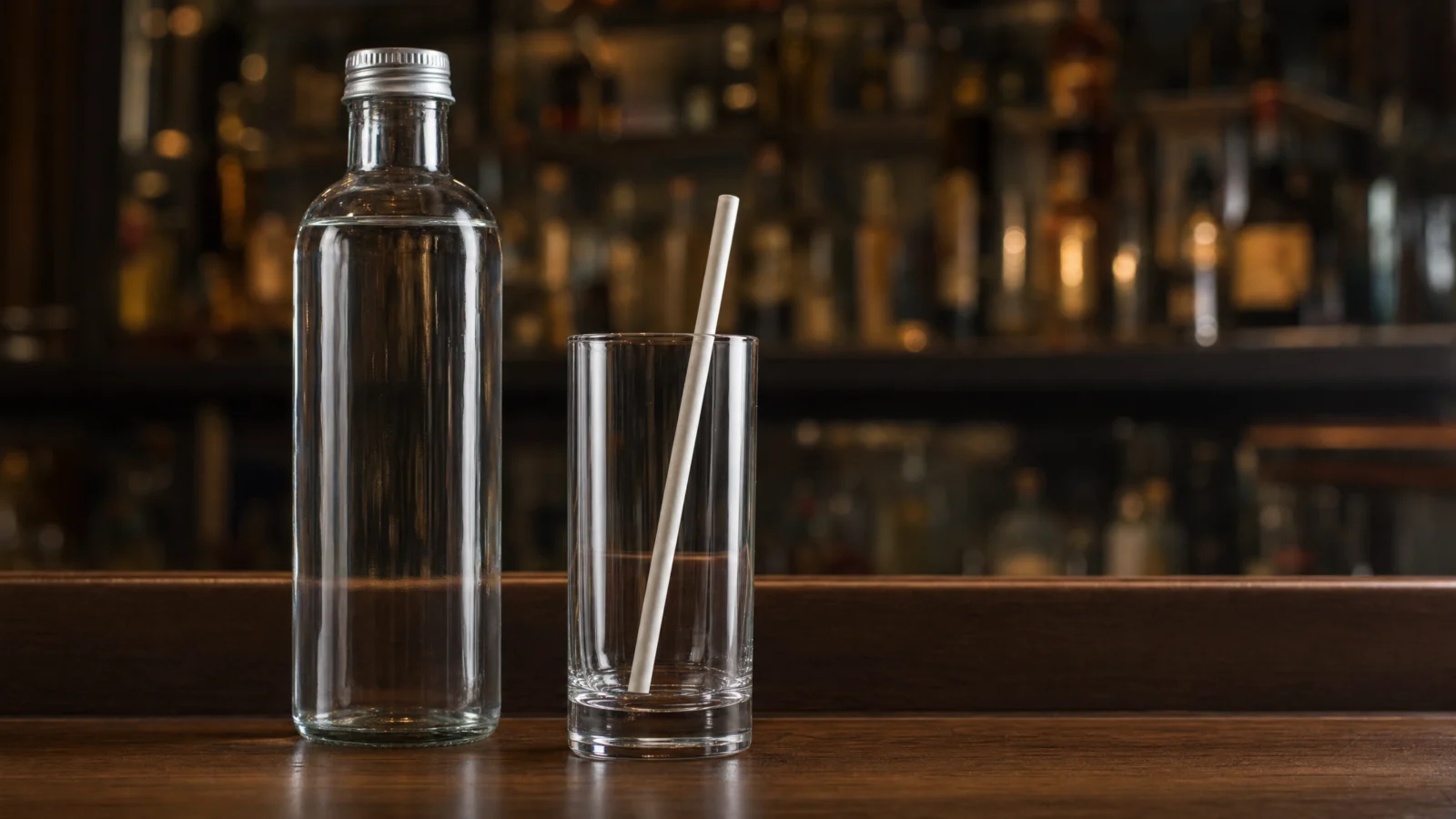
The set with no water. Bottle, empty glass, straw, counter edge behind the glass at mid height. Everything that must not move is now fixed in a file.
Settings: text to image, 16:9, 2K, quality high. Save the file. It is Image 1 for every step that follows.
Step 2, first try: the edit that was not enough

Water added, meniscus added, straw still straight. The geometry was written line by line and the model kept its habit. Kept on the page so you know what to expect.
Settings: image to image, Image 1 = your plate, 16:9, 2K, quality high.
Step 2, second try: name the demonstration

The straw breaks at the water line, the underwater part sits to the right and reads wider, the counter edge shifts inside the glass. One change, the bend arrived, nothing else moved.
Settings: image to image, Image 1 = your plate, 16:9, 2K, quality high.
Step 3: the final

The deliverable. Label, condensation, wet ring, and the bend kept, because the prompt names it as a fixed thing before it asks for anything new.
Settings: image to image, Image 1 = your step 2 result, 16:9, 2K, quality high.
The three checks before you send it
- Cover the glass above the water line with your thumb. The straw below must not line up with the straw above.
- Follow the counter edge from outside the glass to inside it. It must jump. If it runs straight through, the water is paint.
- Compare the final with the plate side by side. Bottle, counter, light, straw angle: nothing else may have moved. If the bottle changed shape, run step 3 again with "the bottle keeps its exact shape and height" added.
Swap exercise
Change the product and keep the physics. A spoon in a tea glass, a cocktail stirrer in a highball, a bottle neck seen through a full tumbler. Keep the plate step: an empty vessel first, then the liquid as the only change, then the label. Write "the classic refraction demonstration" once and the geometry under it. Never ask for the liquid and the label in one step.
How it drifts and what to do
- The straw straightens again in step 3. The fix is in the prompt above: name the bend as a fixed thing in the first sentence, before the new request.
- The water line moves between steps. Add "the water line stays at exactly two thirds of the glass height".
- The model adds ice. Add "no ice, no bubbles" to the DO NOT list.
- The counter edge vanishes behind the glass. Your plate needs a sharp line at the glass’s mid height; regenerate the plate, not the edit.
Next: page 3, The Same Room Twice.
Section 03
The Same Room Twice
One room, two states, one camera. Ask for it in one line and you get two rooms. Build the states one at a time and the split frame is honest.

What this page covers
The second hard case: a before and after in a single frame. Designers, shopfitters and agents send these every week, and a single prompt cannot make one, because the frame has to hold the same room in two states and the model only knows how to make one room at a time. This page builds a shop fit proposal for a fictional florist, PELL AND ROWE: the empty unit, the fitted unit from the same camera, then the split frame with a seam you can name. Four images, four prompts.
The second truth, and why one prompt loses it
- "Before and after, same kitchen, same camera" asks the model to agree with itself across the centre line. It cannot see its own left half while it draws the right. So the window moves walls.
- A split frame is a composite in the real world too. Photographers shoot two frames on a tripod. The chain does the same thing: state one, state two, then the join.
- The plate is state one, and it carries a lock list: the things that cannot move (window, column, back wall, door, ceiling grid, duct, floor). The lock is repeated word for word in state two.
- The seam is chosen before anything is generated. A column, a door frame or a wall corner hides a join. A seam through open floor shows every mismatch.
- The final step uses two references. If the generated join ever fails your seam check, make the composite in a free editor from your two states and say so. A seam is a second truth; a composite is the honest tool for it.
Before: the one line prompt
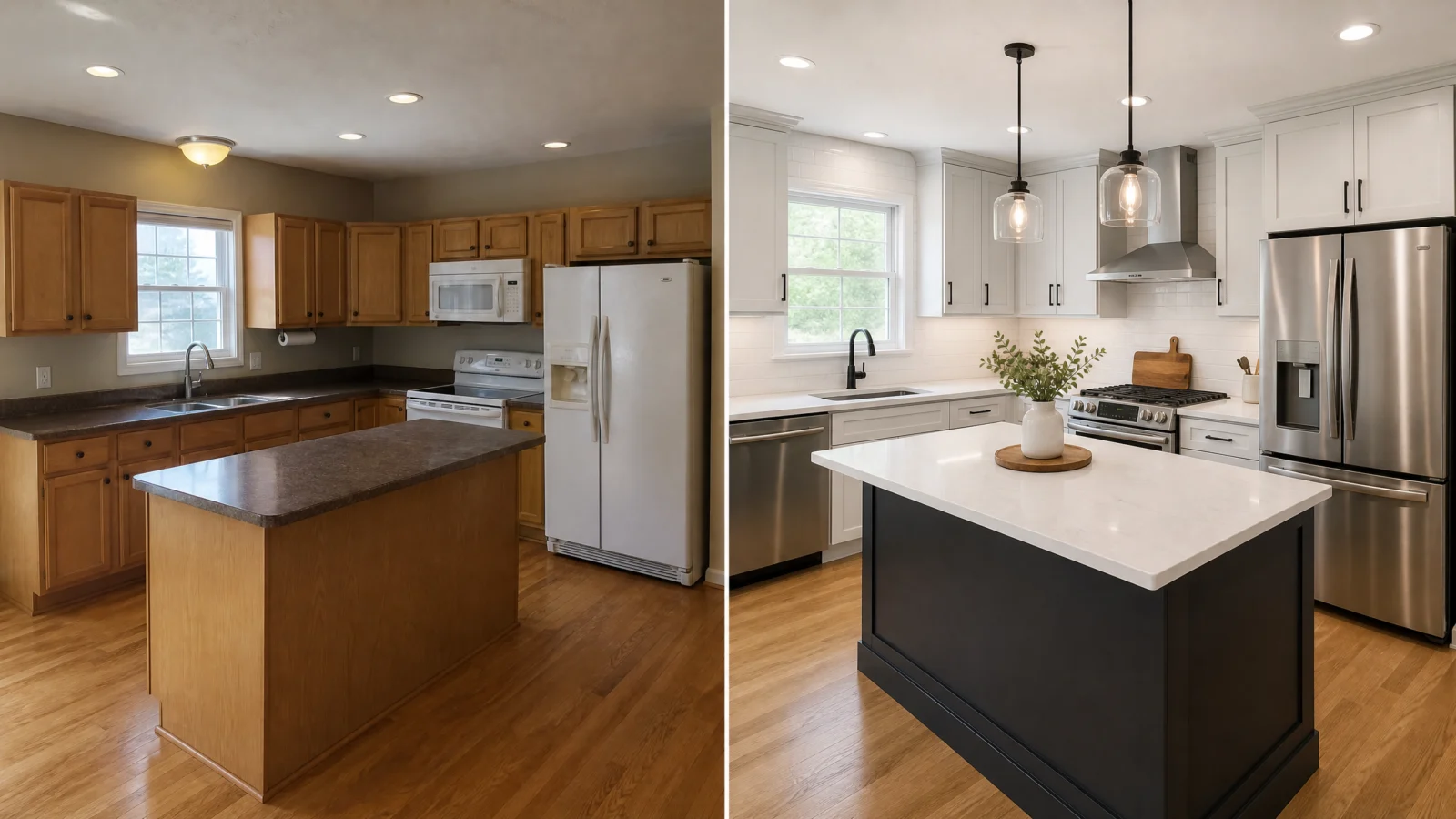
Bare prompt at medium. Two different kitchens: the window moves from the left wall to the far wall, the fridge changes position, the island changes size.
Settings: OpenArt, GPT Image 2, text to image, 16:9, 2K, quality medium.
Step 1: the plate (state one, with the lock list)
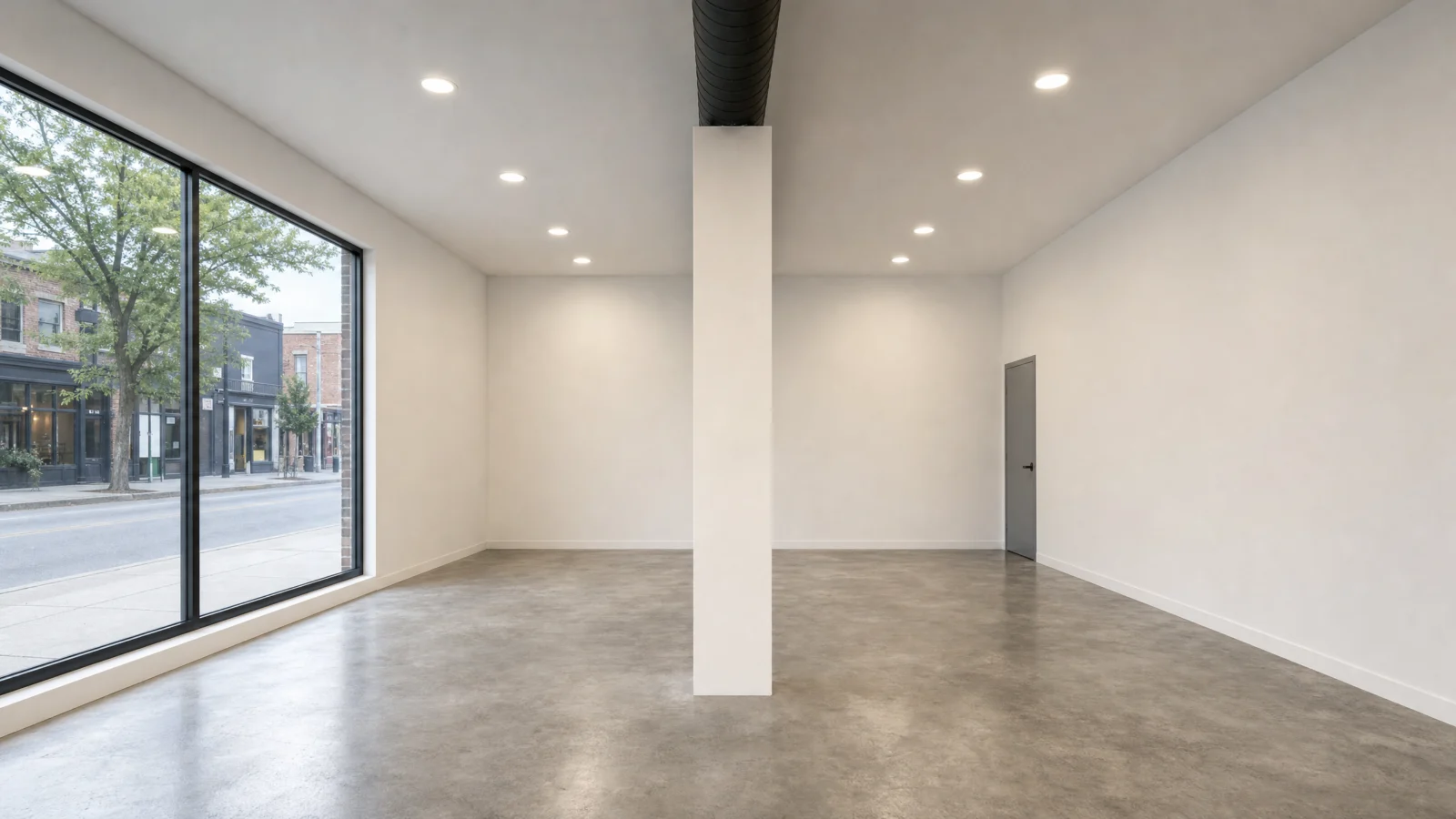
The empty unit. The column sits on the centre line on purpose: it is the seam.
Settings: text to image, 16:9, 2K, quality high. Save it. It is Image 1 for step 2 and step 3.
Step 2: state two, the lock repeated
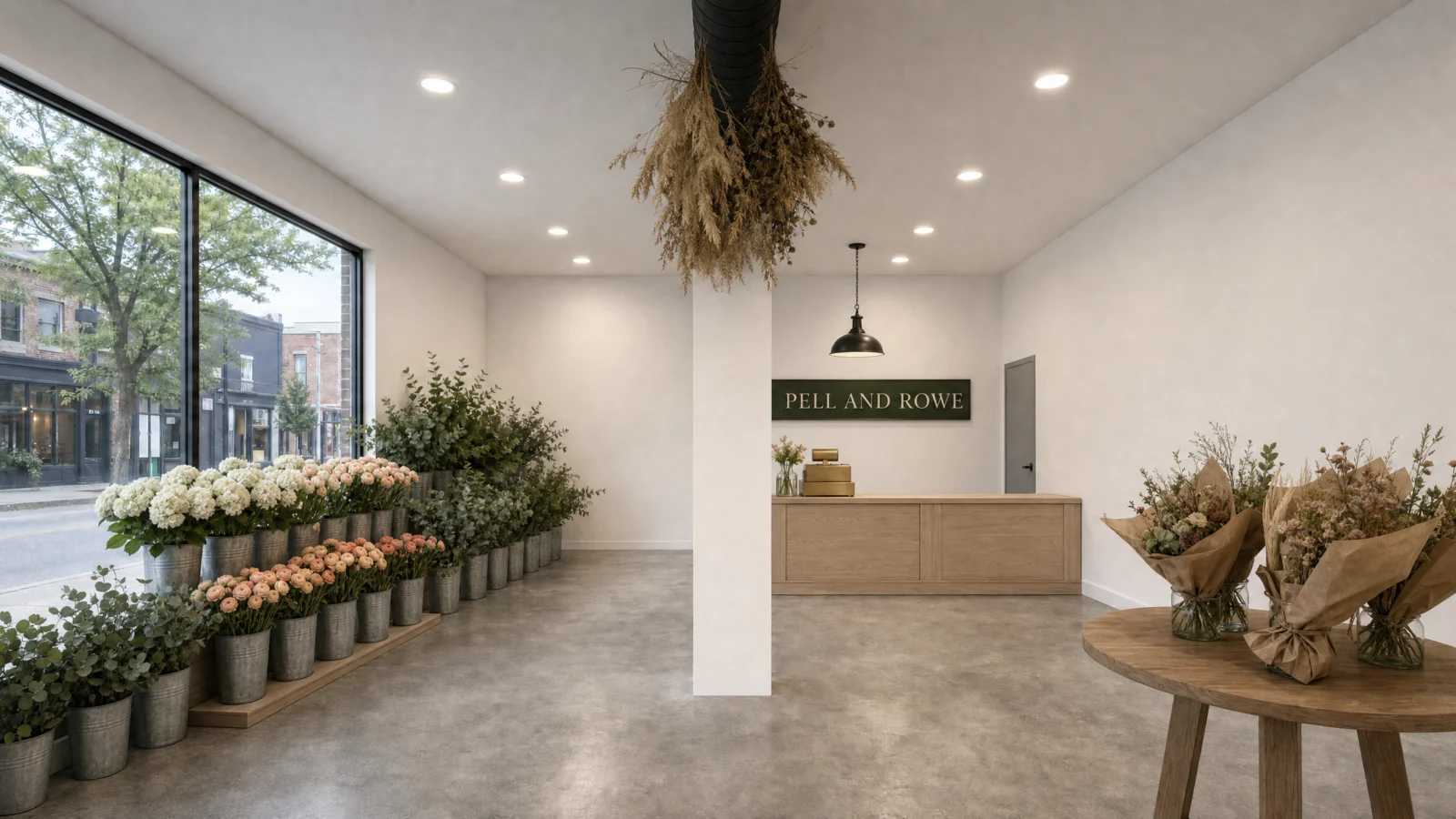
The florist. Window, column, door, duct, downlights and floor all where the plate put them. Only the fit out is new.
Settings: image to image, Image 1 = your plate, 16:9, 2K, quality high. Save it. It is Image 2 for step 3.
Step 3: the split frame, two references, one named seam
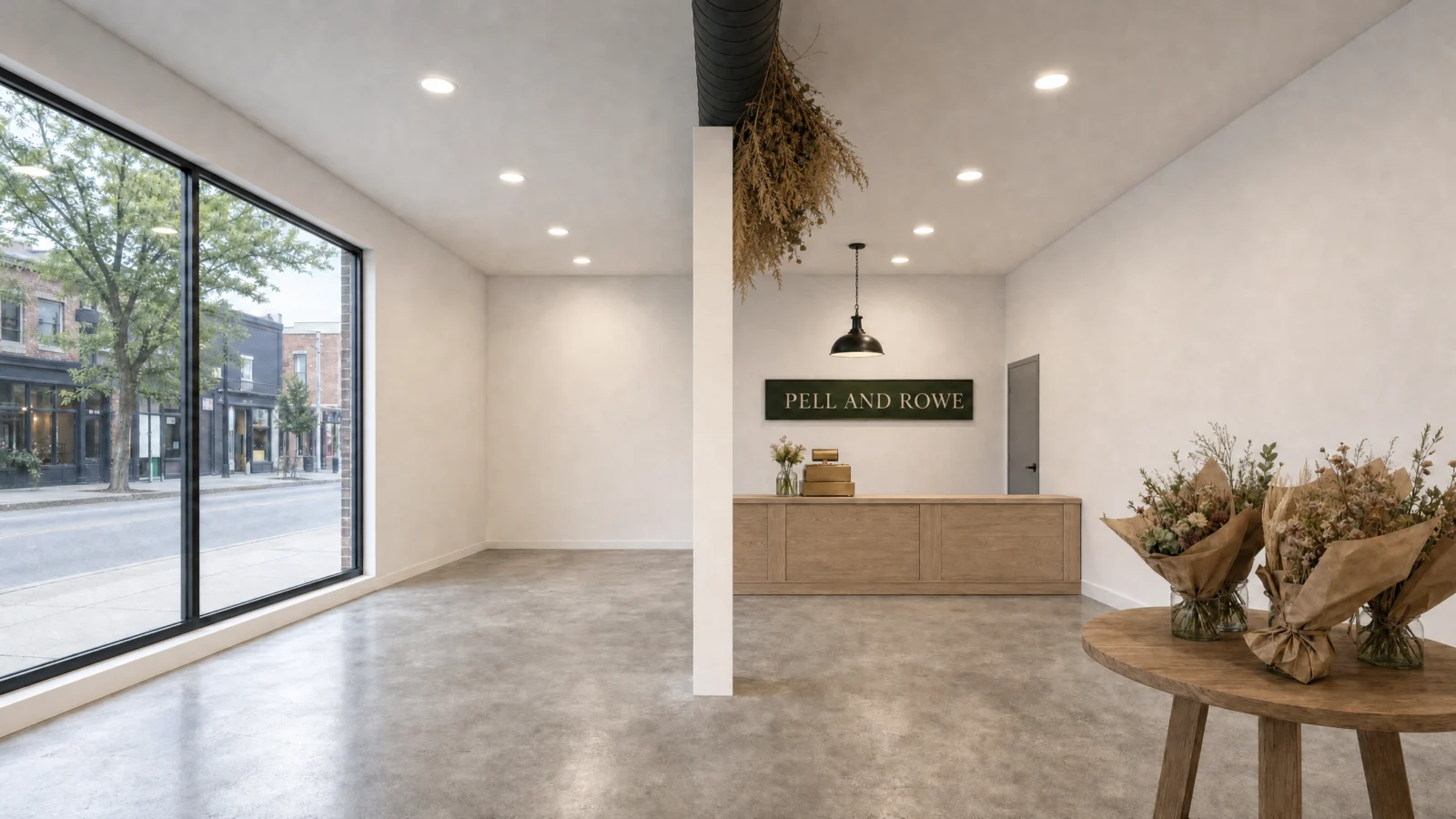
Left of the column, the empty unit. Right of it, the florist. The floor, the ceiling and the duct run across the seam without a step, because the camera never moved.
Settings: image to image, Image 1 = your plate, Image 2 = your state two, 16:9, 2K, quality high.
The three checks before you send it
- Put the plate and the split frame side by side. The left half must match the plate: same window bars, same downlight positions, same floor line.
- Put state two and the split frame side by side. The right half must match state two: same counter, same sign, same door.
- Run a finger down the seam. The ceiling line, the duct and the floor must cross it at the same height. If anything steps, the join was redrawn; make the composite yourself from the two states and keep the page honest.
Swap exercise
A kitchen before and after for a renovation client, a bedroom staged and unstaged for an agent, a trade stand empty and dressed. The lock list changes; the method does not. Choose the seam first (a door frame, a column, a wall corner), put it on the centre line in the plate prompt, and never ask for both states in one step.
How it drifts and what to do
- State two moves the door or shrinks the window. Your lock list was not repeated word for word. Paste it again, in the same order.
- The split frame restyles the left half (adds a plant, warms the light). Add "the left half is unchanged from Image 1, including its colour and brightness".
- The seam shows a step in the floor. Make the composite in an editor from the two states; the states are the deliverable, the join is assembly.
- The fit out ignores the window side. Name what goes under the window, as the prompt above does.
Next: page 4, Two Cameras, One Set.
Section 04
Two Cameras, One Set
A second camera is a second truth. Ask for two views in one line and the model copies the first view and adds furniture. Build the set once, then turn the camera round with the set list in hand.
What this page covers
The third hard case: the same room from the other end. A brand wants two location shots that agree with each other; a set designer wants the room from the door and from behind the counter. One prompt cannot do it, because the model has no room to walk around, only a picture to repeat. This page builds a two view pair for a fictional bakery, TILDEN BAKERY: camera A from the door, camera B from behind the counter, every object in its place with left and right swapped. Two steps, no padding. The pair is laid side by side with no generated join.
The second truth, and why one prompt loses it
- "Seen from two cameras, everything matching" is read as "draw it twice". The model drew the bakery twice from the door, the second a little wider, and invented a counter, a till and a coffee menu for the right half.
- A second camera means every object changes side and size. The left wall becomes the right wall. The thing nearest the camera becomes the thing farthest away. The model will not work that out; you write it.
- The plate is camera A with a set list: every object named with its wall. Step 2 repeats the set list with the walls swapped and names what is now in the foreground.
- Two steps are enough here. A third would be padding. If step 2 drops an object, one edit step puts it back; it did not here.
Before: the one line prompt

Bare prompt at medium. Both halves are the same shot from the door; the right half adds a counter, a card reader, a tip jar, an espresso machine and a price board that the left half does not have. The camera never moved.
Settings: OpenArt, GPT Image 2, text to image, 16:9, 2K, quality medium.
Step 1: the plate, camera A, with the set list
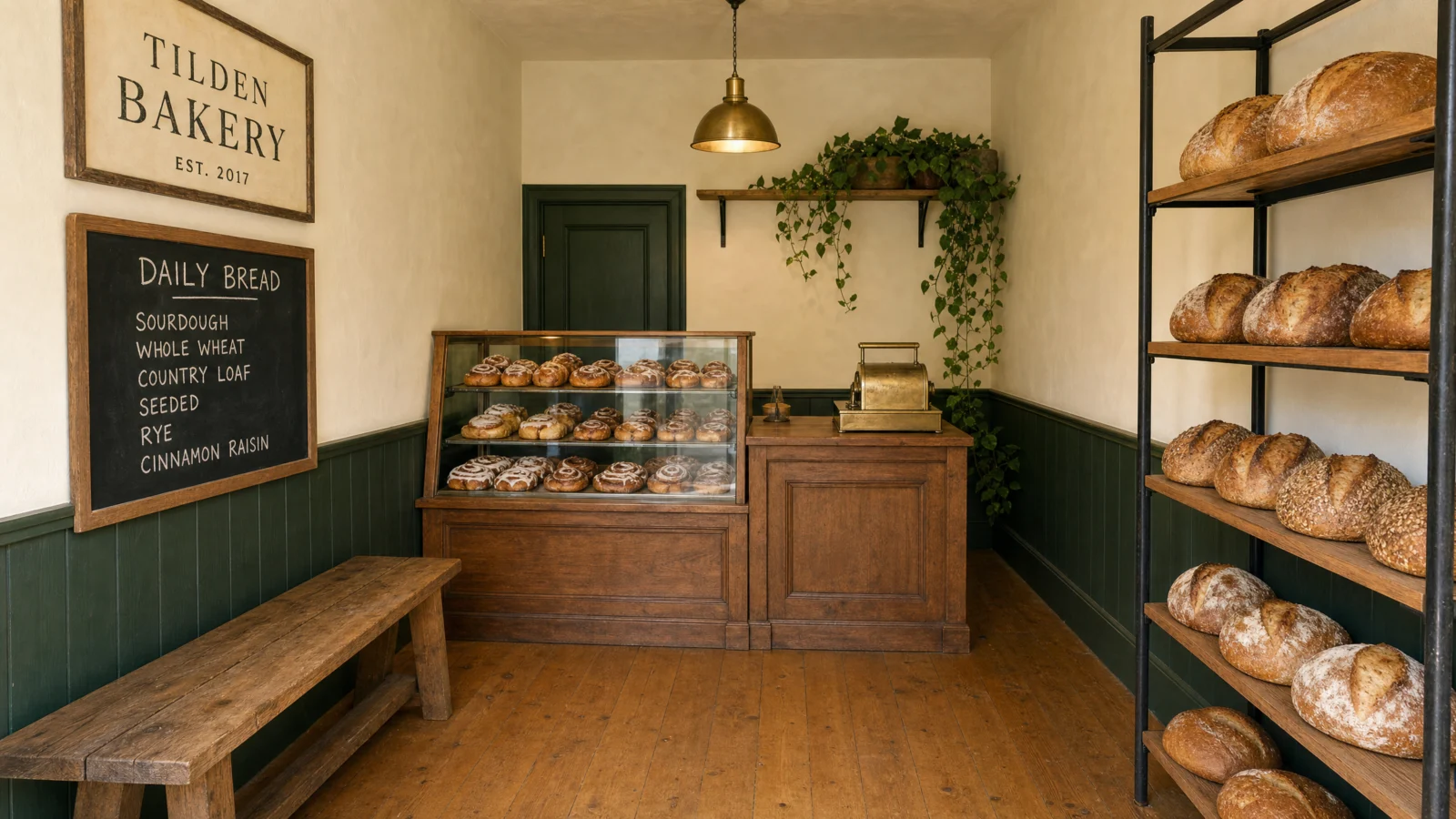
From the door: sign and chalkboard on the left wall, bench under them, bread rack on the right wall, counter with pastry case and till at the far end, pendant over the counter, kitchen door behind.
Settings: text to image, 16:9, 2K, quality high. Save it. It is Image 1 for step 2.
Step 2: camera B, the set list with the walls swapped

From behind the counter: rack now on the left, sign and chalkboard and bench now on the right, pastry case in the foreground seen from its back, the door with its OPEN sign at the far end. The six chalk lines match.
Settings: image to image, Image 1 = your camera A plate, 16:9, 2K, quality high.
The three checks before you send the pair
- Read the set list against camera B, item by item, and tick the wall. Rack left, sign right, bench right, case foreground, door far end. One item on the wrong wall and the pair is two rooms.
- Count what is in B that is not in A. The answer must be nothing except what A could not see (the entrance door, the window beside it). The one line fail added five objects.
- Check the small text. The six chalk lines must read the same in both; the model keeps text when it is listed and loses it when it is "the menu".
Swap exercise
A cafe from the street door and from the barista’s side. A hotel room from the door and from the window. A trade stand from the aisle and from the back wall. Write the set list with walls in camera A, then swap the walls by name in camera B. Never write "the reverse angle" and hope.
How it drifts and what to do
- Camera B keeps the counter at the far end. The prompt did not say what is now in the foreground. Name it, as above.
- A new object appears in B. Add "same objects and no new ones" and list the objects again.
- The sign text changes. Spell the text in both prompts, in capitals, in the same order.
- The lens changes and the room feels bigger. Name the lens in both steps.
Next: page 5, The Honest Mirror.
Section 05
The Honest Mirror
A mirror shows what is behind the camera, reversed. The model guesses it. Photograph the room from the mirror’s side first, then put that photo in the glass.

What this page covers
The first soft case: reflections. In the one line test the woman faced right and her reflection faced the camera; the reflected street ran at an angle the real street did not. Nobody checks a reflection until a client does. This page builds a vanity shot for a fictional skincare brand, SALTMARSH: a plate of what the mirror sees, then the dresser shot with the plate inside the glass, reversed. Two steps. A third was planned for the label and was not needed, so it is not here.
The second truth, and why one prompt loses it
- A reflection is a second picture of the room from a second viewpoint, flipped. The model has one viewpoint and fills the glass with something plausible.
- "Realistic reflection" is a label. The geometry is: what stands opposite the mirror, left and right swapped, a stop darker.
- The plate is that opposite view, generated as a plain photograph with no mirror in it. Then the mirror step says: this photo goes in the glass, reversed, and names what moves to which side.
- The product in front of the mirror shows its back in the glass. Say so, or the label appears twice facing you.
Before: the one line prompt
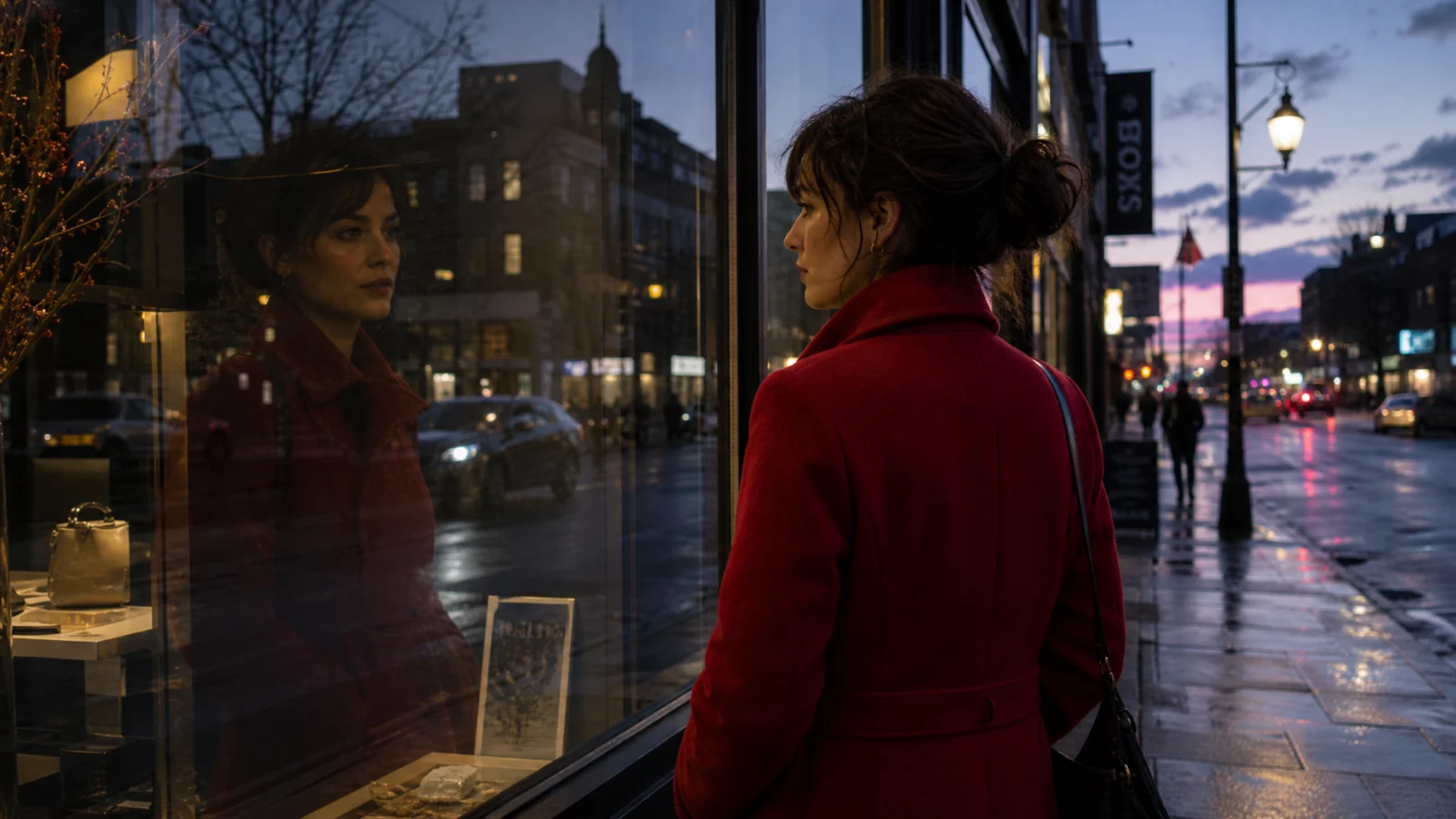
Bare prompt at medium. The woman faces right; her reflection shows her face nearly front on, brighter than glass can return, and the reflected street runs at the wrong angle.
Settings: OpenArt, GPT Image 2, text to image, 16:9, 2K, quality medium.
Step 1: the plate, the room as the mirror sees it

A plain photograph from the mirror’s position: window left, bed and print centre, lamp right. The first run of this prompt drew a mirror frame around the room; the words "no mirror, no frame" were added and it ran clean.
Settings: text to image, 16:9, 2K, quality high. Save it. It is Image 1 for step 2.
Step 2: the plate goes into the glass, reversed
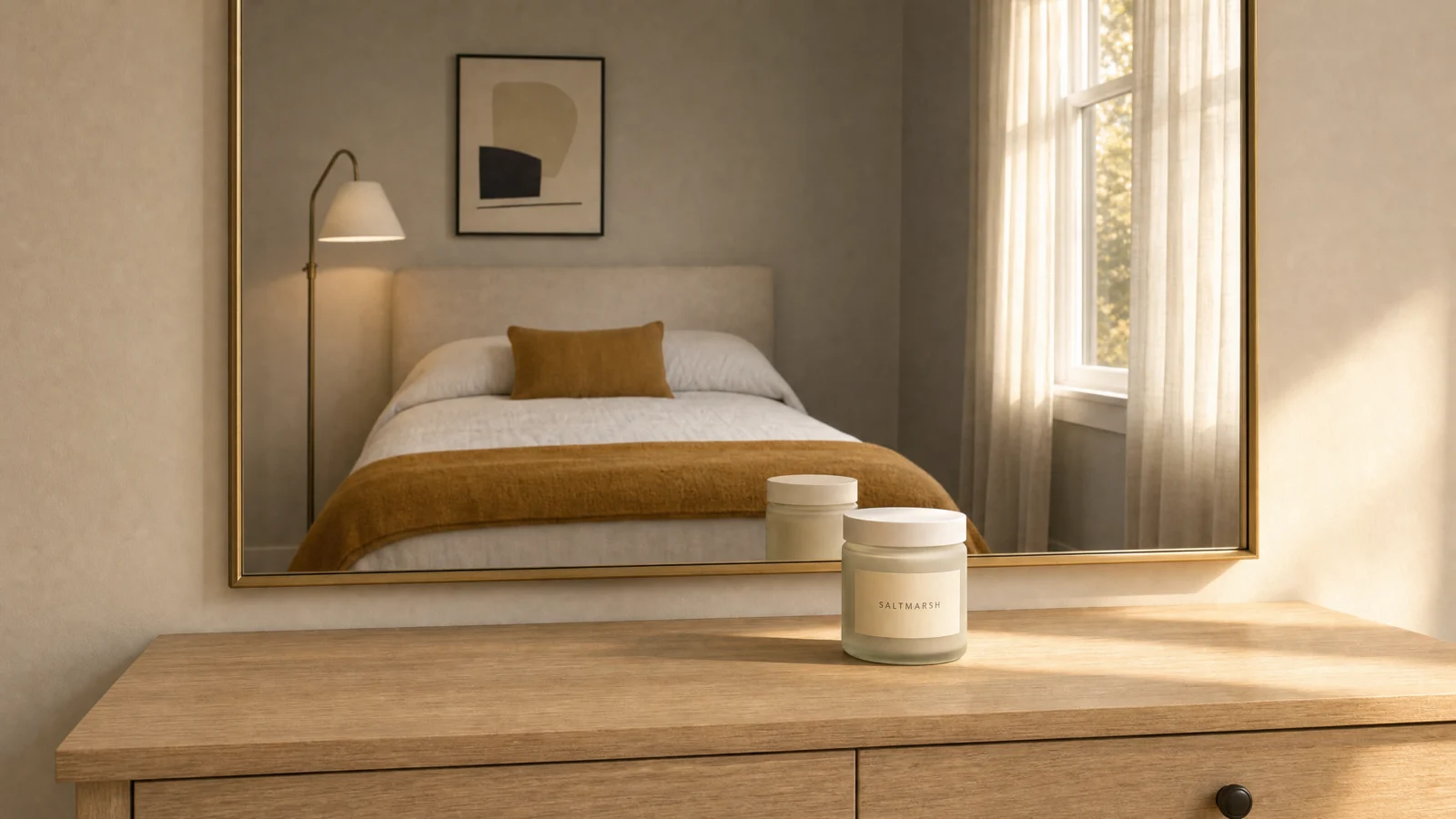
Window now on the right of the glass, lamp on the left, the print’s dark shape on the other side, the jar’s back behind the jar. A reflection you can check against a photo.
Settings: image to image, Image 1 = your room plate, 16:9, 2K, quality high.
The three checks before you send it
- Flip the plate horizontally in any viewer and hold it beside the mirror. Window, lamp, print, bed: same order, same shapes.
- Find the product’s back in the glass, behind the product, not beside it. If the label reads in the mirror, the reflection is a copy, not a reflection.
- The glass is darker than the room. If the reflection is brighter than the dresser top, add "one stop darker" again.
Swap exercise
A perfume bottle on a bathroom shelf with the shower behind the camera. A shop window with the street behind the viewer (the test fail, done properly: plate the street from the window’s side, then the window with the plate in it, reversed). A car in a showroom with the showroom in its paint. Plate what is behind the camera first, every time.
How it drifts and what to do
- The reflection is not reversed. Name the side each object moves to, as above; "mirrored" alone is not enough.
- The mirror shows the dresser and the product from the front. Add "the camera is not in the mirror, the mirror shows only the room in Image 1".
- The frame of the mirror eats the room. Say "large rectangular mirror, thin frame" and give the dresser its own line.
- The plate itself comes back with a mirror in it. Add "no mirror, no frame, a plain photograph", as the plate prompt does.
Next: page 6, True Size.
Section 06
True Size
A number in a prompt is decoration until something touches the ruler. Put the known objects on the scale, then put the product on the same scale, and you get close to true size, with the drift measured and printed, not exact size.

What this page covers
The second soft case: real size. Two tests failed it. A phone beside a credit card came out 2.2 cards wide (a real one is about 1.8). A matchbox beside a ruler came out square and 15 percent small, with a nonsense "0.5 mm" label on the ruler. The drift is small enough that nobody sees it, and large enough that a product page with a scale shot is wrong. This page builds a scale shot for a fictional hand cream, KESTREL: a plate of known objects touching a ruler, then the tube placed on the same ruler. Two steps. The numbers measured on each result are printed here, not rounded away.
The second truth, and why one prompt loses it
- "Correct real sizes" is read as "plausible sizes". The model has no ruler; it has a sense of what looks right, and 20 percent either way looks right.
- A ruler in the frame does not fix it on its own. In the first plate run, the card and the cup were drawn at half their size against the ruler, both floating in space near it.
- What fixed it: contact. When the card’s long side lies along the ruler’s edge from 0 to a named mark, the model has to draw the end at the mark. Touching is a measurement; "beside" is a guess.
- The product goes on in step 2, touching the ruler from 0 to its own length. Its size is now a relation to the plate, not a number in the air.
- Then you measure the result in pixels, because the page claims a size and a claim needs a check. A free image viewer gives you the ruler’s pixels per centimetre.
Before: the one line prompts

Bare prompt at medium. The phone is about 2.2 times the card’s long edge. A real phone is about 1.8. The cup is right.

Bare prompt at medium, second round, run again with "no real brands, no logos" after the first run copied a real matchbox brand. The ruler reads well; the matchbox measures 4.7 by 3.7 against it where a real one is about 5.3 by 3.6, so it is 12 percent short; the lemon measures 7.4, which is right.
Settings: OpenArt, GPT Image 2, text to image, 16:9, 2K, quality medium.
Step 1: the plate, known objects touching the ruler
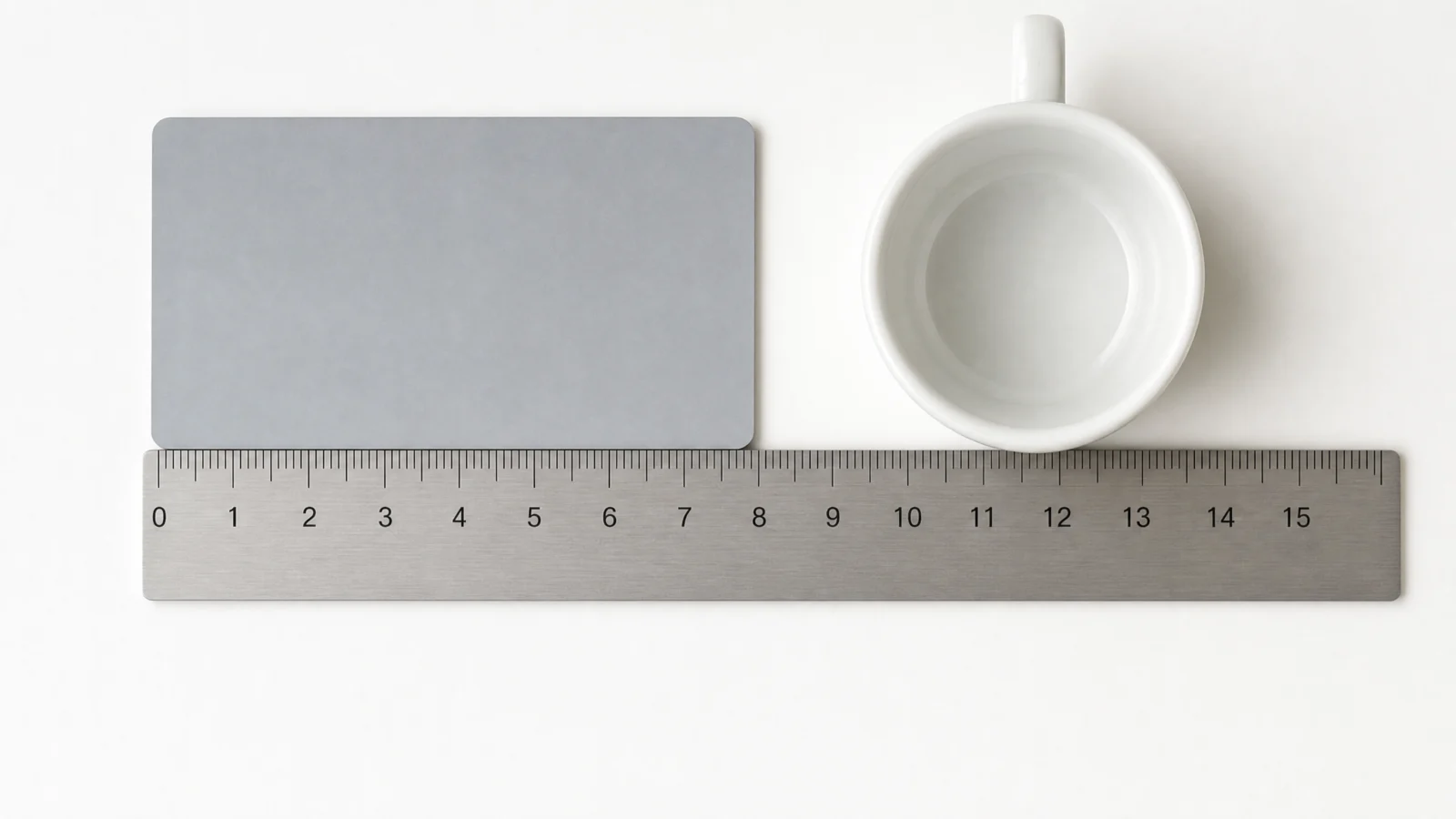
Card from 0 to 8.0 on the ruler (asked 8.6), cup rim 4.3 across (asked 6). Close for the card, short for the cup. The first run of this plate, with the objects beside the ruler instead of touching it, put the card at 4.1; contact doubled the accuracy, and the measurement stays on the page.
Settings: text to image, 16:9, 2K, quality high. Save it. It is Image 1 for step 2.
Step 2: the product on the same ruler
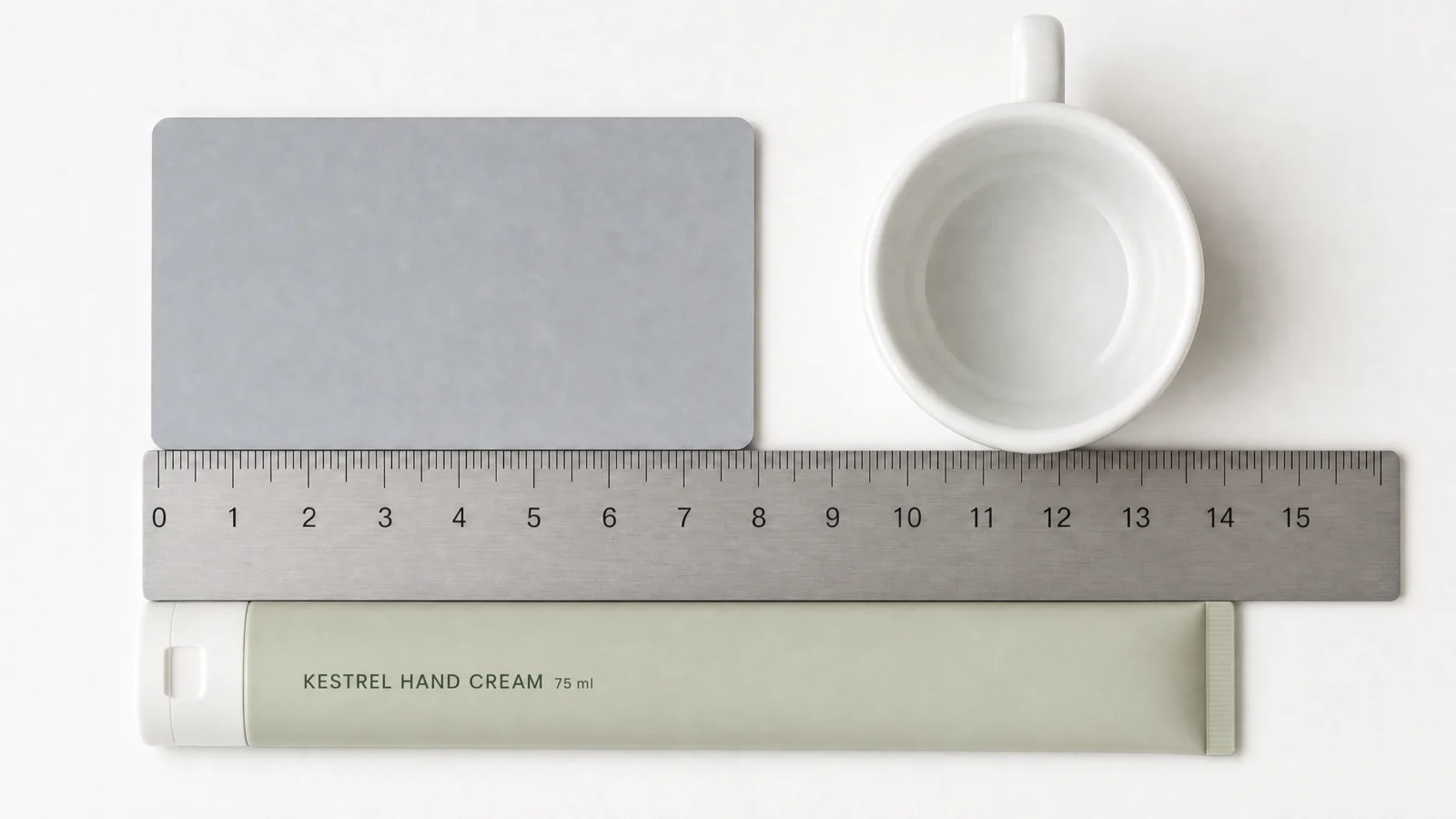
The tube runs from just before the 0 to about 14.6 on the ruler (asked 14). Within 5 percent, and you can see where it sits because it touches the scale. The card and cup held their size from the plate.
Settings: image to image, Image 1 = your plate, 16:9, 2K, quality high.
The three checks before you send it
- Measure the ruler in pixels from 0 to 15 and divide by 15. That is your scale. Measure the product with it. Write the number down.
- If the product is more than 5 percent off, run step 2 again with the end marks named ("its cap starts at the 0 mark, its crimped end finishes at the 14 mark"). Do not accept "about right"; the page is called True Size.
- Known objects must not change between the plate and the final. If the card grew, the model redrew the plate; add "the card still ends at the 8 mark".
Swap exercise
A phone case against a bank card on the ruler. A lipstick against a coin and a key. A chair against a door (the ruler becomes a 2 metre rod standing in the doorway, and the door is the known object at 2 metres). The rule is the same: the known thing touches the scale, the product touches the scale, you measure the result.
How it drifts and what to do
- The objects float near the ruler and shrink. Say "touching", name the start mark and the end mark.
- The ruler grows a second scale or a label. Say "no text other than the ruler numbers".
- The product is right but the cup is wrong. Known objects drift too; measure them, print the number, and accept a supporting object that is off as long as the product is on and the page says so. A second run of the final with every figure pinned beside its own object ("every figure as pinned, never swapped") read card 7.9, cup 4.4, tube 13.8: the product landed within 5 percent both times, the card and cup did not. Close to true size is what this chain gives; the measurement is what makes it honest.
- The product is drawn at an angle and cannot be measured. Say "lying flat, parallel to the ruler".
Next: page 7, The Drawing That Agrees.
Section 07
The Drawing That Agrees
Numbers that add up are not the same as numbers that match the picture. Draw the geometry first, measure it, then write the dimensions the drawing already shows.

What this page covers
The third soft case: a dimensioned drawing. In the one line test the model did something unexpected: its four shelf openings added to exactly 1400, the overall height asked for. Then it drew the shelves with panels between them that the sum left no room for. A joiner checks the chain, finds it closes, builds it, and the shelf is 150 short. This page builds a working drawing for a fictional joiner, ASHCOMBE JOINERY: a plate of the elevation with no numbers, a measurement of the plate, then a dimension layer whose numbers come from the measurement. Two steps and one free step between them. This is not the Blueprint Code of an earlier vault, which is a blue look with decorative callouts; this is a white working drawing whose numbers must match the lines.
The second truth, and why one prompt loses it
- The model can do arithmetic in a prompt (330, 350, 360, 360 make 1400) and cannot make the drawn gaps equal the numbers. The numbers and the lines are two separate truths; it satisfies the one you can check in your head.
- A drawing with the numbers in the same prompt as the lines is two requests fighting. The chain separates them: lines first, numbers second.
- The free step in the middle is the method. Open the plate in any image viewer, read the pixel rows of each edge, scale them to the overall height, round to whole millimetres, make the chain close. Then the prompt tells the model what the drawing already is.
- The dimension prompt names each number against the edge it measures, in order, and says the extension lines touch the drawn edges. That is what a draughtsperson does; the model follows it when it is written.
Before: the one line prompt

Bare prompt at medium, second round. The four openings read 330, 350, 360, 360 and add to 1400. The chain runs from under the top panel to the top of the plinth, so it leaves the top, three shelves and the plinth outside the sum; measured on the drawing, the four openings cover about 1250 of the 1400. The numbers agree with each other and not with the picture.
Settings: OpenArt, GPT Image 2, text to image, 16:9, 2K, quality medium.
Step 1: the plate, lines only
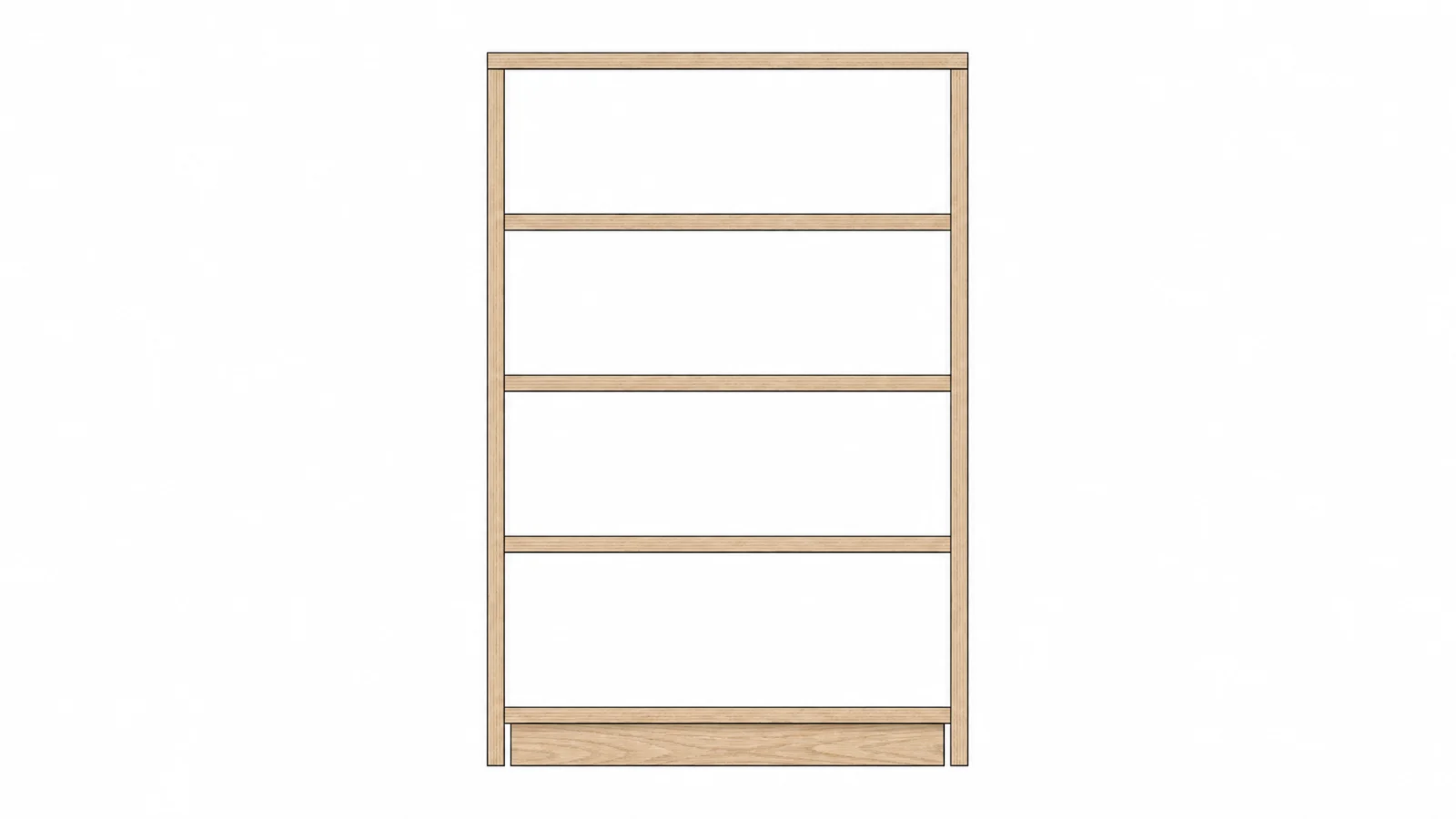
The elevation with no numbers. Measured in pixels: panels 29, three openings 226, the bottom opening 243, plinth 95, total 1131. Scaled to 1400 and rounded so the chain closes: top 35, openings 280, 280, 280, 300, shelves 35, plinth 120.
Settings: text to image, 16:9, 2K, quality high. Note that the model drew the panels at 35, not 18, and the bottom opening a little taller than the other three. That is why you measure before you write the numbers: the drawing decides, not the request.
The free step: measure the plate
Open the plate at full size. Read the pixel row of every horizontal edge (top of the top panel, each shelf’s top and bottom, top of the plinth, bottom of the plinth). Subtract to get each part in pixels. Divide 1400 by the total pixels to get millimetres per pixel. Multiply, round to the nearest 5, and adjust one number so the chain sums to the overall. Write the chain down, top to bottom. That list is the next prompt.
Step 2: the dimension layer, written from the measurement

Width 900, height 1400, and a nine part chain on the right that touches every edge it names and sums to 1400: 35, 280, 35, 280, 35, 280, 35, 300, 120. The lines were not redrawn. The title block is the deliverable’s signature.
Settings: image to image, Image 1 = your plate, 16:9, 2K, quality high.
The three checks before you send it
- Add the chain. It must equal the overall. Here 4 by 35 plus 3 by 280 plus 300 plus 120 is 1400.
- Pick the smallest part and the largest and measure both on the final in pixels. Their ratio must match the numbers (120 to 35 is about 3.4 to 1).
- Compare the final with the plate. No line may have moved. If a shelf shifted to meet a number, the model edited the drawing instead of the layer; run step 2 again with "nothing redrawn" first in the prompt.
Swap exercise
A kitchen cabinet run with three doors and a drawer stack. A garden gate with rails and pales. A tabletop plan with a cutout. Draw the lines without numbers, measure, write the chain, dimension. If your client gives you the numbers first, draw the plate from them as proportions, then measure anyway; the model will have rounded something.
How it drifts and what to do
- The model dimensions the openings only and skips the panels. List every part in the chain, as the prompt does, nine lines for nine parts.
- The numbers appear but the extension lines float. Say "extension lines that touch the drawn edges they measure".
- The drawing gets redrawn to fit the numbers. Put "keep the drawing exactly as it is" first, and keep the numbers you measured, not the ones you wanted.
- Unit text appears everywhere (mm after every number). Say "no unit text" and put the units in the title block if you need them.
Next: page 8, The Chain Sheet and the Fix Bank.
Section 08
The Chain Sheet and the Fix Bank
A chain is three prompts and two checks. The Fix Bank is for the image you already have. And one hard looking case needs neither, so it is here on its own.
The Chain Sheet
Fill the brackets. Run the three prompts in order, attaching the previous result as Image 1 each time. Check between steps.
The Fix Bank: one edit per failure class, for an image you already have
Each of these is an image to image prompt with your own image as Image 1. Start every one with the keep line: "Image 1 is my image. Keep everything exactly as it is except the one change below."
The case that needs no chain: a reading
The one line test asked for a clock at twenty five past three and an oven dial at 180; the clock came back at twenty past and the dial’s scale ran 50, 100, 150, 180, 200, 250 at equal spacing, which no dial does. That looked like a hard case. It is not. Write the hands as geometry and the scale as a list, and one prompt does it. It is here so you do not build a chain for it.

Bare prompt at medium. The minute hand sits on the four; the dial labels 180 as a mark on a scale that has no business having one.
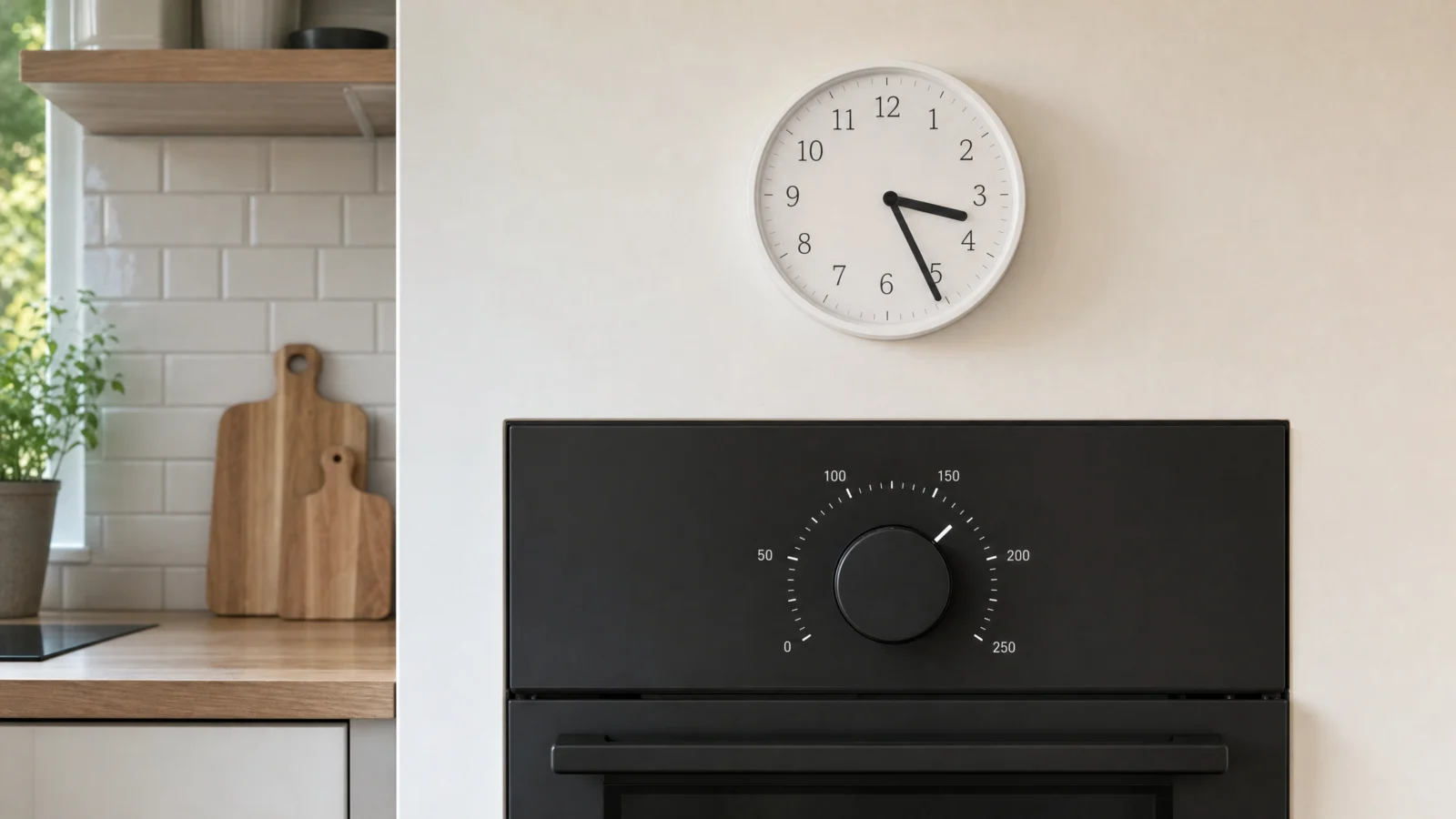
One prompt at high, the reading written as geometry. Minute hand on the 5, hour hand a quarter past the 3, the dial scale 0 to 250 in fifties with the pointer between 150 and 200 nearer 200. No chain.
Settings: OpenArt, GPT Image 2, text to image, 16:9, 2K, quality high. The rule it teaches: a number the model must read is a position you must write. "Ten past ten" is a pose for two hands; write the pose.
The ten checks before anything leaves your desk
- The plate has every fixed element where the prompt put it.
- Only one thing changed between the plate and step 2.
- The truth is visible with your thumb over the rest (the break, the swap, the reversal).
- Anything with a size was measured in pixels and the number written down.
- Anything with a number adds up and matches the lines.
- Left and right are where the geometry says, not where the model preferred.
- Text was spelled in the prompt and reads the same in every step.
- Step 3 did not undo step 2.
- No real brand, no real person, no child, anywhere.
- The client could check it against the real world and find nothing.
Delivery
Send the deliverable and keep the chain. The plate is worth more than the final: the next job on the same set is one step, not three. Name your files plate, truth, final, and keep the prompts in a text file beside them, because the fix in six months is the same prompt with one line changed.
Your turn
Take one of the eight fails from the contact sheets on page 1, or one of your own, and run it through the Chain Sheet. Post the bare fail and your final side by side in the community with the one line that made the difference. Pairs with a measurement in the caption get answered first.
Where this leads
Every one of these second truths is a thing a client can check. As the models improve, the list of hard cases gets shorter; the twelve that passed this round failed a year ago. The method does not get shorter. Plate, truth, deliverable is how you will build anything that has to be right, with this model or the next one, because it is how a photographer, a draughtsperson and a set builder already work. The vault teaches the model nothing. It teaches you to stop asking one prompt to hold two truths.