
Section 01
The Slate | How The One Take Works
► Generate every image and take on OpenArt.ai (GPT Image 2 and Seedance 2.5) : [ Use code DigiAI for 15% off plus 100 free credits ]
► Try BytePlus Lumina with my link: https://bit.ly/4rncByo
Use code LUMINADIG. The first 300 users get 100 free credits each.
One person who stays the same person for thirty seconds, one physical event with an end you can check on a still, and one camera move that changes shape in the middle and still reads as one move. No cuts. That is a one take, and a bare prompt cannot make one.

What this vault is
Six single takes of thirty seconds in Seedance 2.5 at 720p, 16:9, native sound, no on screen text. Each take has one locked character, one staged event in three beats, and one continuous camera move that changes shape once or twice: a dolly that becomes a crane and then a drop, an orbit that becomes a crane, a low track that becomes a crane, twice, a handheld approach that becomes bullet time, and a fly through a window that becomes an orbit that becomes a push in. Two of the six are moves no crew can shoot. Every take sits beside the same idea run as one plain sentence, so you can see exactly what the method buys. Each film is two pages. The first carries the finished 720p take at the top, then the character bible, the three storyboard stills and the camera plan drawn as a map, each above its prompt. The second carries the ten second bare draft at the top, then the full take in a code block, what to check, and what broke and how it was fixed.
How this differs from the earlier vaults
Vol.J taught you to scope a reference down and let Seedance shoot a documentary. Vol.K taught you to arrive on a frame. Vol.L taught the character bible and carried one person through three places with a cut on a hit. Vol.N takes the bible and removes the cut: the person has to fall, fly, brake, swim through smoke, swing an axe and spin, and the camera has to do the one thing cameras in AI video almost never do, which is change what kind of move it is without the model cutting. If you own Vol.L you have the person. This is the person under motion with a camera that is also a character.
The three rules this vault adds
- The Beat Sheet. The event is written as three beats inside the thirty seconds (the approach, the turn, the consequence), each led by an event verb, each closed with a visible end state and "then holds". The last beat ends on a settle. Seedance 2.5 does what it is told and keeps doing it, so every motion is capped and every beat names where things are when it ends.
- The Camera Path. One path for the whole take, drawn on a plan before anything is generated, with the shape change written twice in the prompt: the film term, then the plain description as a physical thing the camera does (rises, breaks off, passes through, settles) at an exact second. Written as a new shot it cuts. Written as a camera action it moves.
- The Bare Line. Every film page carries the same idea as one plain sentence run at 480p for ten seconds. It is the control. It shows you the three things a prompt alone gives away: the person, the set, and the timing.
Carried over from Vol.L and Vol.J, unchanged
The Character Bible: the face made first with text to image, the body made from the face with image to image, both on plain grey, both attached to every take with one binding line each, ONLY then a ban. One asymmetric detail on the face (a beauty mark, an eyebrow split, a nose stud, a mole, a chipped tooth, a chin scar) so the model cannot mirror the person away. The Clean Plate Rule: no text of any kind is generated. One primary camera move per beat, end states on every beat, 720p and never 1080p, draft at 480p first, then lock the prompt and render the final.
The six films
- THE FALL. A climber loses the top hold and falls to the mat. A dolly that becomes a crane and then a drop.
- THE TUBE. A man in an indoor skydiving tunnel is thrown up the glass and brought back down. An orbit that becomes a crane.
- THE MARKET. A courier on a cargo bike brakes hard in a flower hall and a bunch of tulips flies out. A low tracking dolly that becomes a crane.
- THE APEX. A car slides sideways round a flag marshal who does not flinch. A low track that becomes a crane, and the one take with a vehicle.
- THE SPLIT. An axe lands and time slows. A handheld approach that becomes a bullet time half orbit, shown as two takes, because the model moved the camera somewhere else and the page says so.
- THE MIRROR. The camera passes through a rain wet window into a dance studio and a man and his reflection hold through three turns. The impossible move that worked first time.
The anatomy of a take
0 to 10 seconds, the approach: the person and the set doing one ordinary thing, the object that will matter already in frame. 10 to 20 seconds, the turn: one thing changes state with a physical consequence, pinned to a second. 20 to 30 seconds, the consequence: the aftermath, longer than the bang, the body reacting, the camera landing, the hold. The shape change sits at the turn.
What you leave with
- Six finished thirty second takes you can study frame by frame, each with the bare version beside it.
- Six character bibles and eighteen storyboard stills made the way the method says.
- Six camera plans you can trace for your own take.
- The One Take Director: a master prompt that takes your brief through five questions and writes the bible prompts, the board prompts, the plan, the take, the bare line and the check list, one step at a time.
- The Fix Bank: twelve things that break in a long take and the one line that fixes each.
Who it is for
Ad creatives, small studios, music video and short film people, and channel owners who sell or publish thirty second action shots. If your work is a single picture, Vol.24 is the vault you want. If your work moves, this is the method for the shot a client cannot get from a prompt.
What you need
An OpenArt account with GPT Image 2 and Seedance 2.5 (link above, the code gives you credits), any video player that steps frames, and about an hour a film. Attach the face as Image 1, the body as Image 2 and any prop as Image 3 in the OpenArt interface before you paste the take.
What it costs at the time of writing
Check the live price before you spend. At the time of writing a thirty second take at 480p is about 1,800 credits and at 720p about 3,900, the two bible images about 90, three storyboard stills about 140, and the ten second bare line about 600. The house rule: draft at 480p, judge it on three things (the person holds, the set holds, the move reads as one move), change only the line that failed, run once more at 480p at most, then render the locked prompt at 720p. Never iterate at 720p.
How to use the course
Read the six films in order, two pages each, each film one move harder than the last. Then open The One Take Director, answer its five questions with your own person, place and event, and run what it gives you in the order it gives it: bible images, boards, the bare line, the draft, the final. Bring the draft back to the Fix Bank before you spend on the final.
Next: page 2, The Fall.
Section 02
T01 | The Fall, The Bible and Boards
► Generate every image and take on OpenArt.ai (GPT Image 2 and Seedance 2.5) : [ Use code DigiAI for 15% off plus 100 free credits ]
► Try BytePlus Lumina with my link: https://bit.ly/4rncByo
Use code LUMINADIG. The first 300 users get 100 free credits each.
A body in free fall is where identity breaks first. The take above keeps the same climber from the top hold to the mat because she was built before the camera rolled, in two images made in the right order.
What this film teaches
The first move of the vault: a dolly that becomes a crane and then a drop. The camera tracks up the wall beside her, rises over her at the top hold, and when the hold spins loose it falls with her, faster than her, and lands looking straight down at her on the mat. Three shapes, one move, no cut. This page holds the preparation: the character bible, the three storyboard stills and the camera plan. The next page holds the bare line, the full take and what broke.
The character bible
Two images, made in this order. The face first with text to image. Then the body with image to image, the face attached as Image 1, told to keep that exact face. Two independent text to image runs never give the same person. Neither image carries a prop or a set; the set comes from the take. The one asymmetric detail here is the beauty mark on her right cheekbone, because a detail on one side is the cheapest identity lock there is.
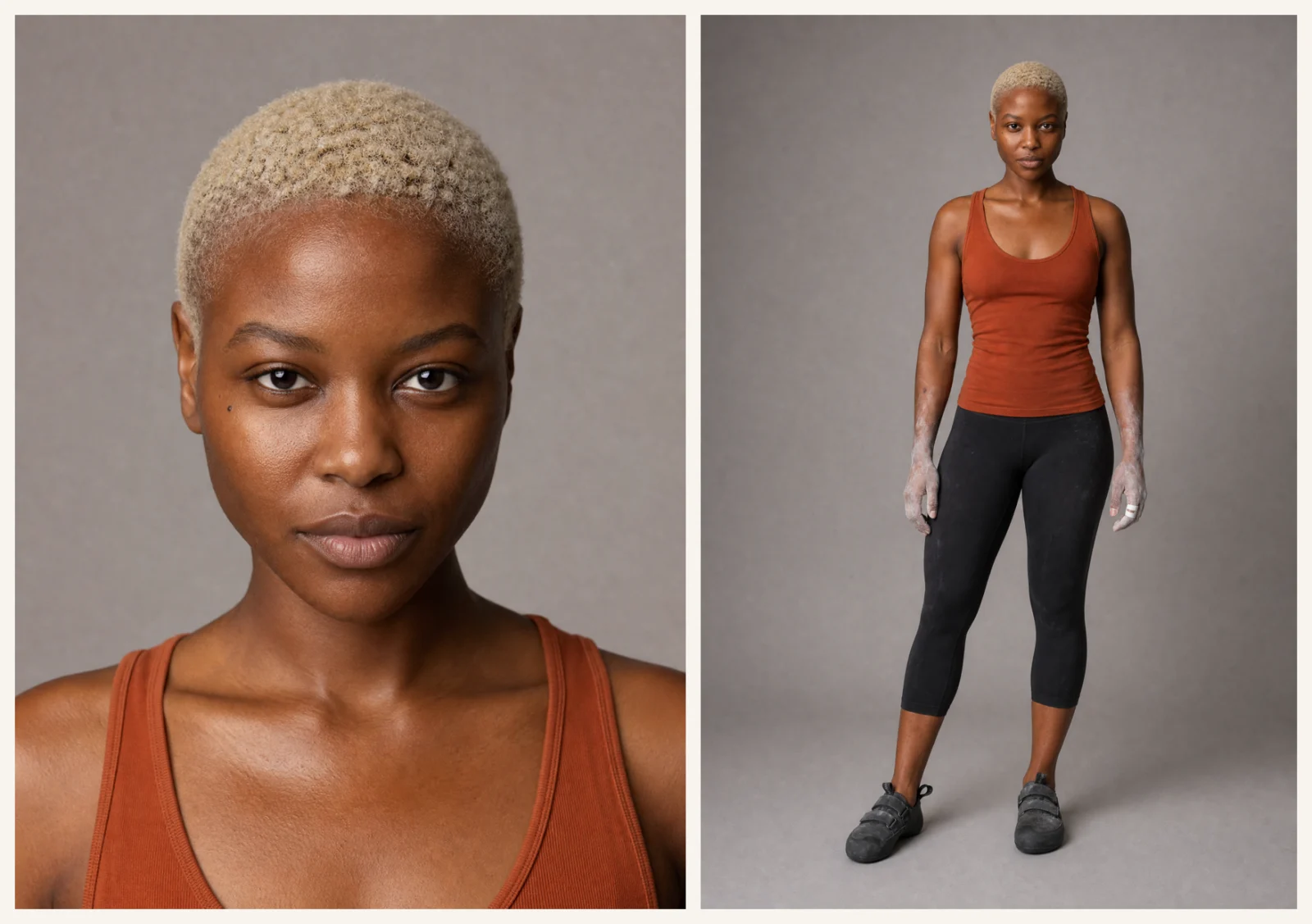
The face (left) and the body made from it (right). The tape on the left ring finger and the chalk are wardrobe, so they live in the body image.
Face, GPT Image 2, text to image, 3:4, 2K, medium:
Body, GPT Image 2, image to image with the face as Image 1, 2:3, 2K, medium:
The three boards
One still per beat, each the end state of that beat, made with the face as Image 1 and the body as Image 2. Look at the three side by side before you spend on video: if the face or the clothes differ between them, fix the bible first. Settings for all three: GPT Image 2, image to image, 16:9, 2K, medium.
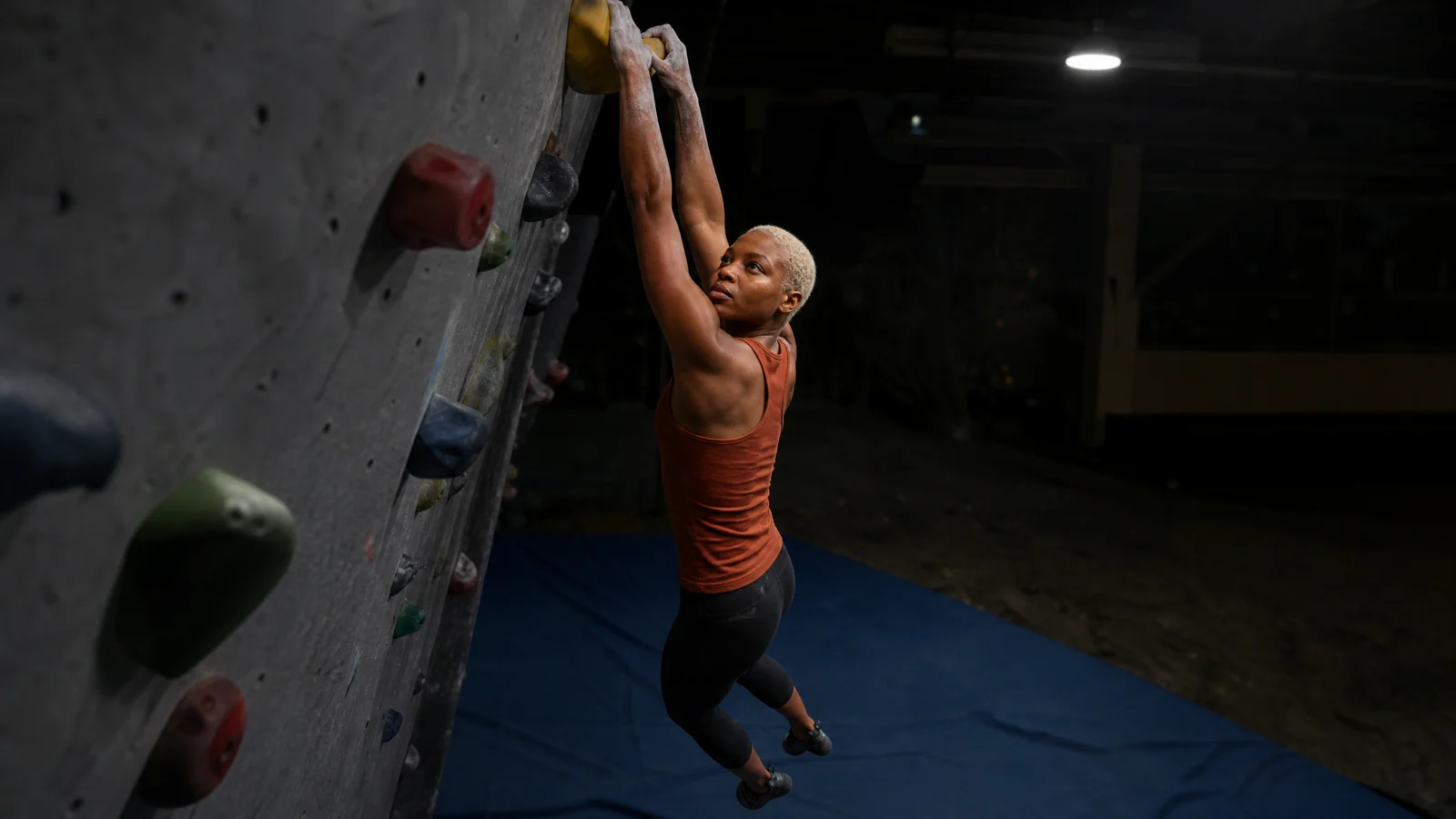
Beat 1 end state: both hands on the top hold, feet off the wall.

Beat 2 end state: in the air, back to the mat, the loose hold beside her.

Beat 3 end state: flat on the mat, eyes open to the lens, the hold by her head.
The camera plan
Drawn before anything was generated, by hand, no credits. The orange line is the camera; the mark is where the move changes shape; the numbers are where she is at the end of each beat. The plan is for you and for this page, not for the model: it is how you find out whether your move is one move before you pay to find out.
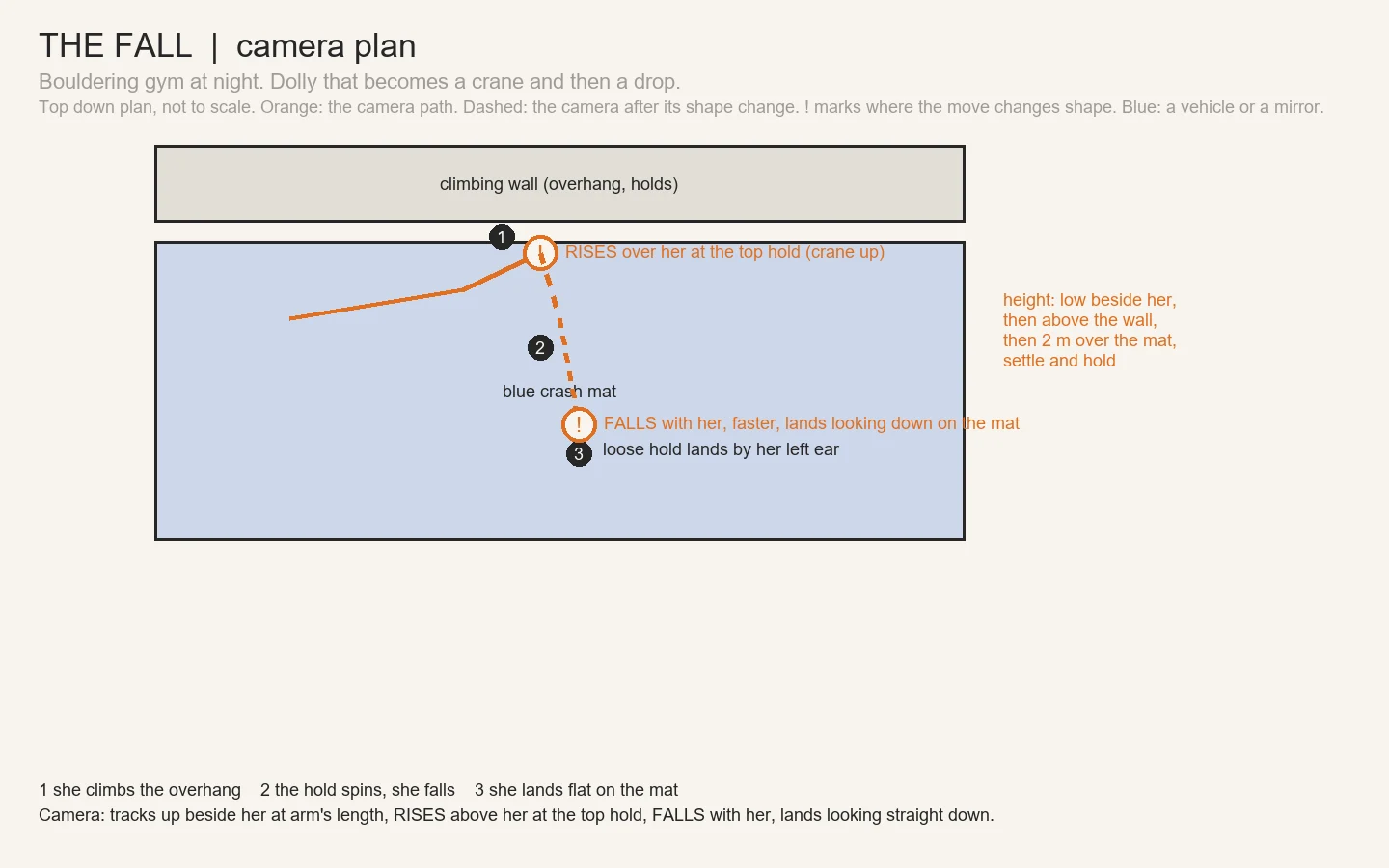
Track up beside her, rise over her at the top hold, fall with her, land two metres over the mat, hold.
Next: page 3, The Fall, the take and what broke.
Section 03
T01 | The Fall, The Take
► Generate every image and take on OpenArt.ai (GPT Image 2 and Seedance 2.5) : [ Use code DigiAI for 15% off plus 100 free credits ]
► Try BytePlus Lumina with my link: https://bit.ly/4rncByo
Use code LUMINADIG. The first 300 users get 100 free credits each.
The video above is the bare line: the same idea as one sentence, no references, ten seconds. A different woman, a soft cut at the fall. Below it is the take that holds, and every line of it.
The bare line, the control
Seedance 2.5, text to video, 16:9, 10 seconds, 480p, no references:

What it gave away: a woman the prompt never chose (ponytail, black top), a real climbing gym in daylight, and a soft cut between the fall and the mat. It is a good ten seconds. It is not your person, your set or your move.
The take
Seedance 2.5, element to video (not image to video: the references act as an art department, they are not the first frame), 16:9, 30 seconds, audio on, 480p for the draft and 720p for the final. References: Image 1 the face, Image 2 the body.
Block by block, what each part buys
- The register line names a real visual tradition and says "one continuous shot, no cuts of any kind" before anything else. Seedance 2.5 does what it is told; tell it first.
- The binding lines take ONLY what each image is for and ban the studio background by name. Without the ban the grey seamless comes into the gym.
- The set is a list of objects with positions and one light. A set written as a mood is redrawn by beat three.
- Each beat leads with the event in capitals, carries the person, names a consequence the world shows (the mat bellies, the hold bounces), and ends with an end state you can freeze and check. "Then holds" caps the motion.
- The camera paragraph writes the shape change twice: the term (crane up) and the plain action (lifts straight up past her and turns to look down). The verbs rises, falls, lands and settles are what keep it one shot. "Cut to" would cut.
- The closing two lines restate the two most expensive locks, the person and the no cut rule. Recency helps.
What to check on the draft, in this order, stop at the first failure
- 10 seconds: both hands on the top hold, the same face, the beauty mark on her right.
- 12 to 14 seconds: the camera drops with the chalk cloud, the wall sliding past without a cut.
- 20 seconds: flat on the mat, the hold beside her head, one person.
- 30 seconds: still, eyes open, nothing moving but the last dust.
What happened on the draft
The 480p draft passed on all three things: the person held from the wall to the mat, the set held, and the drop read as one move (quarter second frames across 12.5 to 14.25 show the wall sliding past continuously). One deviation to know about: the hold landed by her right side, not her left ear. The prompt said left ear in the end state; the model put it where the fall left it. If a small object’s landing place matters, name it in the camera line too, because the camera is looking at it when it lands. Nothing was re rolled.

The 480p draft at 0, 10, 12, 20 and 30 seconds. The final at 720p is the video on the previous page.
On the 720p final, the video on the previous page
The locked prompt, unchanged. She climbs to 10, the hold spins and she drops at 11 to 13 inside the chalk cloud, lands flat on the mat at 13 with the camera dropping with her, and the push to her face runs from 16 to 30 with the hold beside her head. Same person, same gym, one move.
Next: page 4, The Tube.
Section 04
T02 | The Tube, The Bible and Boards
► Generate every image and take on OpenArt.ai (GPT Image 2 and Seedance 2.5) : [ Use code DigiAI for 15% off plus 100 free credits ]
► Try BytePlus Lumina with my link: https://bit.ly/4rncByo
Use code LUMINADIG. The first 300 users get 100 free credits each.
A face seen through curved glass, a body with no floor under it, and a pair of goggles that must move once and stay moved. The take above holds all three because the wardrobe was named piece by piece before the wind started.

What this film teaches
An orbit that becomes a crane. The camera circles the outside of the glass tube at his height, and when the wind throws him up it breaks off the circle and rises with him, then comes back down and settles at his face with his palm on the glass. This page holds the bible, the boards and the plan. The next page holds the bare line, the take, and the one thing the model did that the prompt did not ask for.
The character bible
The eyebrow split is the identity detail here, and it reads even at 480p. The goggles are wardrobe, not a prop, so they live in the body image pushed up on his forehead; the take tells them when to come down.
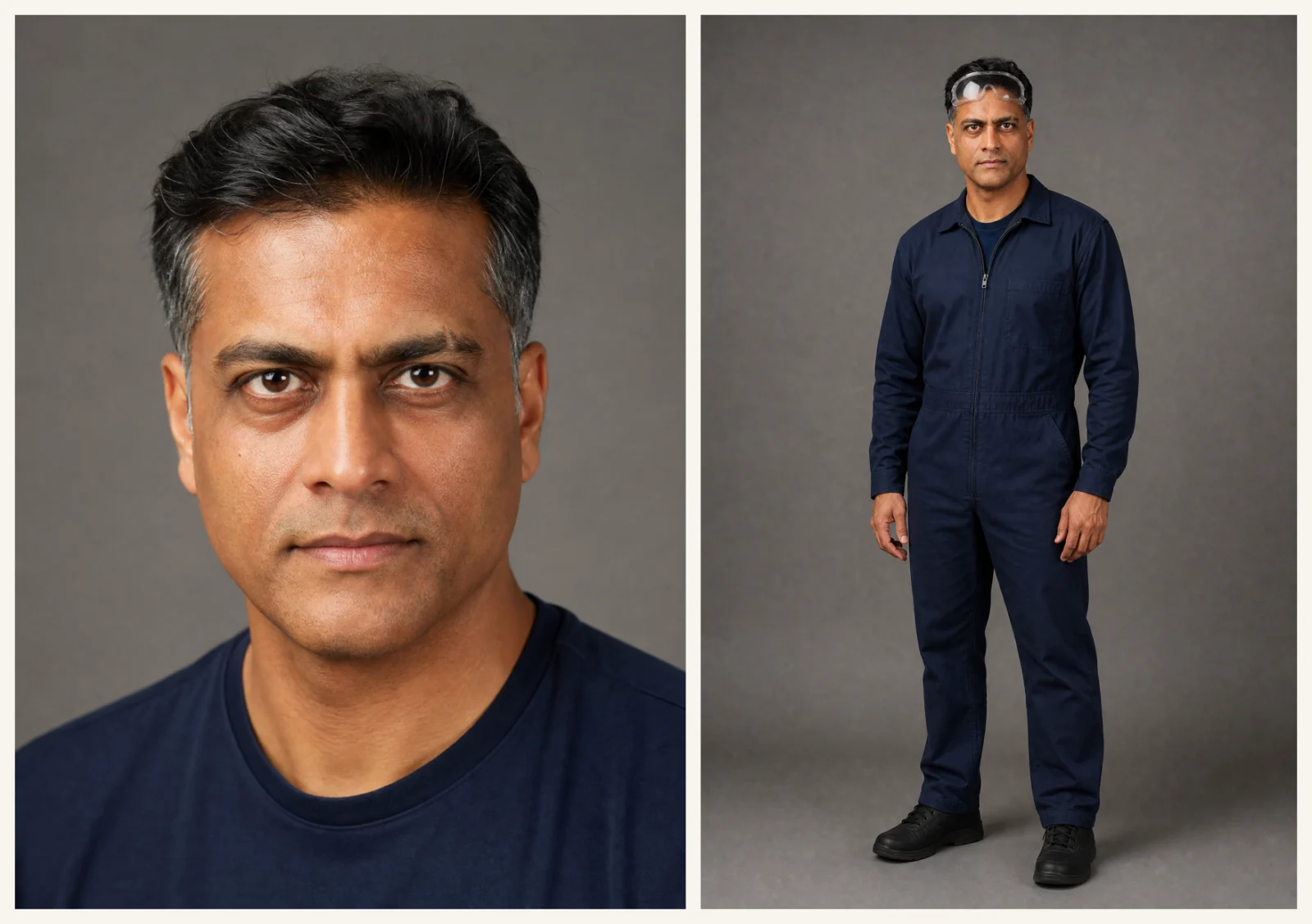
The face (left) and the body made from it (right), goggles on the forehead, flight suit zipped to the chest.
Face, GPT Image 2, text to image, 3:4, 2K, medium:
Body, GPT Image 2, image to image with the face as Image 1, 2:3, 2K, medium:
The three boards
GPT Image 2, image to image, 16:9, 2K, medium, the face as Image 1 and the body as Image 2.
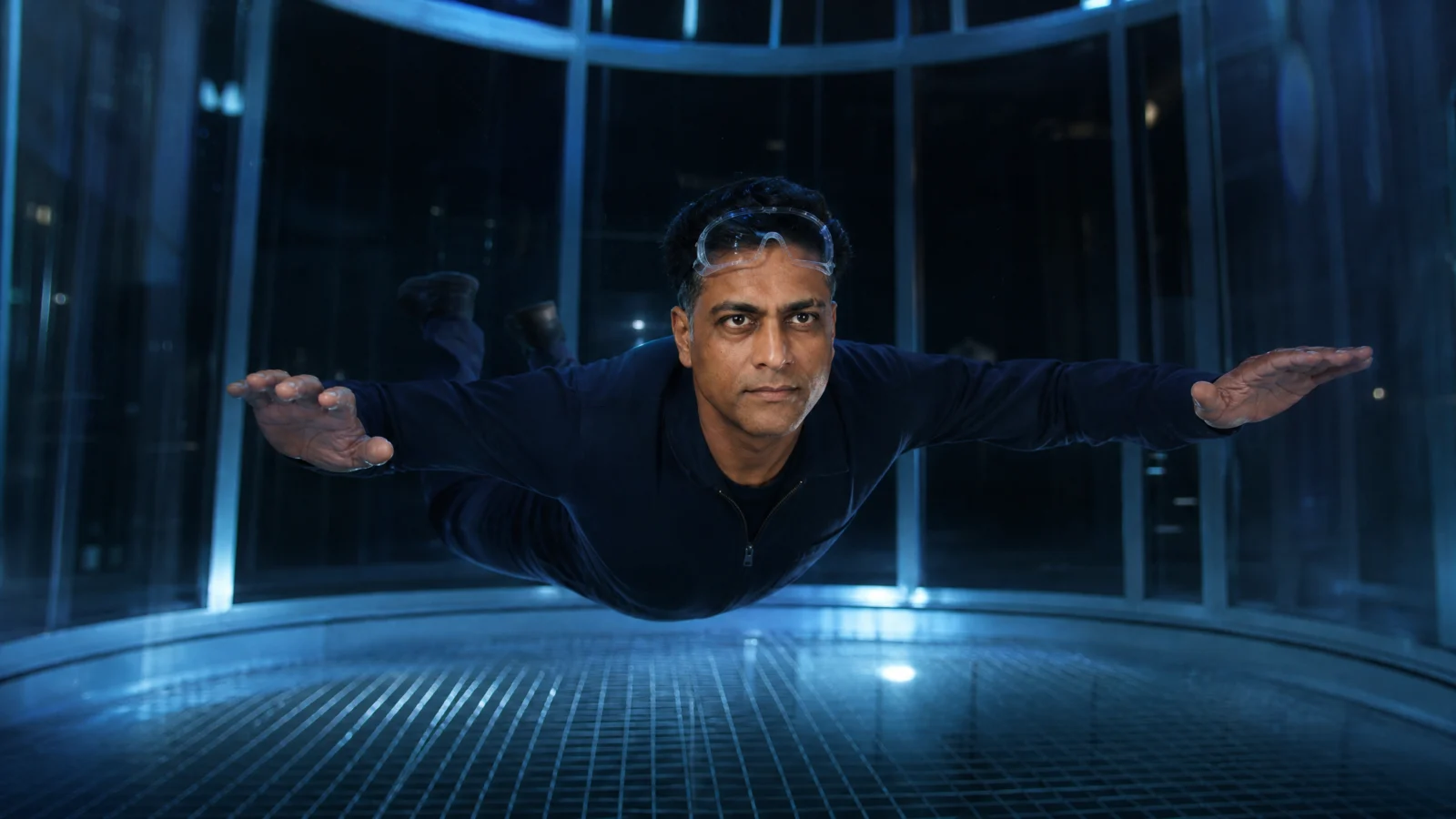
Beat 1 end state: belly down at waist height, arms out, goggles on his forehead, the camera outside the glass.

Beat 2 end state: thrown up the tube on his back, goggles over his eyes, seen from below.
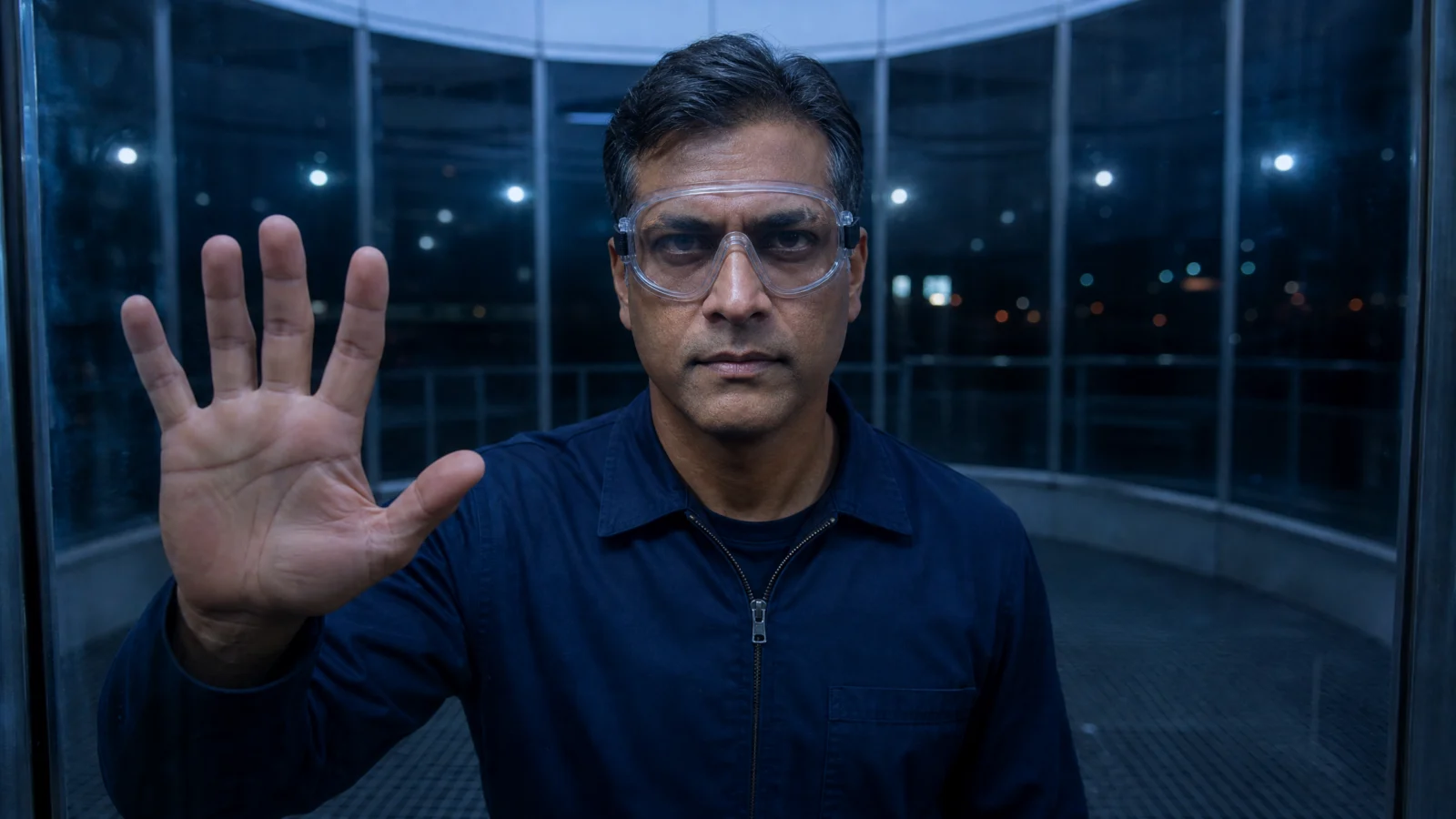
Beat 3 end state: standing on the mesh, one palm on the glass, still.
The camera plan
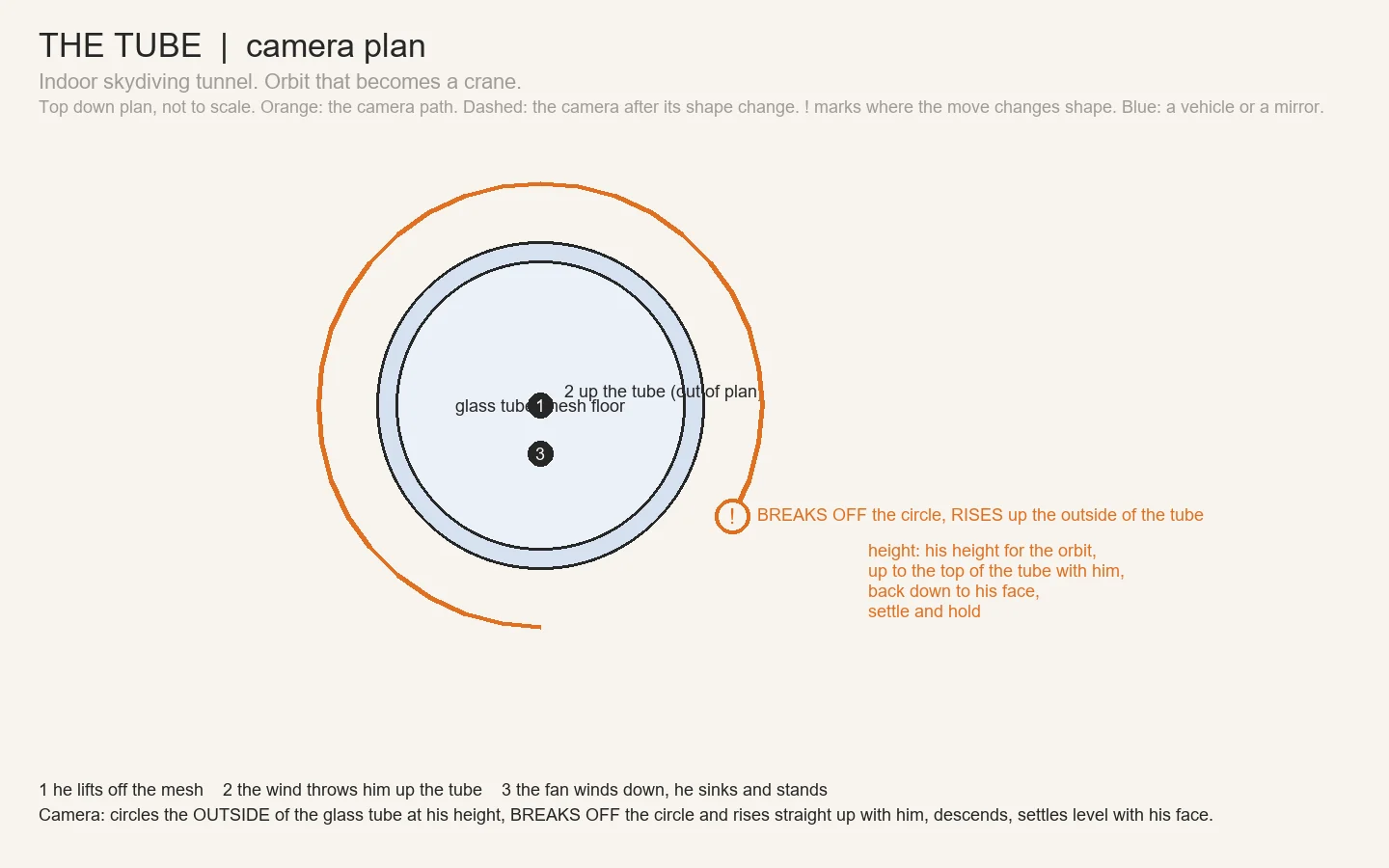
Circle the outside of the tube at his height, break off the circle when he is thrown up, rise with him, come down, settle at his face. Read the next page for what the model did with "outside".
Next: page 5, The Tube, the take and what broke.
Section 05
T02 | The Tube, The Take
► Generate every image and take on OpenArt.ai (GPT Image 2 and Seedance 2.5) : [ Use code DigiAI for 15% off plus 100 free credits ]
► Try BytePlus Lumina with my link: https://bit.ly/4rncByo
Use code LUMINADIG. The first 300 users get 100 free credits each.
The video above is the bare line. A helmet hides the face, the tube has no glass, and three angles are cut together. Below is the take that holds, and the one thing it did that was not asked for.

The bare line, the control
Seedance 2.5, text to video, 16:9, 10 seconds, 480p, no references:

What it gave away: a helmet with a visor, so there is no face to hold; a bare concrete tube with no glass; and three camera positions cut together inside ten seconds. The sentence asked for one shot from outside the glass and got neither.
The take
Seedance 2.5, element to video, 16:9, 30 seconds, audio on, 480p draft then 720p final. References: Image 1 the face, Image 2 the body.
Block by block, what is new in this one
- The goggles are a wardrobe change inside the take: on the forehead in beat 1, pulled down at 12 seconds, over his eyes in every end state after. A thing that must change once and then stay changed is written in the beat where it changes and in every end state that follows.
- "He floats only while the wind is up" and "him floating after the wind has stopped" in DO NOT: the physics regime stated as a sentence and its failure banned by name.
- The glass is the hardest object in the film. "His face seen through the curved glass" and "the glass reflections kept" tell the model the glass is real.
What to check on the draft
- 10 seconds: belly down at waist height, goggles up, the camera outside the glass.
- 12 to 14 seconds: the goggles come down, the camera breaks off the circle and rises, no cut.
- 20 seconds: back at waist height, goggles down.
- 30 seconds: standing, palm on the glass close to the lens, still.
What happened on the draft, and the lesson
The person held, the strongest identity of the six (the eyebrow split reads at 480p). The goggles came down at 12 seconds exactly as written. The shape change at 12.5 to 13.75 seconds is one fast move, not a cut. The deviation: for the rise the model took the camera INSIDE the tube and looked up at him from below, then brought it back to the glass for the last ten seconds. The prompt said "circles the OUTSIDE of the glass" once, in the camera paragraph, and said nothing about the outside during the throw. Seedance 2.5 takes the most direct route to the thing it is told to look at, and the direct route to a man high in a tube is from inside it.
The fix, for your own take: name the thing that must stay between the lens and the person in every beat, not just in the camera line. "The curved glass stays between the camera and him for all thirty seconds; the camera never enters the tube." The take was not re rolled, because all three judging points pass and the page is more useful with the deviation shown than hidden.

The 480p draft at 0, 10, 12, 20 and 30 seconds. At 12 the goggles are coming down; between 12 and 20 the camera went inside.
On the 720p final, the video on the previous page
The locked prompt, unchanged. He steps through the door at 0, lifts at 4, floats at 8 to 10 with the goggles on his forehead, pulls them down at 11 and is thrown up at 13 to 16. One deviation: the camera did not climb the outside of the glass with him. It dropped to the mesh and looked straight up the tube at him small near the top, then returned to his face as he came down. He stands at 25 and puts his palm on the glass at 30. The rise was written as a crane; the model read the tube as a thing to look up, not to climb. A climb needs the glass wall in frame the whole way: say "the curved glass stays at the left edge of the frame as the camera rises".
Next: page 6, The Market.
Section 06
T03 | The Market, The Bible and Boards
► Generate every image and take on OpenArt.ai (GPT Image 2 and Seedance 2.5) : [ Use code DigiAI for 15% off plus 100 free credits ]
► Try BytePlus Lumina with my link: https://bit.ly/4rncByo
Use code LUMINADIG. The first 300 users get 100 free credits each.
A vehicle under a person is two things that must agree for thirty seconds. The take above keeps one bike with two wheels, one woman, and one bunch of tulips that leaves the box and lands where the end state said.
What this film teaches
The first take with a prop that must hold: a cargo bike, given its own reference image as Image 3, because a bike described in words grows a third wheel by the second beat. The move is a low tracking dolly that becomes a crane: knee height beside the front wheel, then straight up over the pallets at the brake, looking down the aisle at the stopped bike, the trolley and the tulips on the floor, settling on one petal.
The character bible and the prop
The cap is wardrobe, so it is in both images. The nose stud on her right is the identity detail. The bike gets its own image: a plain object on a plain floor, nothing else in frame, no rider, so the model learns the bike and not a scene.
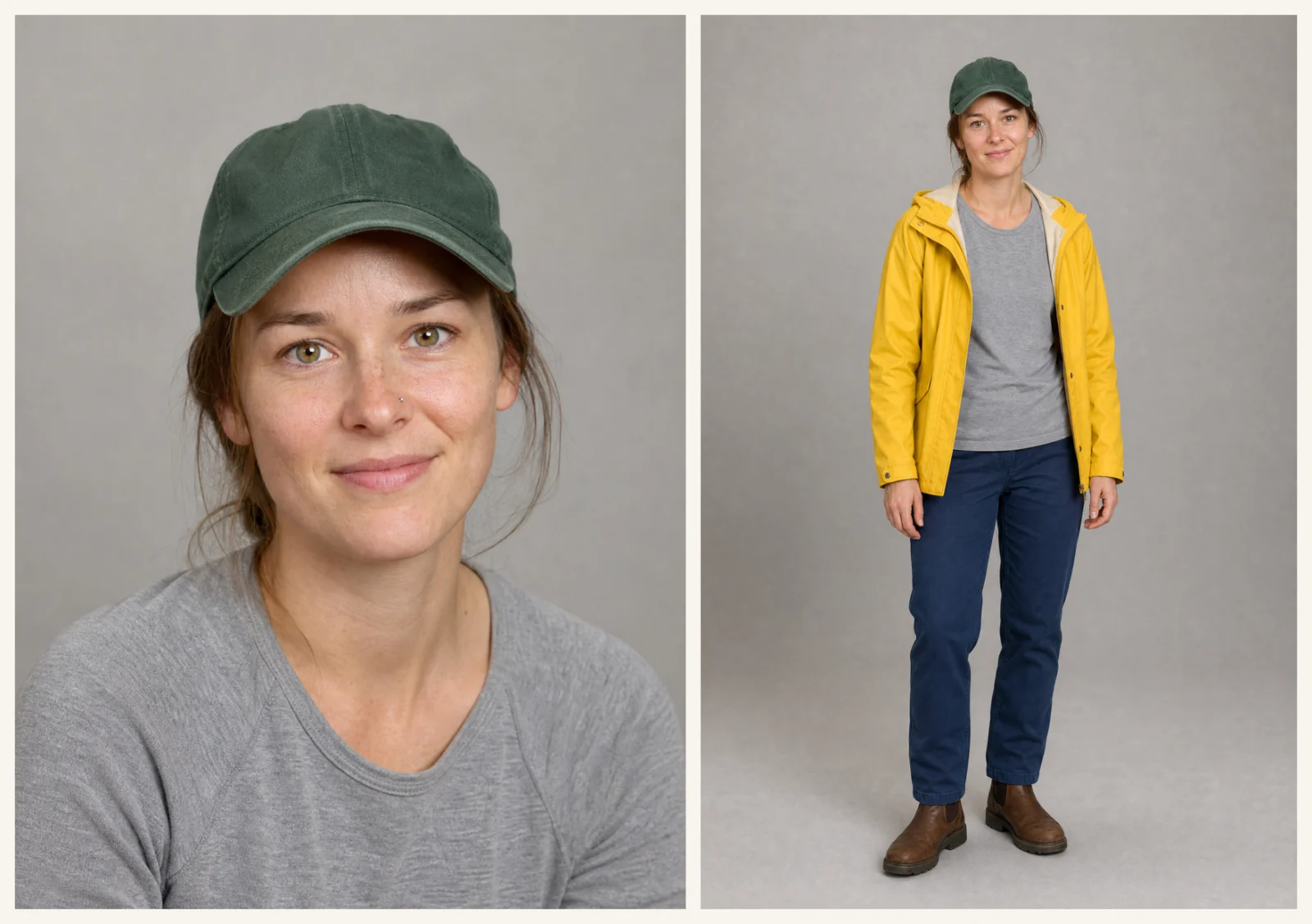
The face (left) and the body made from it (right).
Face, GPT Image 2, text to image, 3:4, 2K, medium:
Body, GPT Image 2, image to image with the face as Image 1, 2:3, 2K, medium:

The prop reference. GPT Image 2, text to image, 16:9, 2K, medium.
The three boards
GPT Image 2, image to image, 16:9, 2K, medium, the face as Image 1, the body as Image 2, the bike as Image 3.
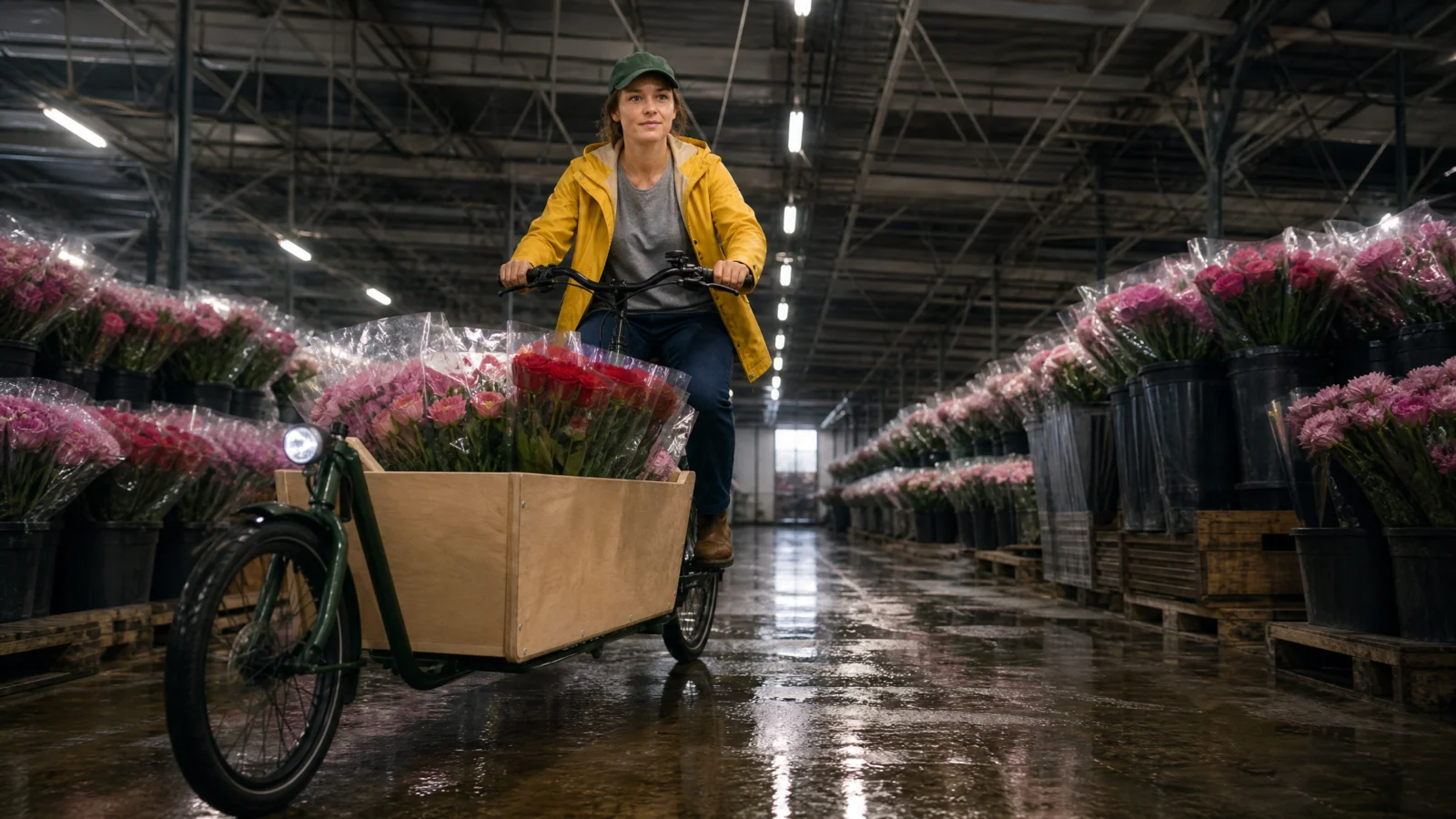
Beat 1 end state: halfway down the aisle, both wheels down, the camera low beside the front wheel.

Beat 2 end state: stopped a foot from the trolley, the tulips on the floor in front of the wheel.
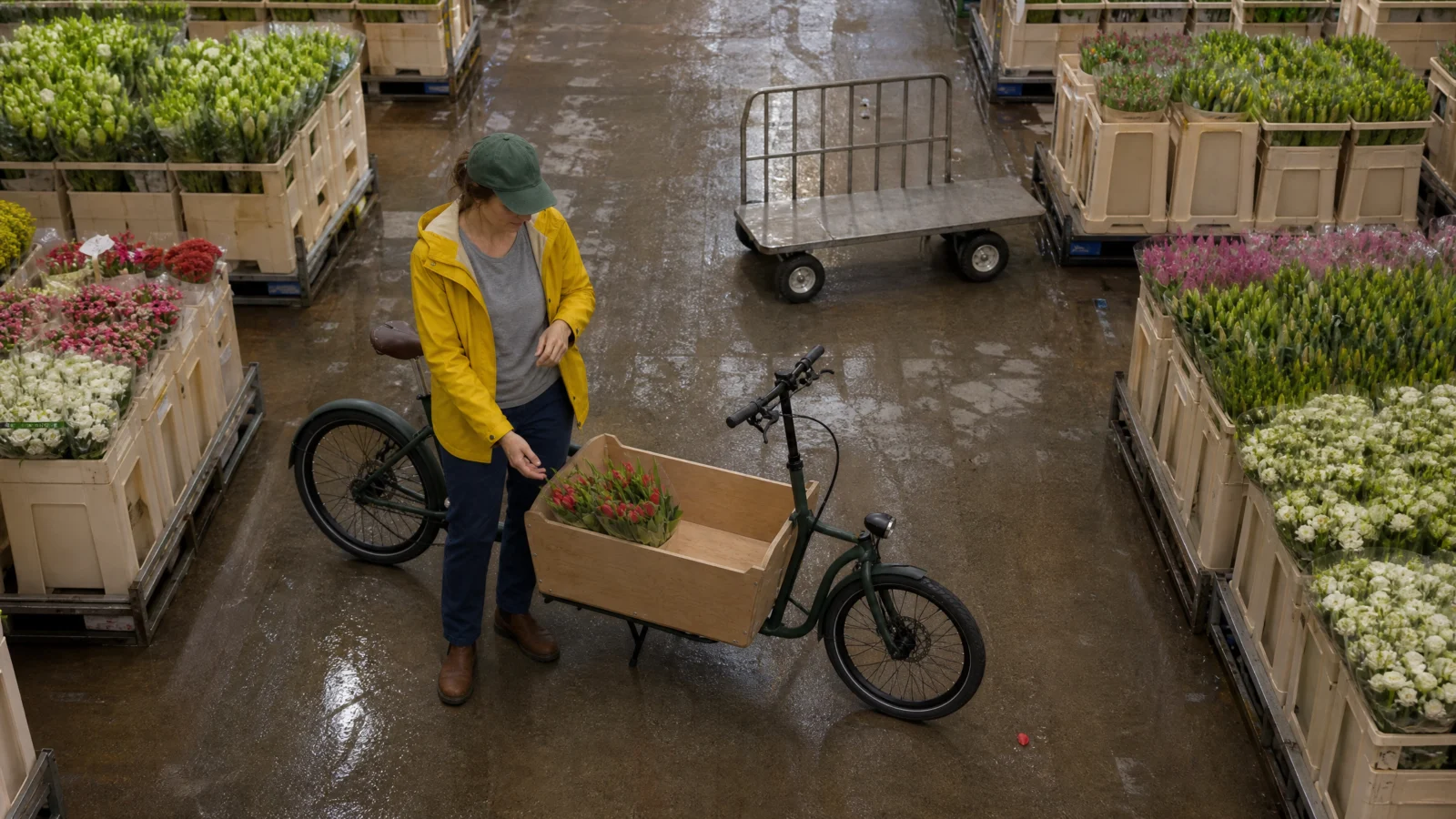
Beat 3 end state: the bunch back in the box, one red petal on the floor.
The camera plan
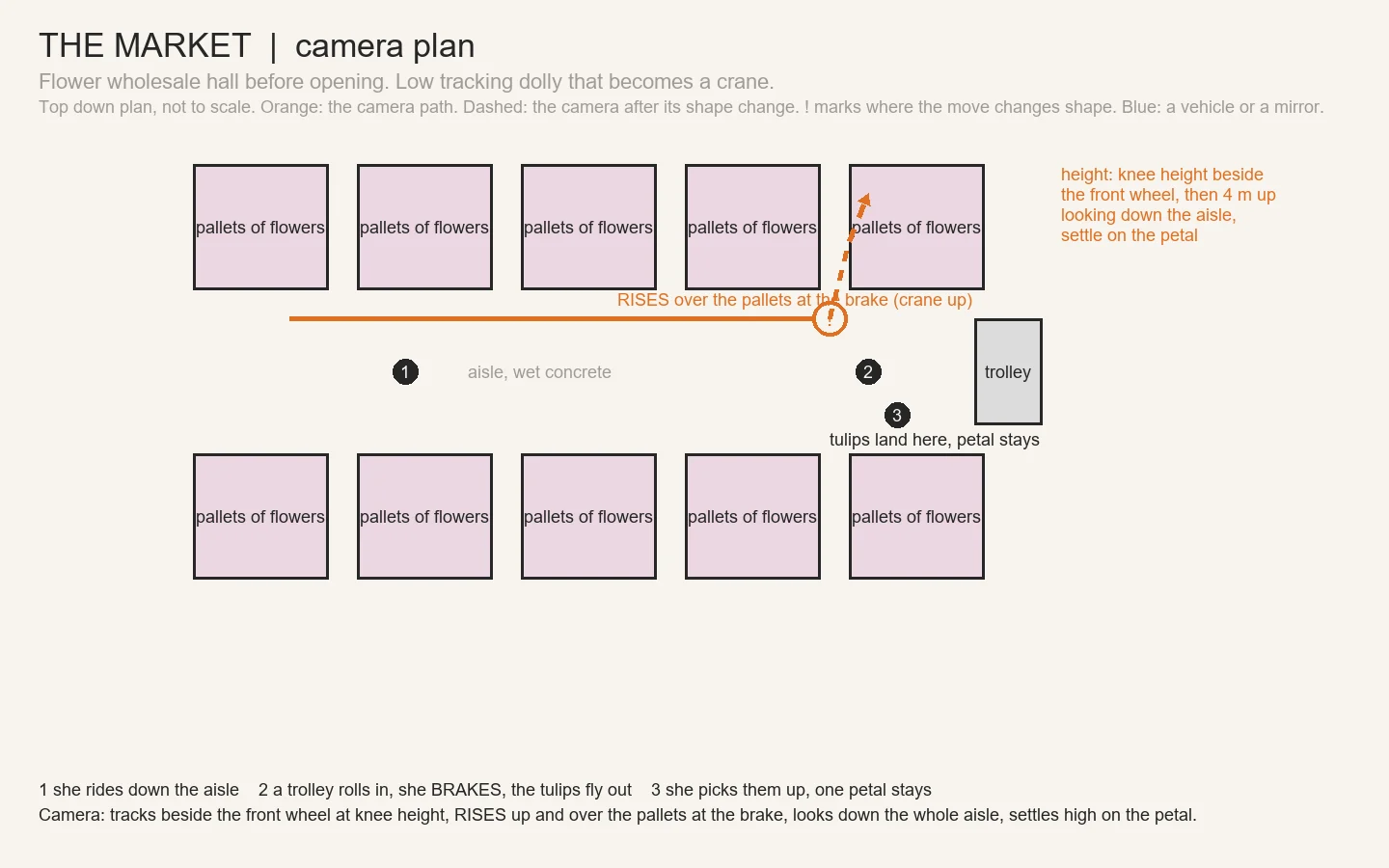
Knee height beside the front wheel, rise over the pallets at the brake, look down the aisle, settle on the petal.
Next: page 7, The Market, the take and what broke.
Section 07
T03 | The Market, The Take
► Generate every image and take on OpenArt.ai (GPT Image 2 and Seedance 2.5) : [ Use code DigiAI for 15% off plus 100 free credits ]
► Try BytePlus Lumina with my link: https://bit.ly/4rncByo
Use code LUMINADIG. The first 300 users get 100 free credits each.
The video above is the bare line: a sunny street market, other people, a different woman, and a cut to the bunch on the ground. Below is the take that keeps one hall, one woman, one bike and one bunch, and lands on a petal.
The bare line, the control
Seedance 2.5, text to video, 16:9, 10 seconds, 480p, no references:

What it gave away: the hall became an outdoor market in sunshine with shoppers; the woman is whoever the model reached for; the bike is a different bike; and the bunch on the ground arrives by a cut. Pretty, and nothing in it is yours.
The take
Seedance 2.5, element to video, 16:9, 30 seconds, audio on, 480p draft then 720p final. References: Image 1 the face, Image 2 the body, Image 3 the bike. Attach all three in the OpenArt interface before you paste.
Block by block, what is new in this one
- A third binding line for the prop, in the same form as the person: take exactly this, exactly one, do not reproduce the plain floor. "Exactly two wheels" is a count line, because a cargo bike is the kind of object the model redraws with three.
- The thrown object has a landing place in the end state (in front of the front wheel) and a trace that outlives it (one petal), so the last ten seconds have something to settle on.
- "Nobody else is in the hall" in the set and "other shoppers or workers" in DO NOT, because a market summons a crowd and a crowd is where identity goes.
What to check on the draft
- 10 seconds: riding, two wheels, the box full, the camera low.
- 11 to 14 seconds: the trolley, the brake, the bunch leaving the box, the camera rising with no cut.
- 20 seconds: stopped a foot from the trolley, the tulips in front of the wheel.
- 30 seconds: the bunch back in the box, one petal on the floor, still.
What happened on the draft
The person held, the cap and the yellow jacket held, the bike held with its plywood box and two wheels, the trolley rolled in at 11, the tulips left the box at 14 and lay in front of the wheel at 20, and one petal was on the floor at 25 and 30. The rise from low to high read as one move. The deviation: the camera rode in front of the bike for the first ten seconds, not beside the front wheel. The model put the camera where the face was. If a side on track matters to you, say what the camera does not see ("the camera never sees her face straight on until the crane") as well as where it is. Not re rolled.

The 480p draft at 0, 10, 12, 20 and 30 seconds.
On the 720p final, the video on the previous page
The locked prompt, unchanged, and the same deviation as the draft: the camera rode in front of the bike for the first ten seconds, looking back at her. The trolley rolls in at 11, she brakes at 12 to 13, the tulips are out of the box at 14 and on the floor in front of the wheel at 20 as the camera rises over them, she picks them up at 25, and one red petal is on the concrete at 30. Two wheels, one bike, one woman throughout.
Next: page 8, The Apex.
Section 08
T04 | The Apex, The Bible and Boards
► Generate every image and take on OpenArt.ai (GPT Image 2 and Seedance 2.5) : [ Use code DigiAI for 15% off plus 100 free credits ]
► Try BytePlus Lumina with my link: https://bit.ly/4rncByo
Use code LUMINADIG. The first 300 users get 100 free credits each.
Two subjects that must not merge: a car that slides and a woman who does not move. The take above keeps the flat white saloon with its one blue door and a marshal who never flinches, and draws the tyre marks around her.
What this film teaches
The vehicle take. A low tracking dolly that becomes a crane: hubcap height as the car comes in, straight up over the marshal at the apex, looking down on the loop of tyre marks, settled. The car gets its own reference image because a vehicle described in words changes model between beats. The marshal is the identity test: a person who must stand still while the frame fills with smoke and spray.
The character bible and the prop
The grey bob and the mole below the left corner of her mouth are the identity. The orange vest and the whistle are wardrobe. The flag is a plain object the take names; it needs no image. The car does.
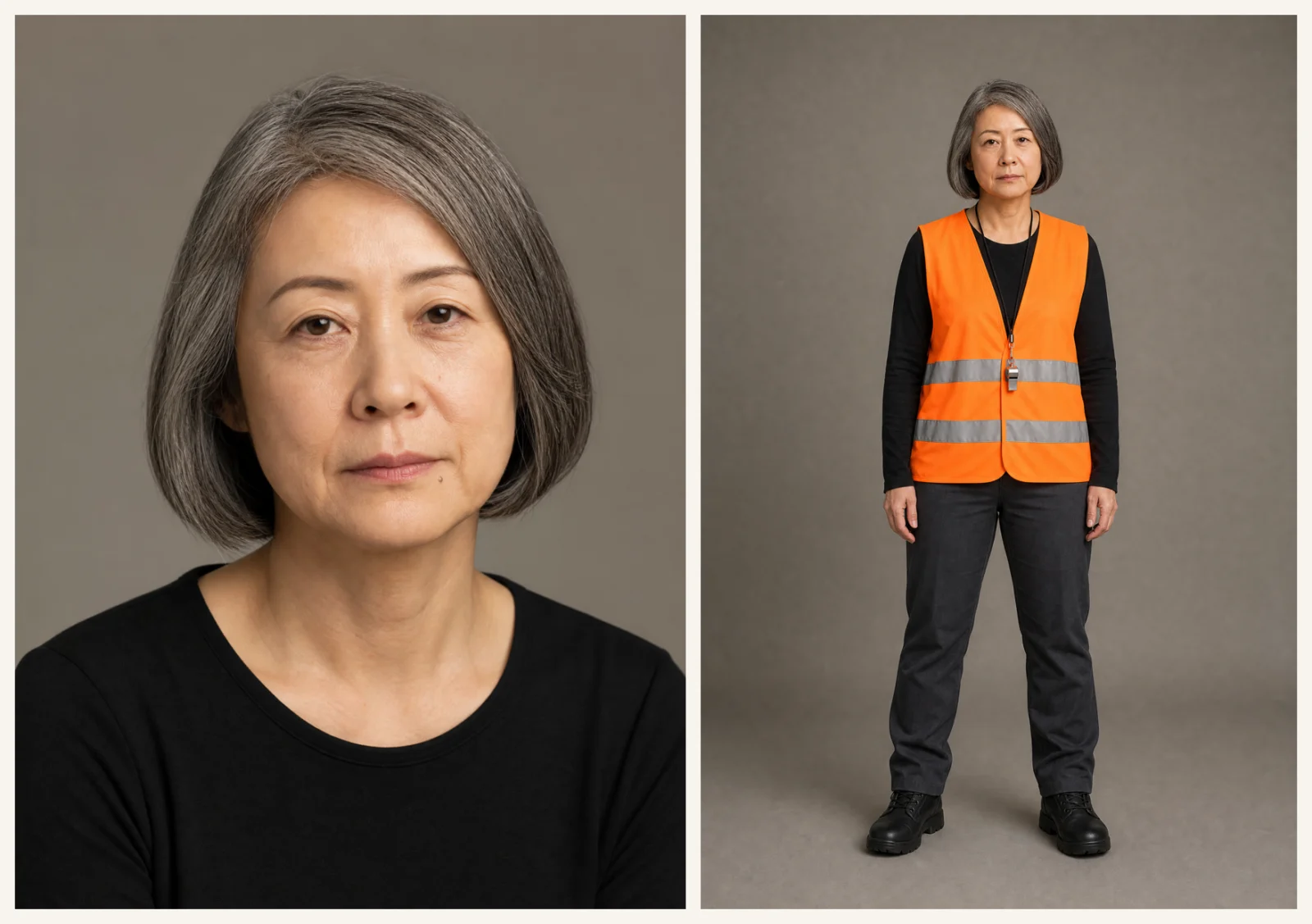
The face (left) and the body made from it (right).
Face, GPT Image 2, text to image, 3:4, 2K, medium:
Body, GPT Image 2, image to image with the face as Image 1, 2:3, 2K, medium:

The prop reference. GPT Image 2, text to image, 16:9, 2K, medium. The one blue door is the car’s asymmetric detail, for the same reason the person has one.
The three boards
GPT Image 2, image to image, 16:9, 2K, medium, the face as Image 1, the body as Image 2, the car as Image 3. Board 2 drew the flag red where the bible says yellow; boards 1 and 3 are yellow. A board drift is worth knowing before the take, and the take names the colour.

Beat 1 end state: the car far off and coming, she has not moved.

Beat 2 end state: the car sideways round the cone in smoke and spray, the cone standing, her still.

Beat 3 end state: straight down, the loop of tyre marks around her, the car tiny.
The camera plan
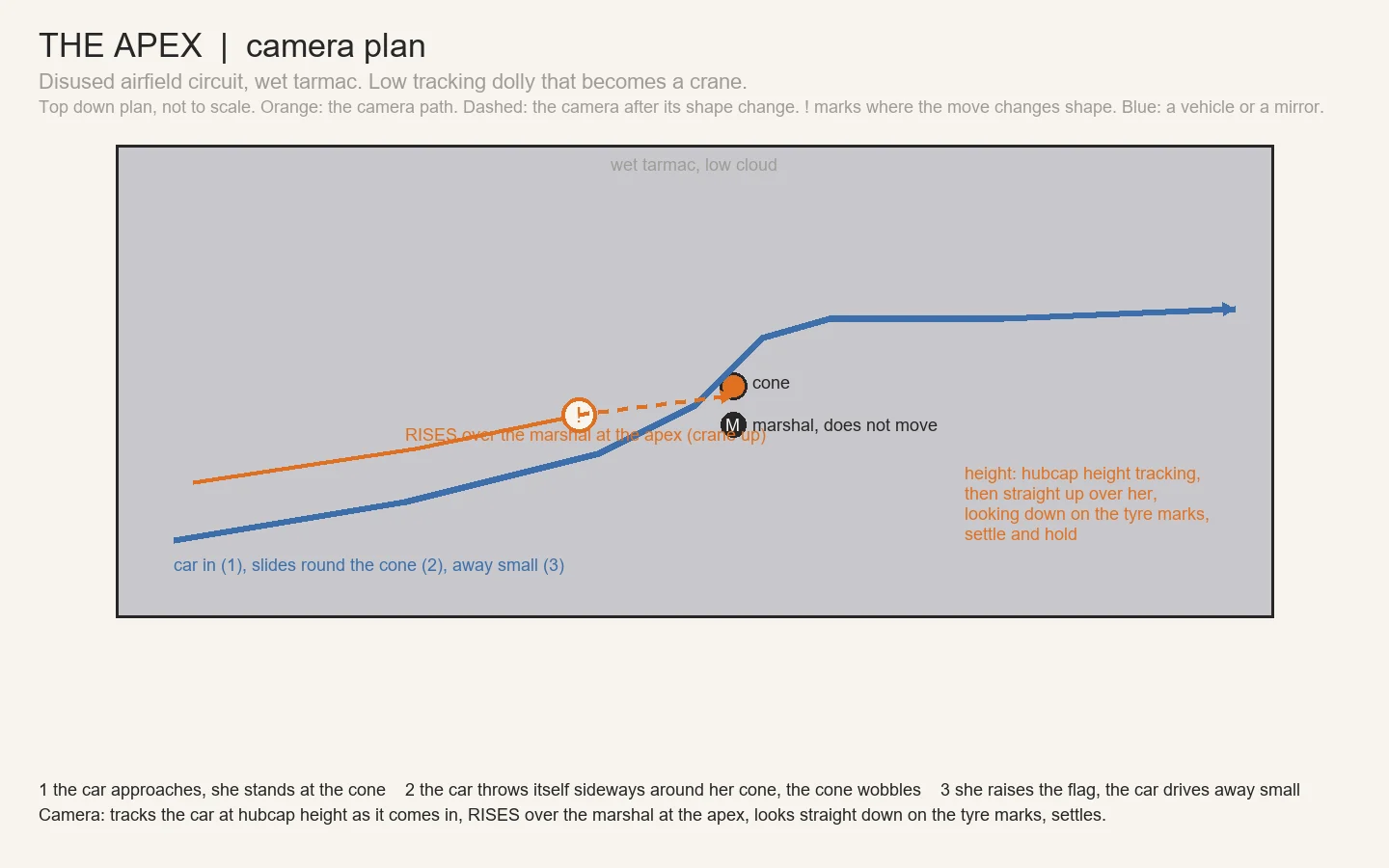
Track the car at hubcap height, rise over the marshal at the apex, look straight down on the marks, settle. The blue line is the car.
Next: page 9, The Apex, the take and what broke.
Section 09
T04 | The Apex, The Take
► Generate every image and take on OpenArt.ai (GPT Image 2 and Seedance 2.5) : [ Use code DigiAI for 15% off plus 100 free credits ]
► Try BytePlus Lumina with my link: https://bit.ly/4rncByo
Use code LUMINADIG. The first 300 users get 100 free credits each.
The video above is the bare line: a black coupe at dusk, a marshal the model invented, and a cut to the drone shot. Below is the take that keeps the white saloon, the blue door and the woman who holds, and the three takes it took to get the car past her.
The bare line, the control
Seedance 2.5, text to video, 16:9, 10 seconds, 480p, no references:

What it gave away: the car the model likes (a dark coupe at dusk), a marshal of its own with a chequered flag, and the low to high move done as a cut at 8 seconds, after which the marshal is gone and a field of cones stands where one stood. A bare sentence has no count line and no camera path, so the model supplies both.
The take, as it finally ran
Seedance 2.5, element to video, 16:9, 30 seconds, audio on, 720p. References: Image 1 the face, Image 2 the body, Image 3 the car. This is take 3; the two before it are below.
Block by block, what this one carries that the first did not
- Geometry as what sits between what: the cone is always between her and the car. A distance alone did not hold; a thing in between did.
- The camera belongs to the car for the first ten seconds. Seedance puts the camera where the face is; this gives it another owner until the rise.
- The flag is loose light cloth in a strong steady wind, named in the set and every beat. Asked to flap, it stayed limp twice; cloth in a named wind streamed from frame one.
- The raise is pinned to 21 and the lower to 26. Unpinned, it never happened.
- DO NOT names this scene’s own collapses: the car touching or passing through her, the cone knocked flat, the camera through the cone, a limp flag.
What happened, in three takes
Take 1, the draft: the person held, the car was the prop car, the slide went round the cone and the marks looped her, but the camera stayed behind the marshal and the crane rose three metres. Judged a pass and run at 720p unchanged. That final put the car into her at 10 to 12 and left the flag hanging still. The build missed it; the review caught it. The quarter second check at the hit is not optional.

Take 1 at 480p: 0, 10, 12, 20, 30 seconds.
Take 2, a 480p re roll with the cone written between her and the car and the camera given to the car: the collision was gone and the camera rode the wheel and rose near top down. Three lines failed: the flag hung limp, the cone was knocked flat at 12.5, the flag was never raised.
Take 3, those lines changed and nothing else, run once at 720p: the final on the previous page. The car passes behind her and never touches her, closer than the three metres asked. The cone stands. The flag streams in every frame and goes up at 21. The camera rides the car, rises from 13 and holds straight down from 20 over the loop of marks.

Take 3 at 720p: 0, 10, 12, 15, 20, 30 seconds.
Next: page 10, The Split, two takes.
Section 10
T05 | The Split, The Bible and Boards
► Generate every image and take on OpenArt.ai (GPT Image 2 and Seedance 2.5) : [ Use code DigiAI for 15% off plus 100 free credits ]
► Try BytePlus Lumina with my link: https://bit.ly/4rncByo
Use code LUMINADIG. The first 300 users get 100 free credits each.
Bullet time is the most copied one take on the internet this season and the hardest to ask for, because a freeze is a thing the model does to the camera, not to the world. The take above slows the world and keeps the camera moving. It also did something the prompt said not to, and the next page shows it twice.
What this film teaches
The first impossible move: a handheld approach that becomes a bullet time half orbit. The camera walks in behind her shoulder, and at the instant the axe lands time slows to a near stop, chips hang in the air, one leaf keeps falling, and the camera travels in a level half circle round the frozen scene to her face. The rule that makes it work: bullet time is written as time slowing while the camera keeps moving and one thing keeps moving. Written as a freeze it comes back as a still frame.
The character bible
The chipped front tooth is the identity detail and the hardest in the vault to keep, because it only shows when she opens her mouth. The apron is wardrobe. The axe is a plain tool the take names.

The face (left) and the body made from it (right).
Face, GPT Image 2, text to image, 3:4, 2K, medium:
Body, GPT Image 2, image to image with the face as Image 1, 2:3, 2K, medium:
The three boards
GPT Image 2, image to image, 16:9, 2K, medium, the face as Image 1 and the body as Image 2.
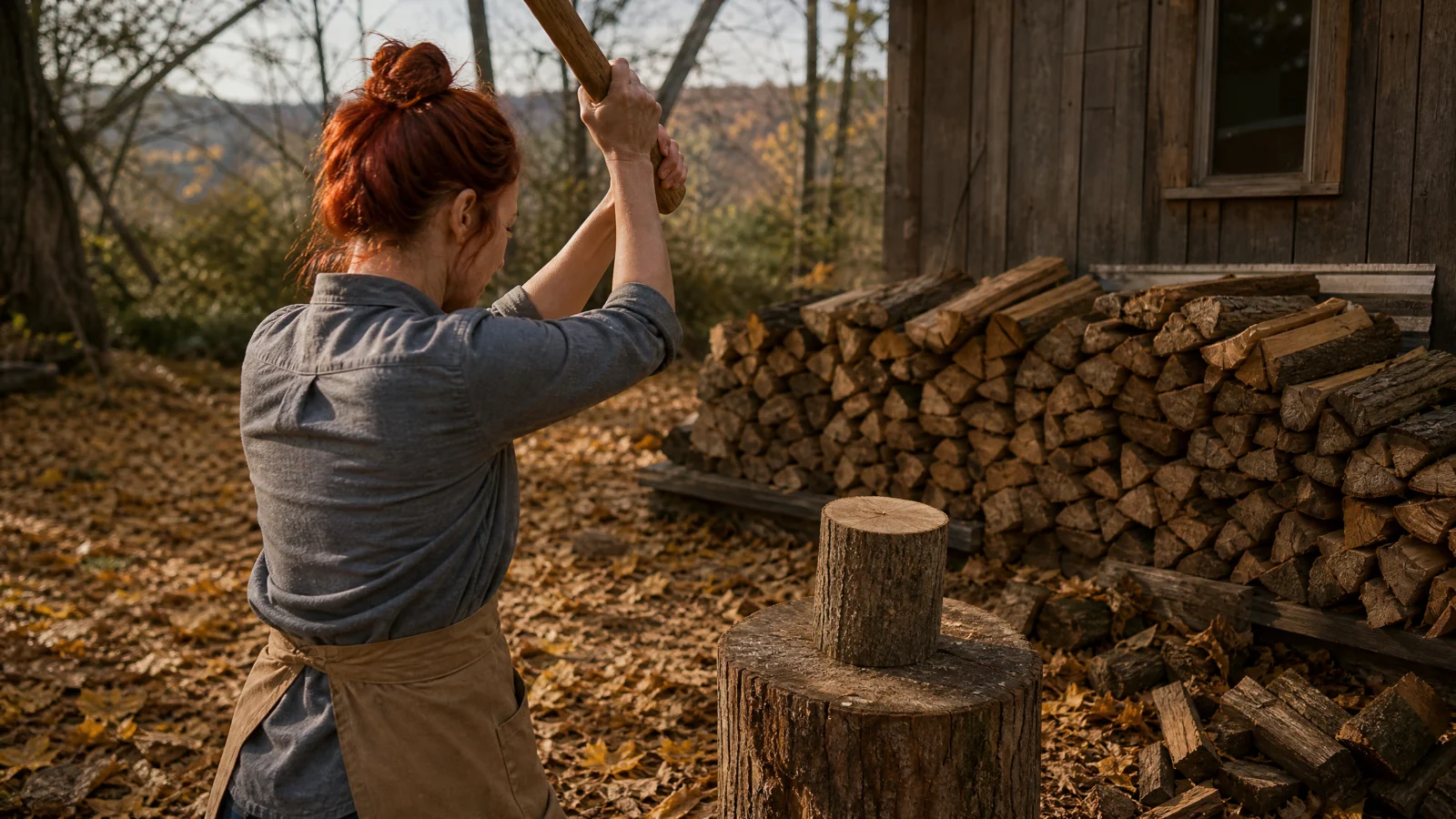
Beat 1 end state: the axe at the top of the swing, the camera behind her right shoulder.

Beat 2 end state: time stopped at the split, chips hanging, one leaf falling, the camera halfway round.

Beat 3 end state: the halves on the ground, the axe head on the block, her hand on the handle.
The camera plan
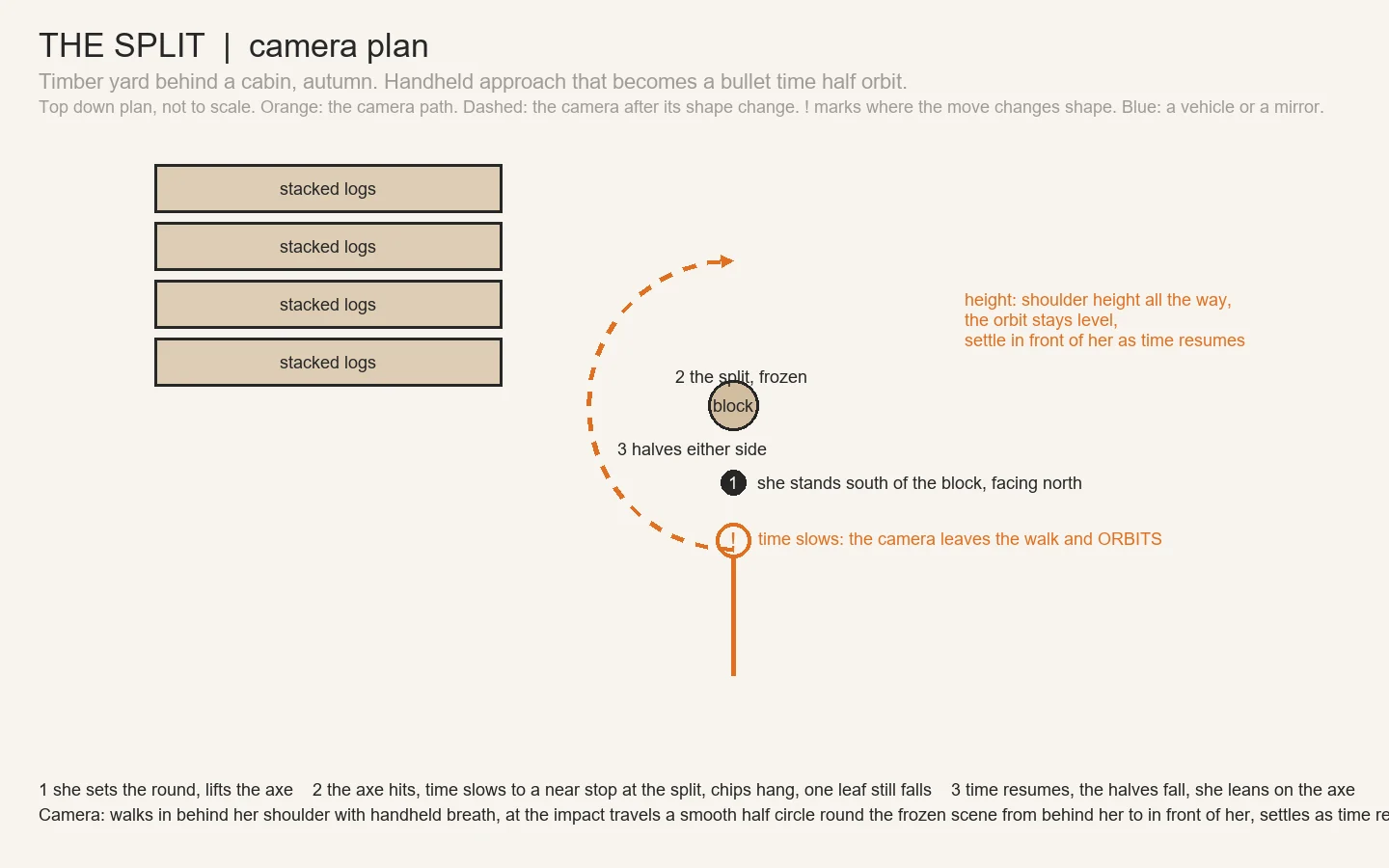
Walk in behind her right shoulder, orbit only when the axe lands and time slows, arrive in front of her as time resumes, settle. The next page shows how far the model moved from this line, and why.
Next: page 11, The Split, two takes.
Section 11
T05 | The Split, Two Takes
► Generate every image and take on OpenArt.ai (GPT Image 2 and Seedance 2.5) : [ Use code DigiAI for 15% off plus 100 free credits ]
► Try BytePlus Lumina with my link: https://bit.ly/4rncByo
Use code LUMINADIG. The first 300 users get 100 free credits each.
The video above is the bare line: a different woman, a log on trestles, cuts, no freeze. Below are two controlled takes. The first taught something the second confirmed, and the page keeps both.

The bare line, the control
Seedance 2.5, text to video, 16:9, 10 seconds, 480p, no references:

What it gave away: the person, the yard and the move. The sentence says time freezes; the model cut to a close up of the axe instead.
Take 1 and what it taught
Take 1 kept the person and the set, slowed time at the split with chips and a yellow leaf hanging from 16 to 20, and read as one move. But the camera circled her during the set up and was in front of her when the axe landed, the hit came at 14 to 16 not 12, and the round was a log a metre long. The orbit happened in the wrong place.

Take 1 at 0, 8, 14, 20 and 30 seconds. By 8 the camera is at her front.
Take 2, the re roll, and the prompt that ran it
Five changes from take 1: a bucket sized round in the set list; beat 1 holds the camera behind her right shoulder and ends "her back to the camera"; beat 2 opens the orbit "only now, at 12 seconds"; DO NOT bans "the camera circling her before the hit"; the closing lock repeats the camera rule. Settings: Seedance 2.5, element to video, 16:9, 30 seconds, audio on, 480p draft then 720p final, Image 1 the face, Image 2 the body.

Take 2 at 0, 10, 12, 20 and 30 seconds. The round is right, the hit lands at 12 to 13, the chips hang, the leaf crosses the lens.
What take 2 confirmed, and the finding
Take 2 fixed the round, the timing and the freeze. The camera again went to her face before the hit (4 to 8 seconds) and pushed in during the freeze instead of orbiting. Two takes, two prompt forms, one result: Seedance 2.5 moves the camera to the face before the action and will not hold a back view through a hit. A model finding, not a prompt problem. One re roll per film is the rule, so take 2 is the final. The fix to try on your own: do not ask the camera to travel to the face at all. Start it at her left side, level with the block, so the only travel left is the half orbit during the freeze, and write "the camera never sees her back".
On the 720p final, the video on the previous page
The take 2 prompt, unchanged. Her back is to the lens for four seconds, then the camera is at her front and stays, as in both drafts. The round came out knee high, so a size written once in the set list is weaker than a size written in every beat. The hit lands at 12, the chips hang to 16 with the leaf falling past, the halves fall at 20, she leans on the axe and smiles from 25. The person held throughout.
Next: page 12, The Mirror.
Section 12
T06 | The Mirror, The Bible and Boards
► Generate every image and take on OpenArt.ai (GPT Image 2 and Seedance 2.5) : [ Use code DigiAI for 15% off plus 100 free credits ]
► Try BytePlus Lumina with my link: https://bit.ly/4rncByo
Use code LUMINADIG. The first 300 users get 100 free credits each.
The second impossible move, and the one that worked first time. The take above starts in the rain outside a first floor window, passes through the glass without breaking it, orbits a man through three turns, and ends on his face and his reflection a hand apart. The reflection is the test: a mirror is a second person the model is allowed to draw.
What this film teaches
A fly in that becomes an orbit that becomes a push in: two shape changes, which is the most this method allows. And the mirror. A reflection has to be the same man, in the same clothes, moving in the same instant, facing the right way. The take writes that as a count line ("his reflection in the mirror is that same person, same face, same clothes, moving in the same instant") and bans the failures by shape ("a different person in the mirror, a reflection that lags or faces the wrong way"). The through glass move is written as a physical pass with a second on it and the glass told to stay whole.
The character bible
The shaved head makes the face the whole identity, so the scar on the right of his chin carries more than usual. The sweatband on the left wrist is the object the event throws.

The face (left) and the body made from it (right).
Face, GPT Image 2, text to image, 3:4, 2K, medium:
Body, GPT Image 2, image to image with the face as Image 1, 2:3, 2K, medium:
The three boards
GPT Image 2, image to image, 16:9, 2K, medium, the face as Image 1 and the body as Image 2. Look at the reflection in all three before you spend on video: if the boards cannot hold it still, the take will not hold it moving.
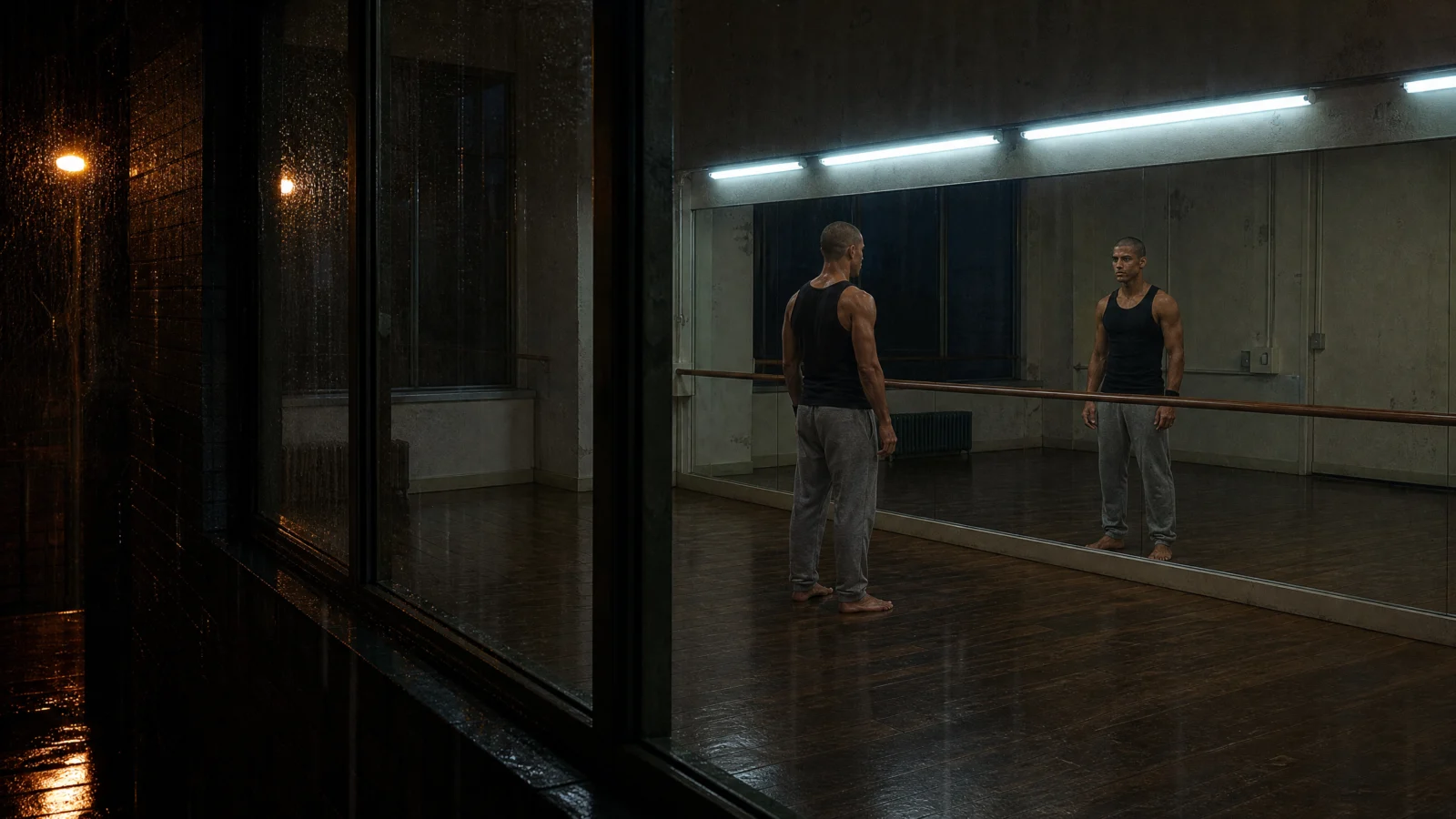
Beat 1 end state: the camera inside, he and his reflection both in frame.

Beat 2 end state: mid turn, the sweatband in the air, the reflection matching him.

Beat 3 end state: crouched at the mirror, the sweatband in his right hand, two of him.
The camera plan
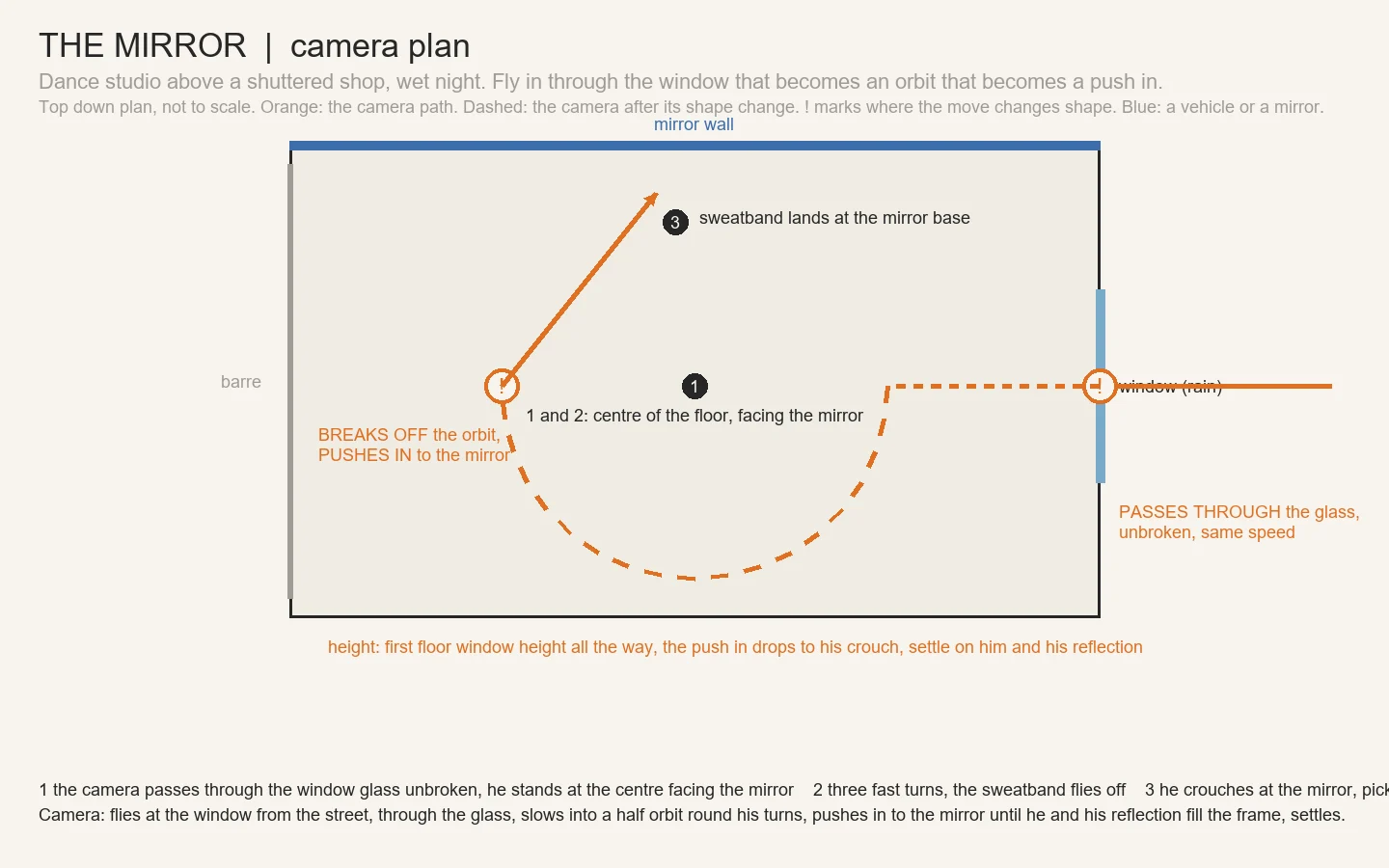
Fly at the window from the street, pass through the glass at 4 seconds, slow in the room, half orbit him from 11 to 20, break off and push in to the mirror, settle on two faces at 28.
Next: page 13, The Mirror, the take and the reflection.
Section 13
T06 | The Mirror, The Take
► Generate every image and take on OpenArt.ai (GPT Image 2 and Seedance 2.5) : [ Use code DigiAI for 15% off plus 100 free credits ]
► Try BytePlus Lumina with my link: https://bit.ly/4rncByo
Use code LUMINADIG. The first 300 users get 100 free credits each.
The video above is the bare line, and it is the honest one: the model went through the window on its own. What it could not do is keep the night, the man, the room or the beats. Below is the take that keeps all four and the reflection too.
The bare line, the control
Seedance 2.5, text to video, 16:9, 10 seconds, 480p, no references:

What it gave away: daylight for a wet night, a different man in a white vest, no sweatband and no event, and the window pass done through a curtain. What it kept: the spins and the crouch at the mirror. A bare prompt can buy the move. It cannot buy the person, the night, the set or the beats.
The take
Seedance 2.5, element to video, 16:9, 30 seconds, audio on, 480p draft then 720p final. References: Image 1 the face, Image 2 the body.
Block by block, what is new in this one
- The register line already says where the shot goes: "from outside in the rain to inside the room and on to the mirror". The model is told the whole journey before the first beat so no part of it reads as a new location.
- The reflection is in the binding line, not only in DO NOT. A count line that includes the reflection ("his reflection is that same person … moving in the same instant") is what stops the mirror from becoming a doorway with a second man in it.
- The pass through the glass has a second (4 seconds) and a physical statement ("the glass staying whole and the rain left behind"). Without the second it happens whenever, or as a cut. Without the statement the glass breaks. "A cut at the window" is in DO NOT by name: the threshold is where the model wants to cut.
What to check on the draft
- 4 to 6 seconds: the drops on the lens fade as the camera enters, the glass whole, no cut.
- 10 seconds: him at the centre, still, and his reflection the same man.
- 11 to 18 seconds: three turns, the reflection turning in the same instant, the sweatband leaving on the second turn.
- 20 seconds: the sweatband at the mirror base, him facing the mirror.
- 30 seconds: crouched, the band in his right hand, two faces, still.
What happened on the draft
The best draft of the six, a pass on all three things. The camera passed through the rain wet window between 4 and 5.75 seconds with the drops on the lens fading as it entered, no cut, the glass whole. The man and his reflection were the same man through three turns from 10 to 18. The sweatband lay at the mirror base at 20 and 24. The last ten seconds pushed in to him and his reflection face to face. The condition set before the build (show any drift) did not arise.

The 480p draft at 0, 10, 12, 20 and 30 seconds.
On the 720p final, the video on the previous page
The same locked prompt, one difference. The final put the mirror wall on the window side, not the far side, so for ten seconds he faces the lens with the barre behind him and his reflection is out of frame. It arrives at 16 when the orbit brings the mirror round, and holds from there: the band on the floor by 13, the crouch at 25 with the band in his right hand and his reflection’s left, two faces a hand apart at 30. The pass through the glass ran 4 to 8, no cut. The lesson: the set list placed the mirror once; the camera line gave it a job during the orbit, and the model honoured the line with the job. If a wall must be in a place, give it a job in the beat where the camera first sees it.
Next: page 14, The One Take Director.
Section 14
The One Take Director A | The Brief and the Bible
► Generate every image and take on OpenArt.ai (GPT Image 2 and Seedance 2.5) : [ Use code DigiAI for 15% off plus 100 free credits ]
► Try BytePlus Lumina with my link: https://bit.ly/4rncByo
Use code LUMINADIG. The first 300 users get 100 free credits each.
The master prompt that made the six films, written to be pasted into a fresh chat with any capable assistant. It asks you five questions, writes a bible, locks it, and then hands you every prompt in the order that saves credits. This page is part one: how it works, the refusals, the five questions and the bible. Parts two and three on the next two pages are the commands. The full text in one file is attached below as a resource.

How to use it
Open a new chat. Paste parts one, two and three together as one message (or attach the text file and say "act as this"). Answer the five questions in one reply. Correct the bible or say NEXT. Then ask for BIBLE PROMPTS, run the face and then the body on OpenArt, ask for BOARDS and look at the three side by side, ask for BARE and run it once, ask for TAKE and run it at 480p, bring the draft to CHECK, and only then run the locked prompt at 720p. The Director was cold tested four times by fresh contexts playing members who gave thin answers, asked for a real actress and a brand, and called TAKE before the bible existed; version 2 below is what survived.
The One Take Director, part one of three
Next: page 15, The One Take Director, part two.
Resources
The One Take Director (full text) (TXT, 17 KB)
Section 15
The One Take Director B | Prompts, Boards, Take
► Generate every image and take on OpenArt.ai (GPT Image 2 and Seedance 2.5) : [ Use code DigiAI for 15% off plus 100 free credits ]
► Try BytePlus Lumina with my link: https://bit.ly/4rncByo
Use code LUMINADIG. The first 300 users get 100 free credits each.
Part two of the master prompt: the four commands that make the images and the take. Paste it directly under part one in the same message, then part three from the next page.
The One Take Director, part two of three
Next: page 16, The One Take Director, part three.
Section 16
The One Take Director C | Bare, Check, Fix, Swap
► Generate every image and take on OpenArt.ai (GPT Image 2 and Seedance 2.5) : [ Use code DigiAI for 15% off plus 100 free credits ]
► Try BytePlus Lumina with my link: https://bit.ly/4rncByo
Use code LUMINADIG. The first 300 users get 100 free credits each.
Part three of the master prompt: the control line, the check, the fix list and the swap. Paste it directly under part two. The last line starts the Director.
The One Take Director, part three of three
Why the bible is locked before anything is written
Every prompt the Director writes after the lock reads from the same eight lines, so the face in the boards is the face in the take and the end states in the take are the end states on the plan. Change a line after the lock with SWAP and it rewrites only the prompts that line touches. The lock is what makes six prompts agree.
Next: page 17, The Fix Bank.
Section 17
The Fix Bank | Twelve Breaks, One Change Each
► Generate every image and take on OpenArt.ai (GPT Image 2 and Seedance 2.5) : [ Use code DigiAI for 15% off plus 100 free credits ]
► Try BytePlus Lumina with my link: https://bit.ly/4rncByo
Use code LUMINADIG. The first 300 users get 100 free credits each.
Everything that broke across the fourteen videos in this vault, and across Vol.J and Vol.L before it, with the one line that fixed each. Bring your 480p draft here before you spend on the final. Change one line, run once more at 480p, then lock.
The twelve
- The face drifts mid take. The face description is only in the binding line. Put it in the first sentence of every beat and in the closing lock. Same seed on the re roll if the tool shows one.
- A second person appears. There is no count line, or a reference showed two views. Add "Exactly one person appears in this film, and no other person anywhere in the frame" to the Image 2 line.
- The camera cuts at the threshold or at the shape change. The change was written as a new shot. Rewrite it as a camera action (rises, turns, passes through, breaks off) with a second on it, and keep "the camera never cuts" as the last line of the prompt.
- The shape change never happens. Lead the change sentence with the camera leaving ("at 11 seconds the camera leaves her"), say what the camera no longer sees, and repeat the change in the first sentence of that beat.
- The event runs for the whole clip. There is no "then holds" and no end state. Add both. Seedance 2.5 keeps doing what it was last told.
- The object multiplies or vanishes. Add a count line ("exactly one bike, with exactly two wheels") and give it a landing place in the end state of the beat where it stops.
- The object turns into something else. Name it by material and shape in the set list and in every beat it appears in, and ban the wrong shape by name in DO NOT ("a log longer than it is wide").
- The camera lands but keeps drifting. End the camera paragraph with "stops dead, settles and holds, nothing moving".
- Bullet time comes out as a still frame. Write it as time slowing, with the camera still travelling and one thing still moving (a leaf, dust, drops). The Split, page 11.
- The glass breaks on a fly through. "Passes through the glass without breaking it, the glass staying whole and the rain left behind", with a second on the pass. The Mirror, page 13.
- The set is redrawn by beat 3. The set was written as a mood. Write it as a list of objects with positions and one light with one direction.
- The camera goes to the face before the action. Measured three times in this vault: The Split circled to her front during the set up in two takes with two prompt forms, The Apex stayed behind the marshal instead of tracking the car, The Market rode in front of the bike. Seedance 2.5 puts the camera where the face is. If the move needs the camera somewhere else before the hit, start it there so no travel is needed, say what the camera does not see ("the camera never sees her back"), and keep the face toward the lens in any beat where the camera must hold still.
Three more that cost nothing to know
- It looks like a game. No optical system was named. Add the lens, the grain, and "video game rendering, plastic CGI" to DO NOT.
- A moderation failure. Usually the generated audio, not the picture. Reword the effects line, change the seed, run again.
- Lettering appears on a wall or a shirt. The clean plate ban is too soft. Ban "any lettering on walls, signs, screens or clothing".
The ten point check, in this order, stop at the first failure
Freeze the draft at 10, 20 and 30 seconds and at each shape change.
- The face is the same person, with the detail on the correct side.
- One person. One prop.
- The wardrobe is the body image, piece by piece.
- The set objects are where the end states put them.
- No cut anywhere, including at the threshold and the shape change.
- Each shape change actually happens and reads as one camera doing something.
- The hit lands within a second of where it was pinned.
- The moved object lies where the end state says.
- The last frame is settled and held.
- The sound follows the event (the score stops at the brake, the crack is at the hit).
For each failure the line to change: the face, the first sentence of each beat and the closing lock; the count, the binding lines; the wardrobe, the Image 2 line; the set, the set list and the end state of the beat that broke; the move, the camera paragraph; the last frame, the last beat’s end state and the last sentence of the camera paragraph; the sound, the audio lines.
The swap exercise
Take The Fall (page 3) and change one line of its bible: the climber becomes a man in his sixties with a white beard and one gold earring in his left ear, same gym, same fall, same camera. Make the face, make the body from the face, make the three boards, and compare them to the six on page 2. Then run the take at 480p. What you are testing is whether the method is the person or the prompt. It is the prompt. Thirty minutes and about 2,100 credits.
Your turn
Open The One Take Director (pages 14 to 16) in a fresh chat and answer its five questions with a person, a place and an event of your own. Choose a move from the six in this vault before you invent one: a dolly that becomes a crane, an orbit that becomes a crane, a low track that becomes a crane, a handheld approach that becomes bullet time, a fly through a window that becomes an orbit. Run the bible images, look at the boards side by side, run the bare line once and keep it, run the draft at 480p, bring it here, change one line, then render the final at 720p. Post the take and the bare line together in the community with the one line you changed.
What the six films cost, for your budget
Six faces and six bodies, two props, eighteen boards, six bare lines at 10 seconds, seven drafts at 480p (one re roll) and six finals at 720p came to about 41,500 credits on OpenArt at the prices on the day, including a cover image. One film of your own, done the same way with one re roll, is about 8,300. Check the live price before you spend; the numbers on each page are from the day of the build.
Where this leads
Vol.L carried one person through three places with a cut on a hit. Vol.N removes the cut and gives the camera a shape change. The next step is two people in one take, which is where identity breaks hardest, and a move that crosses two thresholds. If you want that vault, say so in the community and show the take you made from this one.
Back to page 1, The Slate.